

Do you experience pain when biting down on food? Have you noticed a crack in your tooth or a large filling that keeps failing? Maybe your dentist has recommended a root canal, and you are wondering what comes next.
These are all common signs that your tooth may need extra support. When a tooth becomes weak, damaged, or decayed, it cannot protect itself from further harm.
Over time, this can lead to more pain, more extensive treatment, and even tooth loss.
Dental crowns offer a proven solution. A crown is a custom-made cap that covers the entire visible portion of your tooth, restoring its shape, size, strength, and appearance.
Modern crowns, especially those created with advanced digital technology, can be placed in a single visit, saving you time and inconvenience.
In this guide, we will explore how dental crowns restore teeth, the signs that you may need one, the different types available, and what to expect during the procedure.
Table of Content
- What Is a Dental Crown?
- Signs You May Need a Dental Crown
- How Dental Crowns Restore Tooth Strength and Function
- Benefits of Dental Crowns
- Same-Day Crowns: A Faster Way to Restore Your Smile
- Same-Day Crowns vs Traditional Crowns
- What to Expect During the Dental Crown Procedure
- How Long Do Dental Crowns Last?
- Caring for Your Dental Crown
- Frequently Asked Questions About Dental Crowns
What Is a Dental Crown?
A dental crown is a tooth-shaped restoration that fits over your natural tooth like a protective cap. Its purpose is to restore the tooth’s shape, size, strength, and appearance.
Once cemented in place, a crown fully encases the visible portion of the tooth above the gum line.
Crowns can be made from various materials, including porcelain, ceramic, zirconia, metal alloys, or porcelain fused to metal. Each material has its own advantages.
- Porcelain and ceramic crowns offer the most natural appearance and are often used for front teeth.
- Zirconia crowns combine exceptional strength with excellent aesthetics.
- Metal crowns, such as gold alloy, are extremely durable and are often used for back molars where chewing forces are greatest.
Crowns serve both restorative and cosmetic purposes. They can protect a weak tooth from breaking, restore a broken or worn tooth, cover a dental implant, or improve the appearance of a misshapen or discolored tooth.
Signs You May Need a Dental Crown
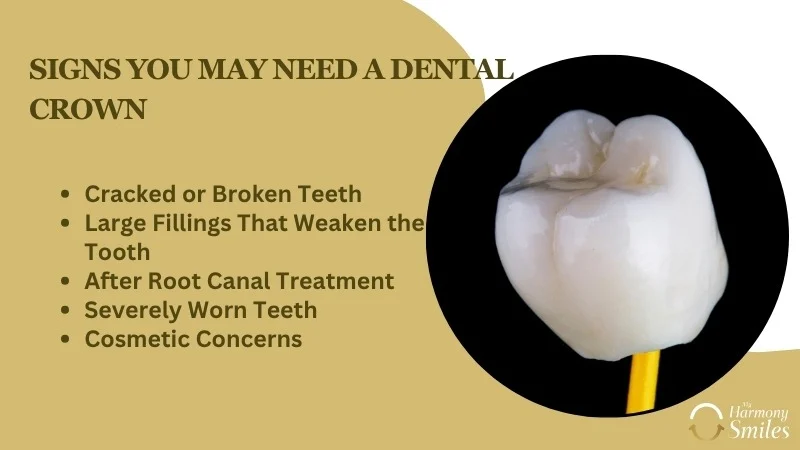
How do you know if you need a crown? Here are common situations where a dental crown is recommended.
Cracked or Broken Teeth
Teeth can crack from trauma, grinding, or even biting down on something hard. Cracks in my teeth may not always be visible, but they often cause pain when chewing or sensitivity to temperature changes.
A cracked tooth cannot heal on its own. Without treatment, the crack can extend deeper, eventually reaching the pulp and requiring root canal therapy or extraction.
A crown holds the tooth together, preventing the crack from spreading and restoring full function. According to the American Association of Endodontists, a crown is essential for cracked teeth.
One study showed a 2-year survival rate of only 20% when endodontically treated cracked teeth were restored without a crown, compared to 94% survival for those that were crowned.
Full-coverage crowns demonstrate a significantly higher success rate compared to composite resin restorations for early-stage cracked teeth.
Large Fillings That Weaken the Tooth
When a cavity is too large for a simple filling, the remaining tooth structure may become too weak to withstand normal chewing forces.
Large fillings can also cause the tooth to crack or fracture. A crown covers and protects the entire tooth, distributing bite forces evenly and preventing further damage.
After Root Canal Treatment
A tooth that has undergone root canal treatment is more brittle and prone to fracture. The procedure removes the nerve and blood supply, making the tooth more fragile.
A crown provides the necessary reinforcement, protecting the tooth from breaking and extending its lifespan.
Severely Worn Teeth
Teeth grinding and clenching (bruxism) can wear down enamel over time, shortening teeth and making them more susceptible to decay and sensitivity.
Crowns can restore the lost height and structure, improving both function and appearance.
Cosmetic Concerns
Sometimes, a crown is the best solution for a tooth that is severely discolored, misshapen, or has an old, unaesthetic filling. A crown can provide a natural, beautiful appearance that blends seamlessly with your surrounding teeth.
How Dental Crowns Restore Tooth Strength and Function
A dental crown restores tooth strength in several important ways.
- A crown provides full coverage protection. By encasing the entire tooth above the gum line, it shields the underlying structure from the forces of chewing and biting. This prevents cracks from spreading and protects the tooth from further damage.
- A crown redistributes bite forces evenly across the tooth. When a tooth is weakened by a large filling or crack, chewing forces can concentrate on vulnerable areas, leading to fracture. A crown spreads these forces across the entire tooth surface, reducing stress on any single point.
- A crown restores proper bite alignment. If a tooth has worn down or been damaged, it can throw off your bite, leading to jaw pain and uneven wear on other teeth. A crown restores the tooth to its proper height and shape, helping your bite function correctly.
- A crown reduces sensitivity. If enamel has worn away, exposing the underlying dentin, you may experience discomfort with hot, cold, or sweet foods. A crown covers the exposed area, protecting the nerve and eliminating sensitivity.
Finally, a crown preserves your natural tooth. By strengthening a damaged tooth and preventing further decay or fracture, a crown can help you keep your natural tooth for many more years.
Benefits of Dental Crowns

Far more than just a cosmetic fix, dental crowns are versatile restorations that protect, strengthen, and preserve your natural teeth for the long term.
Restores Natural Appearance
Modern crowns are crafted to match the color, shape, and translucency of your natural teeth. Porcelain and zirconia crowns, in particular, offer exceptional aesthetics that blend seamlessly with your smile.
Improves Comfort While Eating
A strong, properly fitted crown allows you to chew comfortably and confidently. You can enjoy your favorite foods without worrying about pain or damaging your tooth.
Protects Remaining Tooth Structure
By covering and protecting a weakened tooth, a crown prevents further damage and extends the lifespan of your natural tooth.
Durable Long-Term Solution
With proper care, dental crowns can last many years. Clinical studies show that crowns have high long-term survival rates.
A study of 226 patients over a 10-16 year follow-up found that crown survival rates were 96.9% at 5 years, 93.3% at 10 years, and 84.9% at 16 years. Another study reported 10-year cumulative survival rates of 86.0% for monolithic zirconia crowns.


Boosts Confidence
A restored smile can significantly improve your self-esteem. When your teeth look and function well, you feel more confident smiling, speaking, and interacting with others.
Same-Day Crowns: A Faster Way to Restore Your Smile
Traditional crowns require two visits: one for tooth preparation and impressions, and a second visit 1-2 weeks later for placement. In between, you wear a temporary crown.
Same-day crowns, however, are designed, milled, and placed in a single visit using advanced CAD/CAM technology. This eliminates the need for temporary crowns and a second appointment.
How Same-Day Crowns Work
The process begins with a digital scan of your tooth using an intraoral scanner. The scanner captures thousands of images per second, creating a precise 3D model of your mouth.
This digital impression is far more comfortable than traditional putty impressions and eliminates common errors like air bubbles or distortion.
Using specialized software, your dentist designs your custom crown on the computer screen. The design file is sent to an in-office milling machine, which carves the crown from a solid block of ceramic material.
Once the crown is milled, your dentist checks the fit, makes any necessary adjustments, and permanently bonds it to your tooth.
Advantages of Same-Day Crowns
Here are the main advantages of same-day crowns:
- Immediate Restoration: You walk out of the office with your permanent crown in place. No waiting, no temporary crown, no second appointment.
- Greater Convenience: One visit instead of two. This is especially valuable for patients with busy schedules.
- Comfortable Digital Scanning: No messy impressions. The digital scan is quick, comfortable, and highly accurate.
- Precise Fit and Natural Appearance: CAD/CAM technology achieves marginal accuracy below 50 microns, ensuring an excellent fit. This precision contributes to long-term success.
- Reduced Risk of Temporary Crown Problems: Temporary crowns can come loose or fall off, causing discomfort and requiring an extra visit. Same-day crowns eliminate this risk entirely.
- Preservation of Natural Tooth Structure: Digital scanning often allows for more conservative tooth preparation, preserving more of your natural tooth.
Same-Day Crowns vs Traditional Crowns
| Feature | Same-Day Crowns | Traditional Crowns |
| Number of Visits | One | Two (or more) |
| Temporary Crown Needed | No | Yes (worn for 1-2 weeks) |
| Turnaround Time | Same day | 1-2 weeks |
| Digital Scanning | Yes (intraoral scanner) | Traditional impressions (optional digital) |
| Final Placement | Same visit | Second visit |
Clinical studies show that same-day crowns have survival rates comparable to traditional crowns over 5-10 year follow-up periods. Same-day crowns demonstrate excellent durability comparable to laboratory-made crowns when properly designed and placed.
What to Expect During the Dental Crown Procedure
Whether you choose a traditional or same-day crown, the procedure follows a similar pattern.
Comprehensive Examination
Your dentist will examine your tooth, take X-rays to assess the root and surrounding bone, and discuss your treatment options. If you have decay or gum disease, these issues will be addressed first.
Tooth Preparation
The tooth is numbed with local anesthesia. Your dentist then shapes the tooth, removing any decay or damaged areas and creating space for the crown. The amount of tooth removed depends on the type of crown and the material used.
Digital Impressions or Scanning
For a traditional crown, your dentist takes an impression of your prepared tooth and sends it to a dental lab. For a same-day crown, your dentist uses an intraoral scanner to capture a digital impression.
Crown Fabrication
For traditional crowns, the lab fabricates your crown over 1-2 weeks. For same-day crowns, the crown is milled in the office while you wait.
Final Placement
At your final appointment, your dentist checks the fit, color, and shape of your new crown. After making any necessary adjustments, the crown is permanently cemented or bonded to your tooth.
How Long Do Dental Crowns Last?
The lifespan of a dental crown depends on several factors, including the material used, your oral hygiene habits, and whether you grind your teeth. On average, crowns last 10 to 15 years. Some crowns last 20 years or longer with excellent care.
Clinical studies provide more specific data. One study reported crown survival rates of 96.9% at 5 years, 93.3% at 10 years, and 84.9% at 16 years. Another study found 10-year survival rates of 86.0% for monolithic zirconia crowns. Research also shows that crowns have survival rates exceeding 90% after five years.
Factors that influence crown longevity include:
- Oral hygiene: Regular brushing, flossing, and professional cleanings prevent decay around the crown margin.
- Teeth grinding: Wearing a nightguard protects your crown from excessive forces.
- Diet: Avoiding hard or sticky foods reduces the risk of crown damage.
- Regular dental visits: Your dentist can monitor your crown and catch any issues early.
Caring for Your Dental Crown
Proper care is essential for maximizing the lifespan of your crown.
- Brush twice daily with a non-abrasive toothpaste.
- Floss daily around the crown, paying special attention to the gum line where the crown meets your natural tooth.
- Visit your dentist regularly for checkups and cleanings.
- Wear a nightguard if you grind or clench your teeth.
- Avoid chewing ice, hard candy, or other hard objects.
- Use a soft-bristled toothbrush to avoid scratching porcelain or ceramic crowns.
Frequently Asked Questions About Dental Crowns
What is a dental crown used for?
A dental crown is used to restore a tooth that is cracked, broken, decayed, or weakened. It covers the entire visible portion of the tooth, providing strength, protection, and a natural appearance.
How do I know if I need a crown?
You may need a crown if you have a cracked tooth, a large filling that weakens the tooth, a tooth that has had root canal treatment, severe wear from grinding, or a tooth that is severely discolored or misshapen.
Are same-day crowns as durable as traditional crowns?
Yes. Clinical studies show that same-day crowns have survival rates comparable to traditional crowns over 5-10 year follow-up periods. Advanced CAD/CAM technology ensures a precise fit and optimal material properties.
Is getting a dental crown painful?
The procedure is performed under local anesthesia, so you should not feel pain during the treatment. You may experience some sensitivity or mild discomfort afterward, but this typically resolves quickly.
How long does the procedure take?
For a same-day crown, the entire process typically takes 60 to 120 minutes. Traditional crowns require two visits spaced 1-2 weeks apart.
Can a crown improve the appearance of my tooth?
Yes. Crowns can be customized to match the color, shape, and size of your natural teeth, providing a beautiful, natural-looking restoration.
How should I care for my crown?
Care for your crown the same way you care for your natural teeth: brush twice daily, floss daily, and visit your dentist regularly for checkups and cleanings. Avoid chewing hard objects and wear a nightguard if you grind your teeth.
Restore Strength, Function, and Confidence With Dental Crowns
Dental crowns are one of the most reliable and versatile restorative treatments in modern dentistry.
Whether you have a cracked tooth, a large filling that is failing, or a tooth that needs protection after root canal therapy, a crown can restore its strength, function, and appearance.
Modern crowns, especially those created with same-day CAD/CAM technology, offer exceptional durability, natural aesthetics, and the convenience of a single visit.
With proper care, your crown can last for many years, allowing you to eat, smile, and speak with confidence.
If you think you may need a dental crown, do not wait. A cracked or weakened tooth will not heal on its own, and delaying treatment can lead to more extensive damage, root canal therapy, or even tooth loss.