


Gum recession becomes more common as you reach your 40s and 50s. Your gums may start pulling away from your teeth, exposing the roots and creating gaps that can feel uncomfortable.
Many people notice this change and wonder if they need surgery to fix it.
The good news is that non-surgical preventive dentistry treatment can be effective when gum recession is detected early and driven by inflammation, plaque buildup, or brushing habits.
While gum tissue doesn’t grow back on its own, you have options to manage the condition and prevent it from getting worse.
With the right approach, you can protect your exposed roots and maintain your oral health without going under the knife.
Understanding gum recession treatment options can help you make smart choices about your dental care.
This article will walk you through the signs to watch for, explain why your gums recede, and show you practical steps to address the problem.
Key Takeaways
- You might need gum rejuvenation in your 40s and 50s due to years of brushing habits, gum disease, and natural aging
- Early-stage gum recession can be managed with non-surgical treatments like improved oral hygiene and dental cleanings
- Prevention through proper brushing technique and regular dental exams is the best way to protect your gums long-term
Recognizing Gum Recession: Symptoms and Signs
Gum recession often develops slowly over years, making it easy to miss until significant damage occurs. Knowing what to look for helps you catch problems early when treatment options are less intensive.
Early Warning Signs and Visual Clues
The first signs of gum recession can be subtle. You might notice your teeth looking slightly longer than they used to. This happens because your gum tissue pulls away from the tooth surface.
Look for a visible notch or gap where your gum meets your tooth. The area might appear darker or yellowish compared to the white enamel above it. Your gums may also look red, swollen, or bleed when you brush.
Some people see triangular spaces forming between their teeth near the gum line. These are called “black triangles.” You might also notice changes in how your teeth fit together when you bite.
If your gums feel tender or look puffy, these are common dental problems that shouldn’t be ignored.
Tooth Sensitivity and Root Exposure
Tooth sensitivity is one of the most common symptoms of receding gums. You feel sharp pain when eating hot, cold, sweet, or acidic foods.
This happens because exposed tooth roots lack the protective enamel that covers the rest of your teeth.
Your roots are covered with cementum instead, which is much weaker. When this surface gets exposed, the nerves inside your teeth react to temperature changes and certain foods.
The sensitivity might start mild but can become severe over time. You may find yourself avoiding certain foods or drinks. Some people feel discomfort even when breathing cold air through their mouth.
The Role of Age and Risk Factors
Gum recession affects millions of people, especially adults in their 40s and 50s. Age itself doesn’t cause gum recession, but years of habits catch up with you.
Brushing too hard damages your gums over time. Smoking weakens gum tissue and reduces blood flow. Genetics also play a role—some people naturally have thinner gum tissue that recedes more easily.
Other risk factors include grinding your teeth, misaligned teeth, and gum disease.
People with diabetes or hormonal changes face higher risks. Even lip or tongue piercings can cause gum damage where the jewelry rubs against tissue.
Why Gums Recede: Causes Specific to Midlife
Your gums face unique challenges in your 40s and 50s that make recession more likely.
Decades of wear, hormonal shifts, and accumulated damage from plaque and tartar create the perfect conditions for gum tissue to pull away from your teeth.
Gum Disease and Periodontal Disease
Gum disease is the leading cause of recession in midlife. When plaque and tartar build up along your gum line, bacteria trigger inflammation that destroys the tissue and bone supporting your teeth.
The early stage, called gingivitis, makes your gums red and puffy. If you don’t treat it, gingivitis turns into periodontal disease.
This advanced form attacks deeper structures and causes your gums to pull back from your teeth.
Warning signs include:
- Bleeding when you brush or floss
- Persistent bad breath
- Gums that feel tender or look darker
- Spaces forming between your teeth
By your 40s and 50s, you’ve had more years for plaque to accumulate. Untreated plaque-driven gum disease becomes harder to reverse as inflammation persists longer and causes permanent damage to gum tissue.
Teeth Grinding and Misaligned Teeth
Grinding your teeth at night puts enormous pressure on your gums. This habit, called bruxism, often gets worse with age due to stress or changes in your bite.
The constant force pushes your teeth in unnatural directions. Your gum tissue can’t handle this pressure and starts to wear away along the edges where it’s thinnest.
Misaligned teeth create similar problems. When your bite is off, certain teeth take more force than they should. Your gums recede faster in these high-pressure spots.
Clenching and poorly aligned teeth rank among the top physical causes of recession. You might not even realize you’re grinding until your dentist points out the damage to your teeth and gums.
Oral Hygiene Habits and Tooth Brushing
Brushing too hard damages your gums more than most people realize. When you scrub aggressively with a firm-bristled brush, you wear away the delicate tissue at your gum line.
Aggressive toothbrushing causes mechanical trauma that adds up over decades. By midlife, you might notice thin, worn spots where you’ve brushed the same way for 30 or 40 years.
A soft-bristled toothbrush protects your gums better. Hold it at a 45-degree angle and use gentle circular motions instead of sawing back and forth.
Poor flossing technique also contributes to recession. Snapping the floss down into your gums or skipping it entirely allows plaque to harden into tartar that irritates tissue and causes inflammation.
Other Contributors: Genetics and Lifestyle
Your genes play a significant role in how your gums age. Some people inherit thinner gum tissue that recedes more easily, regardless of how well they care for their teeth.
Tobacco use speeds up recession dramatically. Smoking reduces blood flow to your gums and makes it harder for tissue to heal from daily wear and damage.
Hormonal changes in your 40s and 50s affect gum health too. Women going through perimenopause and menopause often experience changes in gum tissue density and inflammation levels.
Hormone shifts and diabetes can heighten your risk of recession.
Certain medications dry out your mouth, which reduces saliva’s natural protective effects. Without enough saliva, bacteria multiply faster and attack your gums more aggressively.
Can Gum Tissue Regenerate Naturally?
Gum tissue works differently than other parts of your body and cannot repair itself once it recedes.
Understanding why this happens and what it means for your oral health can help you make informed decisions about treatment.
Understanding Gum Tissue Regrowth
Your gum tissue behaves very differently from your skin or other body tissues. When you cut your skin, it heals and grows back. Gum tissue doesn’t regenerate the way other types of tissue do, like the skin on your body.
This means that once your gums pull away from your teeth, they stay in that position. The tissue simply doesn’t have the ability to grow back to where it used to be.
Your body cannot rebuild lost gum tissue on its own, no matter how well you brush or what home remedies you try.
Many people in their 40s and 50s wonder if their gums can grow back naturally. The answer is no. The tissue loss is permanent without professional intervention.
Why Gums Do Not Grow Back on Their Own
Gum tissue lacks the regenerative cells that allow other body parts to heal. Unlike bone, which can slowly remodel over time, gum tissue that has pulled away from your teeth will not return to its original position.
The structure of gum tissue makes natural regrowth impossible. It doesn’t contain the same stem cells or growth factors found in tissues that can repair themselves.
Once the attachment between your gums and teeth breaks down, your body cannot rebuild that connection.
Factors that prevent natural regrowth include:
- Lack of regenerative cell types in gum tissue
- Permanent breakdown of tissue attachment to teeth
- Ongoing pressure from habits like aggressive brushing
- Continued presence of bacteria below the gum line
Even with perfect oral hygiene, receding gums don’t grow back naturally.
Consequences of Untreated Recession
Leaving receding gums untreated leads to serious problems beyond appearance. The exposed tooth root becomes vulnerable to decay since root surfaces lack the protective enamel covering that tooth crowns have.
You may experience increased sensitivity to hot, cold, and sweet foods. This happens because the exposed root contains tiny tubules that connect directly to the nerve inside your tooth.
Untreated recession can result in:
- Increased risk of root cavities
- Bone loss around affected teeth
- Greater chance of tooth loss
- Worsening recession over time
- Pain and discomfort while eating
Bone loss often accompanies severe gum recession. As the gums pull back, the underlying bone may deteriorate.
This creates a cycle where tissue and bone loss feed into each other, potentially leading to tooth loss if left untreated.
Non-Surgical Treatment Strategies for Gum Recession
Several non-surgical treatments can help manage gum recession in your 40s and 50s by stopping further damage and protecting exposed tooth roots. These approaches work best when recession is mild and caught early.
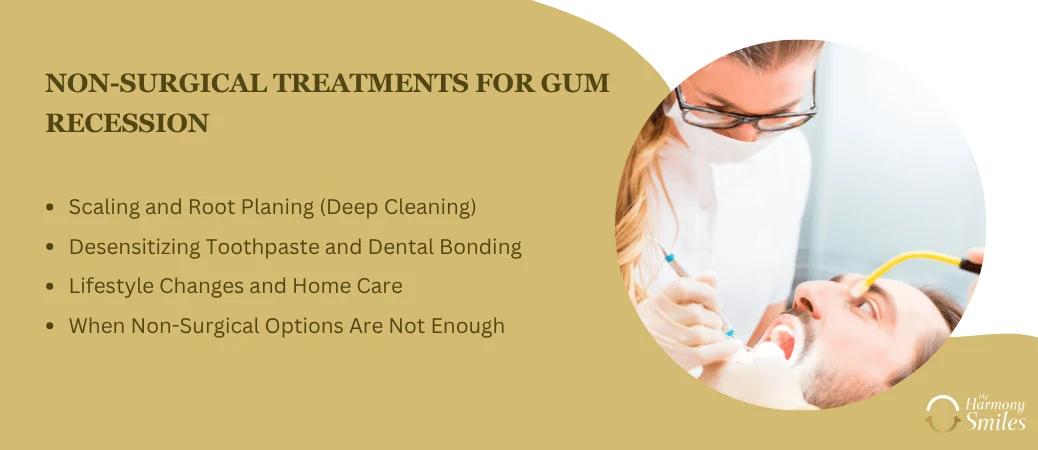
Scaling and Root Planing (Deep Cleaning)
Scaling and root planing is a deep cleaning procedure that removes plaque and tartar from below your gum line. During scaling, your dentist cleans off the buildup on tooth surfaces.
Root planing smooths the tooth roots so your gums can reattach more firmly.
This treatment helps control the bacteria that cause gum disease and further recession. Your dentist typically performs the procedure in sections over one or two visits. You’ll receive local anesthesia to keep you comfortable.
The deep cleaning stops recession from getting worse but doesn’t regrow lost gum tissue. You may need this treatment every few months if you have ongoing gum disease.
Desensitizing Toothpaste and Dental Bonding
Exposed tooth roots often cause sharp pain when you eat or drink hot and cold foods. Desensitizing toothpaste contains compounds that block nerve signals in your teeth.
You’ll need to use it consistently for several weeks to see results.
Dental bonding provides another option for sensitive areas. Your dentist applies a tooth-colored resin material to cover exposed roots. This protects the vulnerable surface and reduces discomfort.
Benefits of these treatments:
- Relief from temperature sensitivity
- Protection against root decay
- Improved appearance of teeth
- No surgery required
Neither treatment reverses recession, but both make living with it more comfortable.
Lifestyle Changes and Home Care
Your daily habits play a major role in preventing further recession. Switch to a soft-bristled toothbrush and use gentle circular motions instead of harsh scrubbing.
Aggressive brushing wears away gum tissue over time.
Daily flossing removes bacteria between teeth where your brush can’t reach. Floss gently by curving it around each tooth rather than snapping it against your gums.
Additional steps to protect your gums include:
- Quitting smoking and tobacco use
- Wearing a night guard if you grind your teeth
- Eating a balanced diet with adequate vitamin C
- Staying hydrated throughout the day
- Reducing stress that can weaken your immune system
Good oral hygiene combined with professional dental cleaning keeps existing recession stable. These habits matter more in your 40s and 50s when gum tissue naturally becomes more vulnerable.
When Non-Surgical Options Are Not Enough
Non-surgical approaches have clear limits you need to understand. If you have 3 millimeters or more of exposed root surface, conservative treatments may not be sufficient. The exposed area remains at high risk for decay and bone loss.
You should consider seeing a periodontist if your recession continues to worsen despite improved brushing and flossing.
Persistent sensitivity that doesn’t respond to desensitizing products is another warning sign. Visible bone loss on X-rays indicates the problem has progressed beyond what scaling and root planing can address.
Gum graft surgery becomes necessary when non-surgical methods can’t protect your teeth from further damage.
A periodontist can measure your recession depth and recommend the most conservative option that will work for your situation.
Prevention and Long-Term Gum Health in Your 40s and 50s
Taking care of your gums becomes more important as you age, but the good news is that preventing gum disease doesn’t require extreme measures.
Simple daily habits and regular dental care can protect your gums and prevent further damage.
Best Oral Hygiene Practices
Your daily oral hygiene routine is your first line of defense against gum recession. You should brush twice a day with a soft-bristled toothbrush using gentle circular motions.
Hard bristles and aggressive brushing can actually damage your gums and make recession worse.
Daily flossing removes plaque and food particles between your teeth where your toothbrush can’t reach. Make sure to floss at least once per day, preferably before bed.
Consider these essential oral hygiene practices:
- Use fluoride toothpaste to strengthen your teeth
- Replace your toothbrush every three to four months
- Brush for at least two minutes each time
- Clean along the gum line without pressing too hard
- Use an antimicrobial mouth rinse if your dentist recommends it
Hold your toothbrush at a 45-degree angle toward your gum line. This helps clean the space where your teeth meet your gums without causing damage.
Preventing Further Gum Recession
Once gum recession starts, it can’t reverse on its own, but you can take steps to prevent it from getting worse. The key is addressing the factors that contribute to gum problems.
If you smoke, quitting is one of the best things you can do for your gum health. Smoking reduces blood flow to your gums and makes it harder for them to heal.
Watch for signs of gum disease like bleeding, swelling, or tenderness. Treating gum disease early can prevent further recession.
If you grind your teeth at night, ask your dentist about a night guard to protect your teeth and gums.
Eating a balanced diet with plenty of vitamins and minerals supports healthy gum tissue. Stay hydrated throughout the day to help your mouth produce enough saliva, which naturally protects your gums.
The Importance of Regular Dental Visits
Professional dental cleaning removes plaque and tartar that you can’t remove at home. You should visit your dentist every six months for checkups and cleanings.
During these visits, your dentist can spot early signs of gum problems before they become serious. Professional cleanings may include scaling and root planing if you have deeper pockets around your teeth.
Your dental team can also:
- Monitor changes in your gum health over time
- Provide personalized advice for your specific needs
- Apply fluoride treatments to reduce sensitivity
- Recommend adjustments to your home care routine
Some people need more frequent cleanings, especially if they have a history of gum disease. Your dentist will tell you how often you should come in based on your individual situation.
When to Seek Professional Help: Dentists and Periodontists
A periodontist has specialized training to treat gum recession, and knowing when to move beyond your regular dentist can protect your teeth from further damage.
Understanding the Role of a Periodontist
Your regular dentist can spot early signs of gum recession during routine checkups. They can help with basic care like deep cleanings and guidance on brushing habits.
However, a periodontist is the specialist best equipped to evaluate recession, determine the cause, and recommend treatment based on severity.
Periodontists complete three extra years of training after dental school. They focus only on gum health and the bone that supports your teeth.
You should see a periodontist for bleeding gums, recession, or loose teeth that don’t improve with regular dental care.
Signs you need a periodontist include:
- Teeth that look longer than before
- Exposed tooth roots that feel sensitive
- Pockets forming between teeth and gums
- Gums that bleed easily or pull away from teeth
When Surgery Is Recommended
Gum graft surgery becomes necessary when recession exposes tooth roots and creates health risks. Not all recession needs surgery.
Your periodontist will consider how much gum you’ve lost, whether it’s getting worse, and if you have pain or sensitivity.
The most common approach is a connective tissue graft. A periodontist takes tissue from the roof of your mouth and attaches it over the exposed root. This procedure protects the tooth and can improve appearance.
You might need gum grafting if you have visible gaps between teeth, severe sensitivity that affects daily life, or roots that are at risk of decay.
Many patients benefit from non-surgical solutions when caught early, so timing matters.
Finding a Specialist and What to Expect
Start by asking your dentist for a referral to a periodontist in your area. You can also search for board-certified periodontists through the American Academy of Periodontology website.
Your first visit will include a full exam of your gums and teeth. The periodontist will measure pocket depths, check for bone loss with X-rays, and discuss what caused your recession.
They’ll explain your treatment options and help you understand what each choice involves.
Treatment for receding gums can restore gum health and protect teeth. Most periodontists offer payment plans if cost is a concern. Ask about recovery time, success rates, and alternatives during your consultation.
Frequently Asked Questions
Gum recession becomes more common as you age, and many people wonder if the tissue will grow back naturally or if surgery is their only option.
The answers depend on how early you catch it and what’s causing the problem in the first place.
Is it normal to notice gum recession in your 40s or 50s?
Yes, gum recession is extremely common in your 40s and 50s. About 50% of Americans experience some gum recession by age 30, and that number jumps to nearly 90% by age 65.
Your gums naturally pull back slightly as you age due to decades of wear and tear. However, significant recession that exposes tooth roots isn’t something you should accept as inevitable.
The recession you notice might stem from years of aggressive brushing, untreated gum disease, or teeth grinding at night. Just because it’s common doesn’t mean you should ignore it.
Can mild or early gum recession grow back on its own?
No, your gums cannot grow back on their own once the tissue has pulled away from your teeth. Unlike skin, gum tissue does not regenerate through natural healing processes.
This is true whether you catch the recession early or late. The biological structure of gum tissue simply doesn’t allow for regrowth without professional intervention.
What you can do is stop the recession from getting worse. Early intervention with proper brushing technique and treatment of underlying causes can halt progression completely.
What are the most effective non-surgical treatments for gum recession?
The most effective non-surgical treatments focus on stopping progression rather than reversing existing damage.
Deep cleaning procedures like scaling and root planing remove plaque and bacteria below the gum line, which helps treat gum disease that may be causing recession.
Your dentist might recommend antimicrobial mouth rinses or antibiotic treatments to control infection. Laser therapy can remove diseased tissue and stimulate healing without cutting.
Switching to a soft-bristled electric toothbrush with a pressure sensor prevents further damage from aggressive brushing. These treatments protect exposed roots and maintain the gum tissue you still have.
What at-home habits can help stop gum recession from getting worse?
Switch to a soft-bristled toothbrush and brush at a 45-degree angle to your gum line using gentle circular motions. Never scrub back and forth with pressure.
Use a water flosser daily to clean along the gum line without the risk of cutting already-receded tissue with string floss. This removes plaque buildup that can worsen recession.
If you grind your teeth at night, wear a custom night guard to protect your gums from the constant pressure. Quit smoking or vaping, as tobacco products significantly increase your risk of continued recession.
How can I tell if my gum recession is caused by brushing too hard, gum disease, or something else?
Recession from aggressive brushing typically appears on the outer surfaces of your teeth, especially canines and premolars where you apply the most pressure.
The recession often looks V-shaped and clean, without much inflammation or bleeding.
Gum disease causes recession that’s usually accompanied by red, swollen, or bleeding gums. You might notice bad breath that doesn’t go away, loose teeth, or pus between your teeth and gums.
Recession from teeth grinding often affects multiple teeth and may come with jaw pain, headaches, or worn tooth surfaces.
Your dentist can examine your mouth and identify the specific pattern of recession to determine the cause.
When should I see a dentist or periodontist about gum recession, even if I want to avoid surgery?
See a dentist as soon as you notice your gums pulling back from your teeth or your teeth looking longer than they used to. Early intervention gives you the best chance to halt progression without surgery.
Schedule an appointment immediately if you experience tooth sensitivity to hot or cold, see exposed tooth roots, or notice your gums bleeding when you brush.
These signs indicate the recession has progressed enough to need professional treatment.
You should also see a periodontist if your regular dentist recommends it or if you have multiple teeth affected by recession.
A periodontist specializes in gum health and can offer more treatment options, including minimally invasive procedures that might help you avoid traditional surgery.