


Waking up at 3 a.m. with a throbbing toothache that refuses to subside is a scenario nobody wants to experience. Or perhaps you just chipped a tooth while eating and are unsure if it can wait until morning.
These moments are stressful, and it is not always clear whether you need to seek help right away or if you can schedule a routine appointment.
Knowing the difference between immediate dental care vs scheduled treatment can protect your smile, save you from unnecessary pain, and prevent minor issues from becoming major problems.
This guide will help you understand what qualifies as a dental emergency, which symptoms require same-day care, which conditions can safely wait for a scheduled appointment, and what to do before you see a dentist.
By the end, you will feel confident making the right call for your oral health.
Table of Content
- Understanding the Difference Between Immediate Dental Care and Scheduled Treatment
- Quick Comparison Table: Emergency vs. Scheduled Dental Care
- Signs You Need Immediate Dental Care
- Dental Problems That Can Usually Wait for a Scheduled Appointment
- Is Your Toothache an Emergency? How to Tell
- What to Do Before Seeing the Dentist
- What Happens If You Delay Emergency Dental Treatment?
- Emergency Dentist vs. Emergency Room: Where Should You Go?
- Dental Emergencies in Children: When Parents Should Act Quickly
- How to Reduce Your Risk of Dental Emergencies
- Frequently Asked Questions
Understanding the Difference Between Immediate Dental Care and Scheduled Treatment
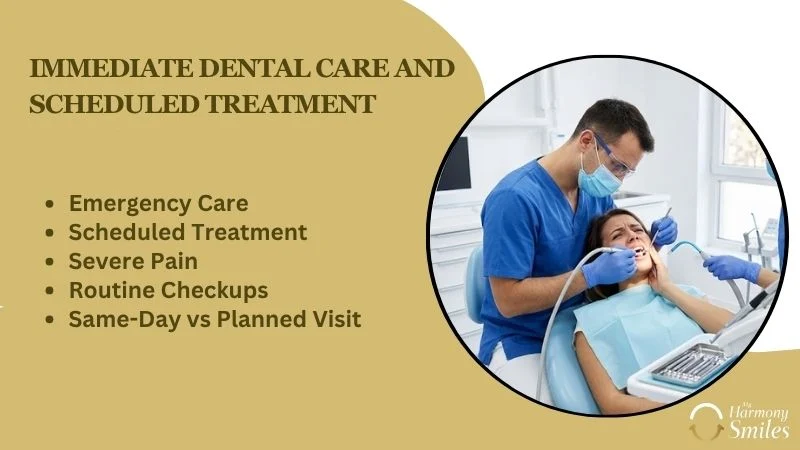
To make the right decision, it helps to clearly define both categories of dental care.
What Is Immediate Dental Care?
Immediate or emergency dental care refers to same-day or urgent treatment for oral health issues that cannot wait. The focus is on relieving severe pain, stopping infection, preserving teeth, and managing trauma.
Many dental offices reserve time in their daily schedules for emergency patients. A dental emergency is any oral health problem that requires immediate attention to stop bleeding, relieve severe pain, or treat a spreading infection.
The American Dental Association defines dental emergencies as potentially life-threatening diagnoses requiring immediate treatment.
Common situations requiring immediate care include:
- Knocked-out tooth
- Severe toothache that does not respond to over-the-counter pain relievers
- Dental abscess or signs of infection
- Facial swelling
- Uncontrolled bleeding
- Broken tooth causing severe pain
What Is Scheduled Dental Treatment?
Scheduled or routine dental treatment involves planned appointments booked in advance. These visits focus on preventive, restorative, or cosmetic care that is not urgent.
Examples include routine exams, dental cleaning and exams, fillings, crowns, and cosmetic procedures. Mild tooth sensitivity or a small chip without pain can often wait for a scheduled visit.


Quick Comparison Table: Emergency vs. Scheduled Dental Care
| Situation | Immediate Care Needed? | Scheduled Visit Acceptable? |
| Knocked-out tooth | Yes | No |
| Severe toothache (waking you from sleep) | Yes | No |
| Facial swelling | Yes | No |
| Dental abscess | Yes | No |
| Broken tooth with severe pain | Yes | No |
| Lost crown without pain | Usually No | Yes |
| Mild tooth sensitivity | No | Yes |
| Routine cleaning | No | Yes |
| Cosmetic concerns | No | Yes |
| Minor chipped tooth without pain | Depends | Usually Yes |
Signs You Need Immediate Dental Care
Certain symptoms should never be ignored. If you experience any of the following, you likely need urgent dental care and should contact an emergency dentist right away.
Severe or Persistent Tooth Pain
A toothache that prevents you from sleeping, does not respond to over-the-counter pain relievers, or involves sharp, throbbing pain requires prompt evaluation. Possible causes include deep decay, infection, an abscess, or nerve damage.
The ADA recommends nonsteroidal anti-inflammatory drugs (NSAIDs) taken with or without acetaminophen as first-line treatments for managing acute dental pain. However, medication is only a temporary measure; you still need professional treatment.
Facial Swelling or Swollen Gums
Swelling often indicates an infection that can spread to surrounding tissues. If you experience swelling accompanied by fever, difficulty swallowing, or difficulty breathing, seek emergency dental care immediately. These can become life-threatening quickly.
Knocked-Out Tooth
A knocked-out tooth is a true dental emergency with a limited time window for saving it. You have the best chance of successful re-implantation if you reach emergency care within 30 minutes.
Re-implantation within 10 to 15 minutes offers the highest success rate. The tooth may still be saved within an hour, but the sooner you act, the better.
First-aid steps for a knocked-out tooth:
- Pick up the tooth by the crown only (the white part, not the root)
- Rinse it gently with water; do not scrub or dry it
- Place it back in the socket if possible, or keep it moist in milk or your own saliva
- Seek treatment immediately
Cracked, Broken, or Fractured Tooth
A broken tooth that causes severe pain, has exposed nerves, or has sharp edges that could injure your tongue or cheek requires urgent care.
Without treatment, the crack can deepen, leading to infection or tooth loss. A tooth that is cracked and causing severe pain may need root canals or even tooth extraction if the damage is too extensive.
Uncontrolled Bleeding
Bleeding from trauma, extraction complications, or sports injuries that does not stop with pressure requires immediate attention. If bleeding continues, visit an emergency room.
Dental Abscess or Signs of Infection
A dental abscess is a pocket of pus caused by a bacterial infection. Symptoms include a pimple-like bump on the gums, pus drainage, a bad taste in the mouth, severe pain, swelling, and fever.
Abscesses can spread to other parts of the body if untreated. Treatment typically involves draining the pus and eliminating the source of infection, which may require a root canal procedure or extraction.
Dental Problems That Can Usually Wait for a Scheduled Appointment
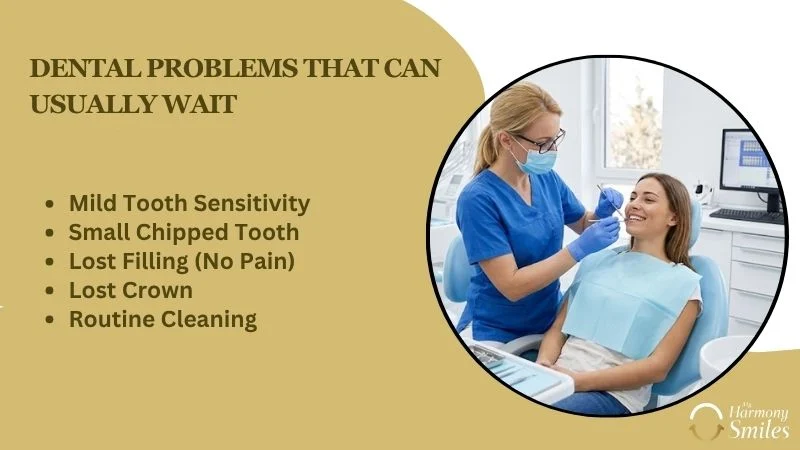
Not every dental issue requires immediate care. Understanding which problems can wait can save you unnecessary stress and an after-hours trip to the dentist.
Mild Tooth Sensitivity
Sensitivity to hot, cold, or sweet foods is usually not an emergency. It may be caused by worn enamel, minor cavities, or gum recession. Schedule a routine appointment to have it evaluated.
Small Chipped Tooth Without Pain
A minor chip that does not cause pain or sensitivity is primarily a cosmetic concern. It can wait for a scheduled visit, though you should still have it evaluated to prevent further damage.
Lost Filling Without Severe Symptoms
If you lose a filling but are not in significant pain, you can usually wait for a regular appointment. In the meantime, avoid sticky or hard foods and keep the area clean.
A lost filling may eventually require emergency dentistry if it becomes painful or leaves the tooth exposed.
Lost Crown Without Pain
A lost crown that is not causing discomfort can often wait for a scheduled appointment. However, it is important to get it replaced soon to protect the underlying tooth from damage.
Routine Preventive Care
Regular checkups, cleanings, and X-rays are essential for maintaining oral health but are not urgent. Schedule these at your convenience.
Is Your Toothache an Emergency? How to Tell
How do you know if your toothache qualifies as immediate dental care vs scheduled treatment? Use this symptom-based decision framework:
Emergency Toothache Signs
- Severe pain that does not respond to over-the-counter pain relievers
- Swelling in your face or gums
- Fever
- Difficulty eating or sleeping
- Pain that wakes you from sleep
- Bad taste or odor indicating infection
Usually Non-Emergency Toothache Signs
- Mild discomfort
- Occasional sensitivity to temperature changes
- Manageable symptoms that improve with home care
If your symptoms worsen or do not improve within a day or two, it is time to call your dentist.
What to Do Before Seeing the Dentist
While waiting for your appointment, there are steps you can take to manage pain and protect your oral health.
For Severe Toothaches
- Rinse your mouth with warm salt water
- Apply a cold compress to the outside of your cheek
- Take over-the-counter pain relievers as directed
- Do not place aspirin directly on your gums; this can cause tissue damage
For Knocked-Out Teeth
- Preserve the tooth properly (as described above)
- Seek care immediately
For Broken Teeth
- Save any fragments
- Rinse your mouth with warm water
- Avoid chewing on the affected side
For Swelling
- Apply a cold compress to reduce swelling
- Contact your dentist immediately; do not wait
What Happens If You Delay Emergency Dental Treatment?
Delaying treatment for a dental emergency can have serious consequences:
- Infection spread: A small infection can become a life-threatening abscess
- Tooth loss: A cracked tooth that could have been saved may need extraction
- More extensive treatment: A simple filling may become a root canal
- Higher costs: Emergency treatment delayed often costs more
- Increased pain: What starts as manageable discomfort can become severe
- Impact on overall health: Oral infections have been linked to heart disease and other systemic conditions
Emergency Dentist vs. Emergency Room: Where Should You Go?
This is a common point of confusion. Most dental emergencies require specialized dental equipment and treatment that hospitals are not designed to provide.
Visit an Emergency Dentist For:
- Toothaches
- Abscesses
- Cracked or broken teeth
- Broken restorations (crowns, fillings)
- Dental trauma
Visit the ER For:
- Difficulty breathing
- Severe facial swelling spreading toward your throat
- Serious facial trauma
- Uncontrolled bleeding
- Signs of a heart attack (jaw pain accompanied by chest pain)
ERs generally do not provide definitive dental treatment. They can manage life-threatening symptoms and may prescribe antibiotics or pain medication, but you will still need to see a dentist for definitive care.
Dental Emergencies in Children: When Parents Should Act Quickly
Children are prone to dental injuries from sports, falls, and everyday activities. Parents should seek immediate care if their child experiences:
- A knocked-out permanent tooth (baby teeth cannot be re-implanted)
- Facial swelling
- Trauma from sports or falls
- Severe pain
- Broken teeth
The American Academy of Pediatric Dentistry emphasizes that availability of after-hours emergency care is an important aspect of continuously accessible care provided through a dental home.
How to Reduce Your Risk of Dental Emergencies
Prevention is always better than treatment. Reduce your risk of dental emergencies by:
- Scheduling regular dental cleaning and exams to catch problems early
- Wearing a mouthguard during sports and physical activities
- Avoiding chewing hard objects like ice, popcorn kernels, and hard candy
- Addressing cavities early before they become severe
- Treating teeth grinding (bruxism) with a nightguard
- Maintaining good oral hygiene; brushing twice daily and flossing daily
Frequently Asked Questions
What qualifies as a dental emergency?
A dental emergency is any oral health issue requiring immediate attention to stop bleeding, relieve severe pain, save a tooth, or treat a spreading infection. This includes knocked-out teeth, severe toothaches, facial swelling, and dental abscesses.
Can a cracked tooth wait until tomorrow?
If the crack causes severe pain, has exposed nerves, or has sharp edges, seek immediate care. A small crack without pain can often wait for a scheduled appointment.
How long can I wait with a toothache?
If your toothache is mild and manageable with over-the-counter pain relievers, you can wait a day or two. However, if the pain is severe, wakes you from sleep, or is accompanied by swelling or fever, seek immediate care.
Is facial swelling always a dental emergency?
Yes. Facial swelling often indicates infection that can spread to other parts of your body. If swelling is accompanied by difficulty breathing or swallowing, go to the ER immediately.
Should I go to the ER for dental pain?
Only if you have difficulty breathing, severe facial swelling, serious facial trauma, or uncontrolled bleeding. For most dental emergencies, an emergency dentist is the appropriate choice.
Can a lost filling wait for a regular appointment?
If there is no pain, a lost filling can usually wait for a scheduled appointment. However, if the tooth becomes sensitive or painful, it may require urgent care.
Conclusion
Knowing the difference between immediate dental care vs scheduled treatment can save you pain, protect your smile, and prevent minor issues from escalating into serious problems.
Seek immediate care when you experience severe pain, infection, swelling, trauma, bleeding, or any symptom that puts your tooth at risk of being lost. Schedule routine treatment when your concerns are preventive, cosmetic, or mild and not progressive.
If you are ever unsure whether your symptoms require urgent attention, do not hesitate to call your dentist. Prompt evaluation can protect both your oral health and your overall well-being.
At My Harmony Smiles, we reserve time for emergency dentistry and are here to help when you need us most.
Contact us today if you are experiencing a dental emergency or if you simply want to schedule a routine dental cleaning and exams to keep your smile healthy.