

If you wear implant dentures, you might wonder whether you need to remove them before bed or if you can keep them in all night. The answer depends on what type of implant dentures you have.
Fixed implant dentures are designed to stay in your mouth 24/7, including while you sleep, but removable implant dentures should be taken out each night to protect your oral health.
Many people find sleeping with dentures convenient, but the rules are different for implant-supported options compared to traditional dentures. Fixed versions work like natural teeth and don’t need removal.
Removable versions clip onto implants but benefit from nightly breaks to let your gums rest and recover.
Understanding the difference between these types helps you make the right choice for your mouth. Knowing when to wear your dentures overnight and when to remove them can prevent gum problems, infections, and discomfort.
The care routine you follow affects how long your dentures last and how healthy your mouth stays.
Key Takeaways
- Fixed implant dentures stay in place all the time while removable ones should be taken out at night
- Removing removable dentures prevents gum irritation, bacterial growth, and oral infections
- Proper cleaning and regular dental checkups keep your implant dentures working well for years
Learn the best practices for sleeping with implant dentures and keeping your smile healthy
Understanding Implant Dentures
Implant dentures use dental implants as anchors to hold replacement teeth in your mouth. They provide more stability than traditional dentures and function more like natural teeth.
What Are Implant-Supported Dentures?
Implant-supported dentures are replacement teeth that attach to titanium posts surgically placed in your jawbone. Instead of resting on your gums like traditional dentures, these dental implants create a strong foundation for your new teeth.
A dentist or oral surgeon places the implants into your jawbone during a minor surgical procedure. The titanium posts then fuse with your bone over several months. This process creates a permanent base that won’t shift or slip when you eat or talk.
Implant overdentures typically require at least two implants to support a full arch of teeth. Your dentist may recommend more implants depending on your bone density and overall oral health.
The result is a restoration that looks and feels more natural than conventional dentures.
Types: Removable vs Fixed Implant Dentures

You can choose between two main types of implant-supported dentures based on your needs and preferences.
Removable implant-supported dentures clip onto your dental implants but you can take them out yourself each day. These implant overdentures snap into place over special attachments connected to the implants. You’ll remove them for cleaning and before bed.
Fixed implant dentures stay in your mouth permanently and only your dentist can remove them. These are also called hybrid or screw-retained dentures. They function just like natural teeth and remain in place at all times, including while you sleep.
Fixed options require more implants than removable ones. They typically need four to six implants per arch to provide adequate support.
How Implant Overdentures Differ From Traditional Dentures
Traditional dentures sit directly on your gums and rely on suction or adhesive to stay in place. They often slip during eating or speaking and can feel bulky in your mouth.
Implant overdentures attach to dental implants for superior stability. You won’t need messy adhesives or worry about your teeth moving unexpectedly. The implants also help preserve your jawbone by providing stimulation that prevents bone loss.
Traditional removable dentures require replacement every five to seven years as your jaw shape changes. Implant-supported options last much longer because the implants maintain your bone structure.
You’ll also enjoy better chewing ability with implant dentures compared to conventional partial dentures or full dentures.
Can You Sleep with Implant Dentures?
Whether you can sleep with implant dentures depends on the type you have. Fixed implant dentures stay in your mouth all the time, including at night.
Removable implant-supported dentures should typically be taken out before bed to protect your gum health.
Sleeping with Fixed Implant Dentures
Fixed implant dentures are designed to stay in place 24/7, just like your natural teeth. You don’t need to remove them at night.
These dentures attach permanently to your dental implants with screws. Only your dentist can take them out during regular checkups and cleanings. This means you’ll sleep with dentures in without any issues.
Your fixed dentures won’t shift or move while you sleep. They provide constant support and maintain your facial structure overnight.
You still need to brush and floss around your implants before bed. Use a soft toothbrush and clean underneath the denture bridge where it meets your gums. A water flosser works well to remove food particles from hard-to-reach areas.
Sleeping with Removable Dentures
Most dentists recommend removing your removable implant-supported denture before going to sleep. Taking them out at night gives your gums time to rest and recover.
Sleeping with removable dentures can lead to several problems:
- Gum inflammation and irritation
- Bacterial and fungal infections
- Bad breath
- Increased plaque buildup
- Reduced denture lifespan
Your snap-on dentures clip onto implants but come out easily. Remove them each night, brush them with a soft toothbrush, and soak them in denture solution or water. Clean your gums and the implant attachments with a soft brush before bed.
If you accidentally sleep with your removable dentures occasionally, it won’t cause serious harm. However, making it a habit increases your risk of oral health problems.
First Night Protocols After Denture Placement
Your dentist may ask you to keep your new dentures in for the first 24 to 48 hours after placement. This initial period helps reduce swelling and allows your gums to adjust to the new prosthetic.
Follow your dentist’s specific instructions for the first night. Some patients need to wear their implant overdenture continuously, while others can remove it right away.
Your healing process and the type of procedure you had will determine the best approach.
After the initial healing period, switch to your regular nighttime routine. Remove removable dentures at night and keep fixed dentures in place. Contact your dental office if you experience unusual pain, swelling, or bleeding during the first few days.
Risks and Consequences of Sleeping with Dentures
Wearing dentures overnight can lead to several health problems that affect your mouth and body. These issues range from fungal infections and gum irritation to more serious concerns like bone loss and respiratory infections.

Denture Stomatitis and Oral Infections
Denture stomatitis is one of the most common problems you face when sleeping with dentures. This condition happens when yeast called Candida builds up under your dentures, causing red, swollen, and painful gums.
Wearing dentures 24/7 promotes bacterial and fungal growth because your mouth stays warm and moist all night. The dentures trap food particles and plaque against your gum tissue, creating the perfect environment for infections to develop.
When you don’t remove your dentures at night, you give these harmful organisms constant access to your gums. This can lead to oral thrush, bad breath, and uncomfortable sores. Your risk increases even more if you have diabetes or dry mouth.
Gum Health and Tissue Wellness
Your gums need time to rest and recover from the daily pressure of wearing dentures. When you sleep with them in, you deny your soft tissues this important recovery period.
The constant pressure from dentures causes gum irritation and inflammation. Your tissue doesn’t get enough oxygen when covered by dentures all night, which slows down natural healing processes.
Removing your dentures before bed reduces friction and compression on your gums. This nightly break helps maintain healthy tissue and prevents chronic soreness. Studies show that letting your gums rest overnight is a best practice supported by dental experts.
Bone Resorption and Oral Structure Changes
Continuous pressure from dentures can speed up bone loss in your jaw. This process, called bone resorption, happens naturally over time but gets worse when you wear dentures constantly.
The ongoing stress on your jawbone affects how well your dentures fit. As bone loss progresses, your dentures may become loose and uncomfortable, requiring adjustments or replacements sooner than expected.
This change in your oral structure can make it harder to eat and speak properly. You might notice gaps developing between your dentures and gums, which allows food to get trapped more easily.
Increased Systemic Health Risks
Research suggests that sleeping with dentures may increase your risk of developing pneumonia, especially if you’re an older adult. Bacteria from your mouth can travel to your lungs while you sleep, potentially causing respiratory infections.
The connection between oral health and overall health means problems in your mouth can affect your whole body. Infections that start in your gums can spread and contribute to other health complications.
Your immune system works harder when dealing with constant oral infections. This ongoing stress may make you more vulnerable to other illnesses and slow down your body’s ability to fight off disease.
Benefits and Drawbacks of Overnight Denture Wear
While you can technically sleep with dentures in, this decision comes with both advantages and risks that affect your oral health. Understanding both sides helps you make the best choice for your situation.
Potential Advantages of Leaving Dentures In
Sleeping with dentures in offers certain practical benefits that matter to some wearers.
You maintain your facial structure throughout the night, which prevents the sunken appearance that can occur when dentures are removed. This can boost your confidence if you share a bedroom with someone.
Your dentures also protect your remaining gum tissue and help keep your teeth from shifting position overnight. For people who have trouble chewing or swallowing, wearing dentures at night can help prevent nutritional problems by making it easier to eat during the day.
Some people find comfort in keeping their dentures in place, especially during the adjustment period. The familiar feeling helps you sleep better if removal causes anxiety or discomfort.
Drawbacks and Expert Recommendations
Most dentists advise against sleeping with dentures because the risks often outweigh the benefits. When you sleep with dentures, you create a warm and moist environment where bacteria and yeast grow quickly.
This increases your risk of developing denture stomatitis, a fungal infection that causes red and swollen gums. You face higher chances of gum disease, tooth decay, and oral infections when wearing dentures for more than 24 hours straight.
Ill-fitting dentures can rub against your gums during sleep and create painful sores. Your facial muscles relax at night, which can cause dentures to shift or become loose over time.
Experts recommend removing your dentures before bed to let your gums rest and recover, which supports better long-term oral health.
Oral Hygiene and Nightly Care Routine
Proper cleaning habits protect your oral health whether you have removable or fixed implant dentures. The right routine prevents infections, keeps your gums healthy, and helps your dental implants last longer.
Nighttime Cleaning for Removable Implant Dentures
If you have a removable implant-supported denture, you should take it out every night to clean it properly. Remove your dentures gently without forcing them to avoid damaging the clips or attachments.
Use a soft-bristled brush and non-abrasive denture cleanser to scrub away food particles and plaque. Brush all surfaces of your dentures including the areas that attach to the implants.
After brushing, soak your dentures overnight in a denture-cleaning solution or plain water to keep them moist.
While your dentures soak, brush your gums, tongue, and the roof of your mouth with a soft toothbrush. Pay special attention to cleaning around the dental implants using an interdental brush or water flosser. This removes bacteria that can cause gum inflammation or infections.
Rinse your dentures thoroughly in the morning before putting them back in your mouth.
Care Tips for Fixed Implant Dentures
Your fixed implant dentures stay in your mouth all the time, so cleaning around the implants requires special attention. Brush your dentures twice daily using fluoride toothpaste just like you would natural teeth.
Use these tools to clean hard-to-reach areas:
- Water flossers to flush out debris between teeth and around implants
- Floss threaders to get dental floss under the bridge
- Interproximal brushes to clean between teeth and implant posts
Focus on the areas where your dentures meet your gums since plaque builds up quickly there. Schedule regular professional cleanings every six months so your dentist can monitor your implants and remove stubborn buildup.
Maintaining Gum and Bone Health
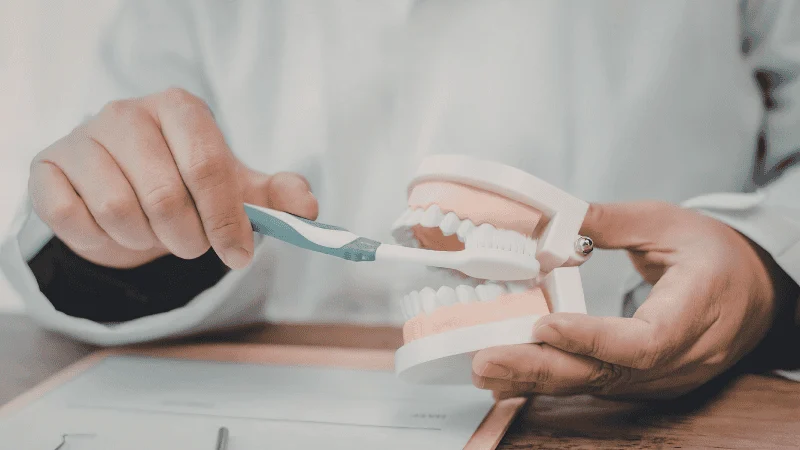
Healthy gums are essential for keeping your dental implants stable and functional. Removing removable dentures at night gives your gum tissue time to rest and recover from daily pressure.
Good oral hygiene prevents common problems that threaten gum health:
- Bacterial infections that cause swelling and bleeding
- Fungal growth that leads to oral thrush
- Bone loss around implants from chronic inflammation
Watch for warning signs like red or sore gums, bad breath that won’t go away, or dentures that feel loose. These symptoms mean you need to see your dentist right away. Eating a balanced diet and staying hydrated also support gum and bone health around your implants.
When to Consult Your Dentist
Regular check-ups help catch problems early, but certain warning signs mean you need to see your dentist right away. Your denture care routine should match your specific needs and implant type.
Signs of Complications from Overnight Wear
Contact your dentist immediately if you notice persistent redness or swelling around your implants or gums. These symptoms could point to infection or inflammation that needs professional treatment.
Bad breath that doesn’t go away after cleaning your dentures may signal bacterial buildup or gum disease. Your general dentist can identify the cause and recommend the right treatment.
Watch for any looseness in your dentures or implants. If your dentures feel less stable than usual or you notice movement when eating or speaking, schedule an appointment soon. Loose implants can lead to bone loss if not addressed quickly.
Pain around the implant sites, especially when sleeping with dentures, should never be ignored. Discomfort might mean your dentures need adjustment or that an infection is developing.
White patches, sores, or unusual bleeding in your mouth are other red flags. These could indicate denture stomatitis or other conditions that require immediate care.
Personalizing Your Denture Nighttime Routine
Your dentist can create a custom care plan based on whether you have fixed or removable implant dentures. They’ll consider your oral health history, lifestyle, and any medical conditions that affect your mouth.
Schedule a consultation to discuss your specific situation. Your dentist will evaluate your denture fit, check your implant stability, and review your nighttime denture care habits.
Some people need different care approaches due to sleep apnea, dry mouth, or difficulty handling dentures. Your dentist can suggest tools like special brushes, cleaning solutions, or soaking containers that work best for you.
Plan follow-up visits every six months or as recommended. These appointments let your dentist monitor your implants, adjust your dentures if needed, and update your care routine as your needs change.
Frequently Asked Questions
The type of implant dentures you have determines whether you should remove them at night. Fixed dentures stay in place all the time, while removable snap-in options need nightly removal to keep your mouth healthy.
Is it safe to wear implant-supported dentures overnight?
It depends on what type you have. Fixed implant-supported dentures are designed to stay in your mouth all the time, including while you sleep. They work just like natural teeth and don’t need to be removed.
Removable implant-supported dentures should come out at night. Sleeping with removable dentures can promote bacterial growth and cause gum problems.
Your dentist will tell you which type you have and what to do at bedtime.
Do I need to take snap-in dentures out every night, or can they stay in?
You should take snap-in dentures out every night. These removable dentures clip onto implants but are meant to be removed daily for cleaning.
Removing them gives your gums time to rest and heal. It also lets you clean both the dentures and the area around your implants properly.
Taking dentures out reduces pressure on the implants and helps your soft tissue stay healthy.
How often should implant dentures be removed for cleaning?
Fixed implant dentures never need to be removed by you. You clean them twice a day while they stay in your mouth, just like brushing natural teeth.
Removable implant dentures should come out every night. Clean them with a soft brush and non-abrasive cleanser, then soak them overnight.
You also need to clean around the dental implants using an interdental brush or water flosser after removing the dentures.
What problems can happen if I leave snap-on dentures in while sleeping?
Wearing removable dentures overnight increases your risk of infections like denture stomatitis and oral thrush. These happen when bacteria and fungi build up under the dentures.
Your gums can become red, swollen, and sore from constant pressure. This irritation prevents your tissues from getting oxygen and healing properly.
You might also develop bad breath and experience faster bone loss over time. The dentures themselves may wear out faster if you don’t give them a nightly break.
How do you properly remove snap-in (implant) dentures at home?
Start by washing your hands thoroughly. Hold the denture firmly with both hands and gently rock it back and forth to release it from the attachment points.
Pull straight up or down depending on whether it’s an upper or lower denture. Don’t use excessive force or twist the denture, as this could damage the attachments.
Once removed, immediately clean the denture with a soft brush. Then clean your gums, tongue, and the area around your implants.
Are fixed implant-supported dentures meant to be worn 24/7?
Yes, fixed implant-supported dentures stay in your mouth all the time. These are also called hybrid or screw-retained dentures, and only your dentist can remove them.
They function like natural teeth and provide continuous support and comfort. You don’t take them out at night or for cleaning.
You maintain them by brushing twice daily and using floss threaders or water flossers to clean around the implants. Regular dental visits ensure they stay in good condition.