


Wisdom tooth extraction is one of the most common oral surgery procedures performed today. If your dentist has recommended removing one or more wisdom teeth, you likely have questions about what happens next.
- How long will recovery take?
- How much pain should you expect?
- What can you eat?
- Most importantly, how can you ensure a smooth, complication-free healing process?
Understanding what to expect after your procedure can significantly reduce anxiety and help you prepare for a comfortable wisdom tooth extraction recovery.
This complete guide covers everything you need to know about wisdom tooth extraction recovery; from the moment you leave the dental chair to full healing.
You will learn about the recovery timeline, pain management, foods to eat and avoid, dry socket prevention, and when to contact your dentist.
Table of Content
- Why Wisdom Teeth Sometimes Need to Be Removed
- How Tooth Extractions Can Prevent Future Dental Issues
- What Happens During a Wisdom Tooth Extraction Procedure
- What to Eat After Wisdom Tooth Extraction
- How to Keep the Extraction Site Clean
- Recovery Timeline: How Long Does Healing Take?
- When to Contact Your Dentist After a Wisdom Tooth Extraction
- Why Patients Trust My Harmony Smiles for Wisdom Tooth Extractions
- Frequently Asked Questions About Wisdom Tooth Extraction
Why Wisdom Teeth Sometimes Need to Be Removed

Wisdom teeth, also known as third molars, typically emerge between ages 17 and 25. While some people have no issues with their wisdom teeth, many require extraction to prevent or address complications.
Common reasons wisdom teeth are removed include:
- Impacted teeth: Wisdom teeth that do not have enough room to emerge properly can become trapped in the jawbone or gums. Impacted teeth can cause pain, infection, and damage to adjacent teeth.
- Overcrowding: When wisdom teeth try to emerge, they can push other teeth out of alignment, undoing years of orthodontic work.
- Infection and decay: Partially erupted wisdom teeth create pockets where bacteria can collect, leading to gum infection, decay, and even abscesses.
- Gum disease: The area around wisdom teeth is difficult to clean, making it susceptible to periodontal disease.
- Damage to neighboring teeth: Wisdom teeth can press against adjacent molars, causing root resorption or decay.
- Cysts or tumors: In rare cases, fluid-filled cysts can form around impacted wisdom teeth, damaging the jawbone and nearby teeth.
Early removal is often recommended because the roots are not fully formed, making the procedure easier and recovery faster.
How Tooth Extractions Can Prevent Future Dental Issues
Tooth extraction is more than a quick fix; it’s a strategic investment in your long-term oral health and a foundation of preventive dentistry.
- Reduced Risk of Infection: Removing wisdom teeth eliminates the risk of recurrent infections around partially erupted teeth. It also prevents bacteria from spreading to other areas of your mouth.
- Better Tooth Alignment: By removing teeth that would otherwise crowd your smile, you protect the alignment of your remaining teeth.
- Improved Oral Hygiene: Without hard-to-reach wisdom teeth, brushing and flossing become more effective, reducing your risk of cavities and gum disease.
- Prevention of Future Dental Emergencies: Proactive removal prevents abscesses, jaw complications, and severe pain that often occur when wisdom teeth become problematic later in life.
- Enhanced Comfort and Function: Many patients report easier chewing, speaking, and sleeping after wisdom tooth extraction.
What Happens During a Wisdom Tooth Extraction Procedure
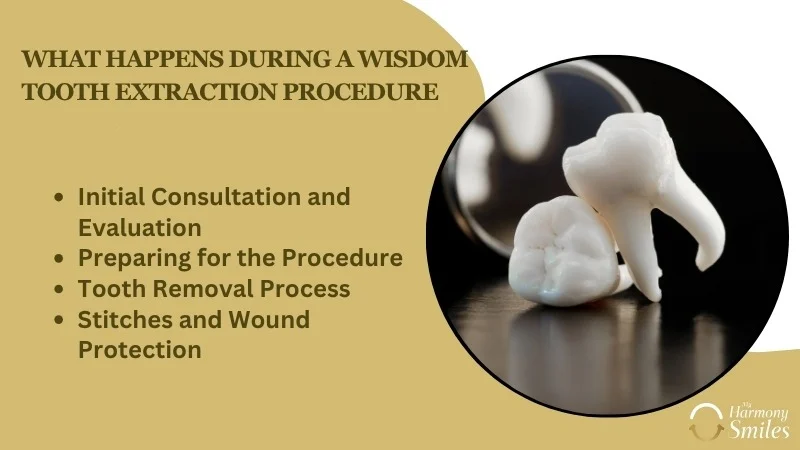
Understanding the procedure can help ease any anxiety you may feel.
- Initial Consultation and Evaluation: Your dentist will examine your mouth, take digital X-rays or a 3D scan to assess the position of your wisdom teeth, and discuss the best approach for removal.
- Preparing for the Procedure: Depending on the complexity of your case and your anxiety level, your dentist may recommend local anesthesia, nitrous oxide, oral sedation, or IV sedation. The goal is to keep you comfortable and pain-free throughout the procedure.
- Tooth Removal Process: For a simple extraction, the tooth is loosened and removed. For impacted wisdom teeth, your dentist may need to make a small incision in the gum and remove bone to access the tooth. In some cases, the tooth is divided into sections for easier removal.
- Stitches and Wound Protection: After the tooth is removed, the site is cleaned. Your dentist may place dissolvable stitches to help the wound heal properly. Gauze is placed over the extraction site to control bleeding and promote blood clot formation.
Immediately After the Extraction
The first few hours after your procedure are critical for setting the stage for smooth healing.
- Bite Down on Gauze: Your dentist will place gauze over the extraction site. Bite down firmly for 30 to 60 minutes to control bleeding. Change the gauze as needed until bleeding stops.
- Blood Clot Formation: A blood clot will form in the socket where the tooth was removed. This clot is essential for protecting the underlying bone and nerves. It is the foundation of healing, and you must protect it at all costs.
- Rest: Plan to rest for the remainder of the day. Avoid talking too much and keep your head elevated to reduce swelling.
- Dissolvable Stitches: If your dentist used stitches, they will dissolve on their own within 7 to 10 days. Do not try to remove them.
The First 24 Hours After Wisdom Tooth Removal
The first 24 hours are the most critical for protecting the blood clot and minimizing complications.
- Rest and Recovery: Take it easy. Avoid any physical activity that could increase blood pressure and cause bleeding.
Activities to Avoid
- Rinsing or spitting forcefully: This can dislodge the blood clot.
- Drinking through a straw: The suction can pull the clot out of the socket.
- Smoking: Tobacco use significantly increases the risk of dry socket.
- Eating hard or crunchy foods: Stick to soft foods only.
- Recommended Foods: Stick to liquids and very soft foods like yogurt, applesauce, pudding, smoothies (eat with a spoon, not a straw), and broth.
- Managing Swelling: Apply an ice pack to the outside of your cheek for 20 minutes on, then 20 minutes off during the first 24 hours. This helps minimize swelling and bruising.
Managing Pain, Swelling, and Discomfort
Here is what you need to know about the possibility of discomfort, swelling, pain – and what to expect.
Normal Recovery Symptoms
- Mild to moderate pain that peaks within the first 48 hours
- Swelling of the cheeks and jaw that typically peaks around day 2-3
- Jaw stiffness and soreness
- Bruising around the jaw that may last up to 2 weeks
- A small amount of blood in your saliva for the first 24 hours
Pain Management Tips
- Take prescribed or over-the-counter pain medication as directed
- Apply ice packs for the first 48 hours, then switch to warm compresses
- Keep your head elevated, even while sleeping
Cold vs Warm Compresses
- First 48 hours: Use cold compresses (ice packs) to reduce swelling
- After 48 hours: Switch to warm compresses to promote blood flow and reduce stiffness
Warning Signs to Watch For
- Pain that worsens after 3-5 days instead of improving
- A foul taste or bad odor from the extraction site
- Excessive bleeding that does not stop with pressure
- Fever or chills
- Increasing swelling after 3 days

What to Eat After Wisdom Tooth Extraction
Proper nutrition supports healing, but choosing the right foods is essential to avoid irritating the surgical site.
Best Foods During Recovery
| Phase | Recommended Foods | Foods to Avoid |
| First 24-48 Hours | Yogurt, applesauce, smoothies (spoon only), pudding, broth, Jell-O | Hot foods, crunchy foods, anything requiring chewing |
| Days 3-5 | Scrambled eggs, oatmeal, mashed potatoes, soft pasta, cottage cheese, well-cooked vegetables | Spicy foods, acidic foods, seeds, nuts |
| Days 5-7 | Soft fish, bananas, rice, soft bread without crust | Hard meats, raw vegetables, chewy foods |
| Week 2+ | Gradual return to normal diet | Popcorn, hard candies, ice (until fully healed) |
Foods to Avoid Until Fully Healed
- Crunchy foods (chips, nuts, popcorn)
- Spicy foods that can irritate the site
- Acidic foods (tomatoes, citrus)
- Hot foods and drinks (can increase bleeding)
- Alcohol and tobacco (delay healing)
How to Keep the Extraction Site Clean
Maintaining cleanliness is essential for preventing infection while protecting the blood clot.
- First 24 Hours: Do not rinse, spit, or brush near the extraction site. Allow the blood clot to form and stabilize.
- After 24 Hours: Gently rinse your mouth with warm salt water (1/2 teaspoon salt in 8 ounces of warm water) several times a day. Do not swish forcefully; let the water fall out of your mouth naturally.
- Brushing: You can brush your teeth the day after surgery, but avoid the extraction site. Be gentle and do not spit; let the toothpaste and water drain from your mouth.
- Returning to Normal Oral Hygiene: As healing progresses, you can gradually resume normal brushing and flossing, being careful around the surgical site.
Recovery Timeline: How Long Does Healing Take?
Every patient heals differently, but here is a general timeline for wisdom tooth extraction healing time.
| Timeframe | What to Expect |
| First 24 Hours | Blood clot forms. Rest, ice packs, soft foods. Minimal activity. |
| Days 2-3 | Swelling peaks. Pain is most noticeable. Continue soft foods and rest. |
| Days 4-7 | Swelling and pain begin to subside significantly. You may return to work or school. |
| Week 1-2 | Gums are mostly healed. Stitches dissolve. Most patients feel much better. |
| 2-4 Weeks | Surgical site continues to heal beneath the surface. |
| Few Months | Full bone healing occurs beneath the gums. |
Factors that can affect your recovery time:
- Number of teeth removed (more teeth = longer recovery)
- Complexity of the extraction (impacted teeth take longer)
- Your age (younger patients tend to heal faster)
- Your overall health
- Smoking status (smokers heal slower)
- How well you follow aftercare instructions
Most people need 3 to 4 days off from work or school, but this varies depending on the complexity of the extraction and your individual healing process.
When to Contact Your Dentist After a Wisdom Tooth Extraction
While some discomfort is normal, certain symptoms require immediate attention.
Contact your dentist if you experience:
- Excessive bleeding that does not stop with firm pressure
- Severe pain that worsens after 3-5 days (possible dry socket)
- Signs of infection: fever, chills, or increasing swelling
- Swelling that continues to worsen after 3 days
- Difficulty swallowing or breathing (seek emergency care immediately)
- A foul taste or bad odor from the extraction site
- Numbness that does not resolve
Why Patients Trust My Harmony Smiles for Wisdom Tooth Extractions
At My Harmony Smiles, we understand that wisdom tooth extraction can feel daunting. Our experienced team combines advanced techniques with compassionate care to ensure your procedure is as comfortable as possible.
We take the time to explain your treatment options, answer all your questions, and provide detailed aftercare instructions. Our goal is not just to remove your wisdom teeth but to support you through a smooth, stress-free recovery.
Frequently Asked Questions About Wisdom Tooth Extraction
How painful is wisdom tooth removal?
You should not feel pain during the procedure because of anesthesia. Afterward, you will experience some discomfort, but this can be managed with prescribed or over-the-counter pain medication. Most patients find the pain peaks around day 2-3 and then steadily improves.
How long does swelling last?
Swelling typically peaks on day 2 or 3 after surgery and then begins to subside. Most swelling resolves within 5 to 7 days. Using ice packs during the first 48 hours can significantly reduce swelling.
Can I brush my teeth after an extraction?
You can brush your teeth the day after surgery, but avoid the extraction site. Be gentle and do not spit; let the water drain from your mouth naturally.
What foods are safest during recovery?
Soft foods like yogurt, applesauce, mashed potatoes, scrambled eggs, and smoothies (spoon only) are best for the first few days. Gradually introduce semi-soft foods as you heal.
How can I avoid dry socket?
Dry socket occurs when the blood clot is dislodged from the socket. To prevent it:
- Do not smoke or use tobacco products
- Do not drink through a straw
- Do not spit forcefully
- Avoid rinsing vigorously for the first 24 hours
- Follow all aftercare instructions carefully
When can I return to work or school?
Most people take 3 to 4 days off, but this depends on the complexity of your extraction and how you feel. Some patients return sooner, while others need a full week.
Are wisdom teeth always removed?
No. Some people have enough room in their jaw for wisdom teeth to emerge without problems. However, many dentists recommend removal if there is a risk of future complications such as impaction, crowding, infection, or decay.
Restore Your Oral Health with Wisdom Tooth Extraction at My Harmony Smiles
Wisdom tooth extraction is a common and safe procedure that can prevent serious dental issues and protect your long-term oral health. While the wisdom tooth extraction recovery process requires some patience and care, understanding what to expect makes it much more manageable.
If you are experiencing pain, crowding, or other issues related to your wisdom teeth, do not wait. Schedule a consultation at My Harmony Smiles today.
Our experienced team will evaluate your situation, explain your options, and guide you through every step of the process; from diagnosis to full recovery.
Your comfort and oral health are our priorities. Contact us today to book your appointment.