Losing a tooth can feel overwhelming. Maybe you have been avoiding your favorite foods because chewing has become difficult.
Perhaps you find yourself covering your mouth when you laugh or dodging photos at family gatherings.
These are common reactions, and they are completely understandable. Missing teeth affect more than just your appearance; they impact your confidence, your ability to eat and speak comfortably, and even your long-term oral health.
The good news is that modern dentistry offers several effective solutions for replacing missing teeth.
Whether you have lost one tooth, several teeth, or all of your teeth, there is a treatment option that can restore your smile and improve your quality of life.
Understanding the process and knowing what to expect during teeth replacement can make choosing the right option much easier.
This guide walks you through everything you need to know: why replacing missing teeth matters, the available options, what each procedure involves, recovery expectations, costs, and how to choose the best solution for your unique needs.
Table of Content
- Why Replacing Missing Teeth Is Important
- What Are Your Tooth Replacement Options?
- Which Tooth Replacement Option Is Right for You?
- Budget and Long-Term Value
- The Tooth Replacement Process: Step-by-Step
- What Does Recovery Feel Like?
- How Long Do Tooth Replacement Options Last?
- How Much Does It Cost to Replace Missing Teeth?
- Life After Tooth Replacement
- Frequently Asked Questions About Replacing Missing Teeth
Why Replacing Missing Teeth Is Important
Many people underestimate the consequences of leaving a missing tooth untreated. The gap may seem small, but the effects ripple through your entire mouth.
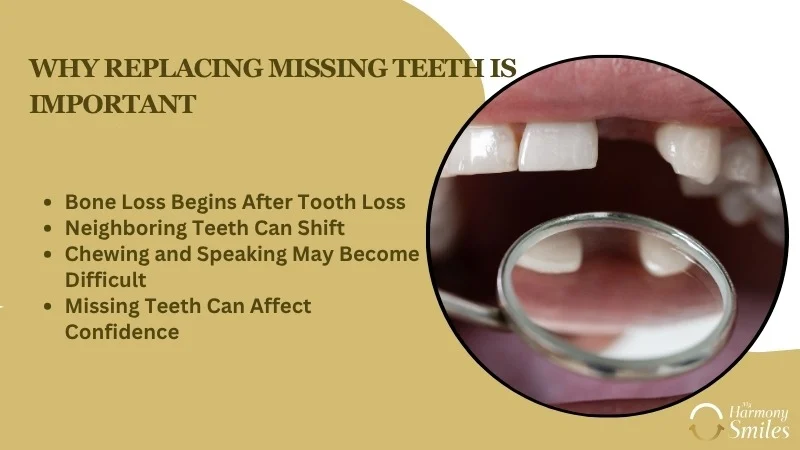
Bone Loss Begins After Tooth Loss
Your jawbone needs stimulation from tooth roots to maintain its density. When a tooth is lost, the bone in that area no longer receives this stimulation and begins to resorb (shrink).
Over time, this bone loss can change the shape of your face, causing a sunken appearance around your mouth and making you look older than you are.
Dental implants, which replace the tooth root, are the only tooth replacement option that prevents this bone loss.
Neighboring Teeth Can Shift
When a tooth is missing, the adjacent teeth naturally drift into the empty space. This shifting can cause bite misalignment, uneven wear on your remaining teeth, and difficulty cleaning areas that were previously accessible.
Over time, this can lead to additional tooth loss and more complex dental problems.
Chewing and Speaking May Become Difficult
Missing teeth can make it hard to chew certain foods, which may lead you to avoid nutritious options like fresh fruits and vegetables.
Speech can also be affected, particularly if you are missing front teeth that help form certain sounds.
Missing Teeth Can Affect Confidence
Perhaps the most personal impact is on your self-esteem. Many patients report feeling self-conscious about their smiles, avoiding social situations, and feeling less confident in professional settings.
Restoring your smile can have a significant effect on your overall quality of life.
What Are Your Tooth Replacement Options?

Modern dentistry offers three primary solutions for replacing missing teeth. Each has its own strengths, and the best choice depends on your specific situation.
| Treatment | Best For | Longevity | Appearance | Cost Range |
| Dental Implant | Single or multiple missing teeth | Lifetime (20+ years) | Most natural | Highest |
| Dental Bridge | One or several adjacent teeth | 10–15 years | Natural | Moderate |
| Denture | Multiple missing teeth or full arch | 5–10 years | Good | Lowest |
Dental Implants
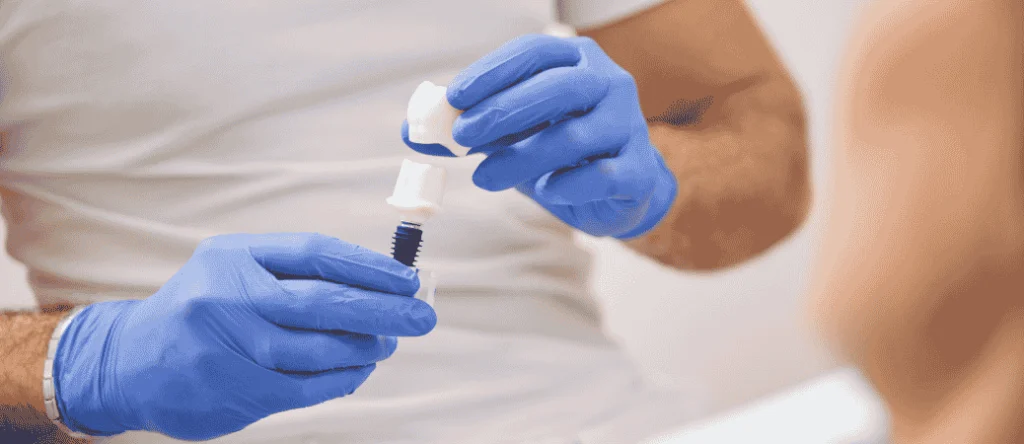
A dental implant is a small titanium post that is surgically placed into your jawbone to act as an artificial tooth root. Over several months, the bone fuses with the implant through a process called osseointegration.
Once healed, a custom-made crown is attached, creating a replacement tooth that looks, feels, and functions like a natural tooth.
Why choose implants?
- Most natural-looking replacement option
- Prevents bone loss by stimulating the jawbone
- Does not require altering adjacent healthy teeth
- Can last a lifetime with proper care
- High success rates: over 95% at 10 years
Implants may require a longer treatment timeline and higher upfront cost, but many patients find the long-term benefits well worth the investment.
Dental Bridges
A dental bridge replaces one or more missing teeth by anchoring artificial teeth to crowns placed on the adjacent natural teeth. Bridges are a faster, less invasive option than implants.
Why choose a bridge?
- Shorter treatment timeline (typically 2-3 visits)
- Lower upfront cost than implants
- Good aesthetics for front teeth
- No surgery required
Limitations:
- Requires altering healthy adjacent teeth
- Does not prevent bone loss
- Typically lasts 10–15 years before needing replacement
Dentures
Dentures are removable or permanent appliances that replace multiple missing teeth or an entire arch. They come in partial dentures (for some missing teeth) and complete dentures (for all teeth on an arch).
Why choose dentures?
- Most affordable option
- No surgery required
- Suitable for extensive tooth loss
- Can be made relatively quickly
Limitations:
- Can slip or shift during eating and speaking
- Does not prevent bone loss
- Requires nightly removal and cleaning
- Typically lasts 5–10 years before needing replacement
For patients seeking greater stability, implant-supported dentures (also called permanent dentures) anchor the denture to implants for a secure, non-removable solution.
Which Tooth Replacement Option Is Right for You?
Choosing the best option depends on several factors.
Number of Missing Teeth
- One tooth: A single implant or a bridge are both options. Implants preserve adjacent teeth and prevent bone loss, making them the preferred choice for many patients.
- Several adjacent teeth: An implant-supported bridge or multiple individual implants provide excellent stability.
- Full arch: Full-mouth dental implants (such as All-on-X) or implant-supported dentures offer secure, permanent solutions.
Bone Density and Gum Health
Implants require sufficient jawbone to support the titanium post. If you have experienced bone loss, you may still be a candidate for implants after a bone grafting procedure. Bridges and dentures do not require bone grafting.
Budget and Long-Term Value
While implants have a higher upfront cost, their longevity often makes them more cost-effective over time. A bridge may need replacement every 10–15 years, while an implant can last a lifetime.
Lifestyle and Personal Goals
Consider your appearance expectations, convenience preferences, and willingness to undergo surgery. Some patients prioritize the most natural look and feel (implants), while others prefer a faster, less invasive solution (bridges or dentures).
The Tooth Replacement Process: Step-by-Step
Understanding the process can help reduce anxiety and prepare you for what lies ahead.
Step 1: Initial Consultation and Examination
Your journey begins with a comprehensive consultation. During this visit, your dentist will:
- Review your medical and dental history
- Perform a clinical examination
- Take digital X-rays and 3D CBCT scans to assess bone density and tooth position
- Discuss your goals and concerns
This appointment helps your dentist identify the best tooth replacement option based on your oral health and objectives.
Step 2: Treatment Planning
Your dentist will present a personalized treatment plan outlining:
- Recommended procedures
- Timeline for each phase
- Cost estimates
- Insurance considerations
You will have the opportunity to ask questions and explore different options before making a decision.
Step 3: Preparatory Procedures (If Needed)
Not all patients need preparatory work, but some situations require:
- Tooth extraction: Removing damaged or decayed teeth before placing implants or bridges
- Bone grafting: Building up bone density in areas where bone has resorbed
- Sinus lift: Adding bone to the upper jaw for implant placement
- Gum disease treatment: Addressing periodontal issues before restorative work
Step 4: Placement of the Restoration
The procedure varies based on your chosen treatment.
For dental implants:
- The area is numbed with local anesthesia
- The dentist makes a small incision in the gum to expose the jawbone
- A precise hole is drilled into the bone
- The titanium implant is placed into the bone
- The gum is sutured closed
- A healing cap or temporary crown may be placed
The surgery typically takes 1-2 hours for a single implant. Most patients return home the same day.
For dental bridges:
- The adjacent teeth are prepared (enamel is removed)
- Impressions are taken
- A temporary bridge is placed
- The permanent bridge is fabricated in a lab (1-2 weeks)
- The final bridge is cemented in place
For dentures:
- Impressions are taken
- The denture is fabricated
- Fittings and adjustments are made
- The final denture is delivered
Step 5: Healing and Recovery
Recovery expectations vary by procedure.
| Treatment | Initial Recovery | Full Healing |
| Dental Implant | 3–7 days | 3–6 months (osseointegration) |
| Dental Bridge | 1–3 days | 1–2 weeks |
| Denture | Several days | Several weeks |
First 24 hours after implant surgery:
- Mild bleeding is normal; bite on gauze to control it
- Apply ice packs to reduce swelling
- Eat soft foods and avoid hot liquids
- Do not rinse, spit forcefully, or use straws
First week:
- Continue soft foods
- Take prescribed medications as directed
- Avoid strenuous activity
- Gently rinse with warm salt water after 24 hours
Long-term healing (implants):
- Osseointegration (bone fusion) takes 3–6 months
- The final crown is placed once healing is complete
- Most patients return to normal activities within a few days
Step 6: Final Restoration and Follow-Up Visits
Once healing is complete:
- For implants: The abutment and crown are attached
- For bridges: Final adjustments are made
- For dentures: Fittings ensure comfort and function
Your dentist will check your bite, evaluate comfort, and provide long-term maintenance instructions. Regular follow-up visits are essential for monitoring your restoration and maintaining oral health.


What Does Recovery Feel Like?
Recovery after tooth replacement varies depending on the type of procedure you undergo. While some discomfort is normal, modern dentistry has made the process much more comfortable than many patients expect.
Understanding what lies ahead can help you prepare and reduce any anxiety about the healing process.
Is Tooth Replacement Painful?
Modern dentistry prioritizes patient comfort. Most procedures are performed under local anesthesia, so you should not feel pain during the treatment.
Afterward, you may experience some discomfort, but this is typically mild to moderate and manageable with over-the-counter or prescribed pain medication.
For dental implants, most patients experience mild to moderate pain for a few days, with full recovery within 1-2 weeks.
How Long Does Recovery Take?
- Initial recovery: 3–7 days for implants, 1–3 days for bridges
- Full healing: 3–6 months for implants (osseointegration), 1–2 weeks for bridges
- Return to normal activities: Most patients return to work within 1–3 days
When Can You Eat Normally Again?
- First 24–48 hours: Soft foods only (yogurt, applesauce, smoothies, soup)
- Days 3–7: Gradually introduce semi-soft foods
- After 1–2 weeks: Most patients can resume a normal diet, though implants require continued caution until osseointegration is complete
How Long Do Tooth Replacement Options Last?
| Procedure | Initial Recovery | Full Healing |
| Dental Implant | 3-7 days | 3-6 months (osseointegration) |
| Dental Bridge | 1-3 days | 1-2 weeks |
| Denture | Several days | Several weeks |
With proper care, dental implants demonstrate remarkable longevity. Studies show 10-year survival rates of 96.4% for implants. Bridges average around 93.8% five-year survival.
Factors that affect longevity include:
- Oral hygiene habits
- Regular dental visits
- Lifestyle habits (smoking, teeth grinding)
- Overall health
How Much Does It Cost to Replace Missing Teeth?
The cost of replacing missing teeth varies widely based on the treatment type, number of teeth, materials used, and whether preparatory procedures are needed.
General cost ranges:
- Single dental implant: $3,000–$6,000 per tooth
- Multiple implants: $15,000–$30,000
- Full-mouth implants: $23,000–$31,000
- Dental bridge: $2,000–$5,000
- Dentures: Varies widely based on type and materials
Does Dental Insurance Cover Tooth Replacement?
Coverage varies by plan. Many dental insurance plans cover a portion of bridges and dentures. Some plans offer partial coverage for implants, though this is less common.
Your dentist can help you understand your benefits and explore financing options to make treatment affordable.
Life After Tooth Replacement
Restoring your smile brings benefits that go far beyond aesthetics.
Improved Chewing Function
With secure, functional teeth, you can enjoy all your favorite foods again; from crisp apples to juicy steaks. This can significantly improve your nutrition and overall health.
Better Speech
Replacing missing teeth, particularly front teeth, can improve clarity and confidence in conversations.
Enhanced Appearance
A complete smile restores facial structure and can take years off your appearance. Many patients report looking and feeling younger after treatment.
Improved Confidence
Perhaps the most profound benefit is the boost in self-esteem. Patients who once hid their smiles find themselves laughing freely, smiling in photos, and feeling more confident in social and professional settings.
Long-Term Oral Health Protection
By preventing bone loss, tooth shifting, and further dental problems, tooth replacement protects your oral health for years to come.
Frequently Asked Questions About Replacing Missing Teeth
What is the best option for replacing a missing tooth?
The best option depends on your specific situation. Dental implants are the most natural-looking and longest-lasting solution, preserving bone health and adjacent teeth. Bridges and dentures may be appropriate for patients seeking faster, less invasive, or more affordable options.
Are dental implants better than bridges?
Implants offer superior longevity, preserve bone health, and do not require altering adjacent teeth. Bridges are faster and less expensive upfront but may need replacement after 10–15 years. The best choice depends on your priorities and budget.
Can I replace several missing teeth at once?
Yes. Implant-supported bridges can replace multiple adjacent teeth, and full-mouth implants (All-on-X) can replace all teeth on an arch using just 4–6 implants.
What happens if I wait too long to replace a missing tooth?
Delaying treatment can lead to bone loss, shifting of adjacent teeth, bite problems, and changes in facial structure. The longer you wait, the more complex and expensive treatment may become.
How long does the tooth replacement process take?
Simple cases (bridges, dentures) may take 2–4 weeks. Implant treatment typically takes 3–6 months, including the healing period for osseointegration.
Can older adults get dental implants?
Yes. As long as you are in good general health, age is not a barrier to implant success.
Do tooth replacement procedures hurt?
Modern anesthesia and sedation options ensure you are comfortable during procedures. Post-operative discomfort is typically mild and manageable with medication.
How do I know which option is right for me?
A consultation with an experienced dentist is the best way to determine the right option. Your dentist will evaluate your oral health, discuss your goals, and recommend a personalized treatment plan.
Taking the First Step Toward Restoring Your Smile
Missing teeth affect your oral health, your confidence, and your quality of life. But you do not have to live with gaps in your smile.
Modern dentistry offers proven solutions that can restore your ability to eat, speak, and smile with confidence. But, you need to know what to expect during teeth replacement.
Whether you choose dental implants, a bridge, or dentures, the journey begins with a single step: scheduling a consultation.
At My Harmony Smiles, we take the time to understand your goals, evaluate your oral health, and create a personalized treatment plan that fits your needs and budget. Our experienced team uses advanced technology to ensure precise, comfortable, and lasting results.
Do not let another day go by hiding your smile. Schedule your consultation today and discover which tooth replacement option can restore your smile.