A toothache can strike at night, over the weekend, or when you cannot get a dental appointment right away.
Knowing how to manage the discomfort safely can help you get through the next few hours while arranging professional care.
Managing tooth pain before you see an emergency dentist comes down to a few safe steps: rinsing with warm salt water, icing your cheek from the outside, and taking an over-the-counter pain reliever at the right dose.
These steps won’t fix a cavity, a crack, or an infection, but they can take the edge off while you arrange care.
The goal here is to help you get through the next few hours as comfortably as possible, and to help you know when home care isn’t enough anymore.
Key Takeaways
- Simple steps like a warm salt water rinse, a cold compress, and OTC pain medicine can ease tooth pain while you wait for care.
- Some common remedies, like aspirin on the gum or heat on the face, can actually make things worse.
- Swelling that spreads, fever, or trouble breathing or swallowing mean you need care right away, not home remedies.
What Can You Do Right Now for Tooth Pain Relief?
Tooth pain relief at home works best when you combine a few gentle, low-risk steps instead of relying on just one.
Rinsing, icing, and cleaning carefully around the painful tooth all work together to calm inflammation and keep the area from getting worse.
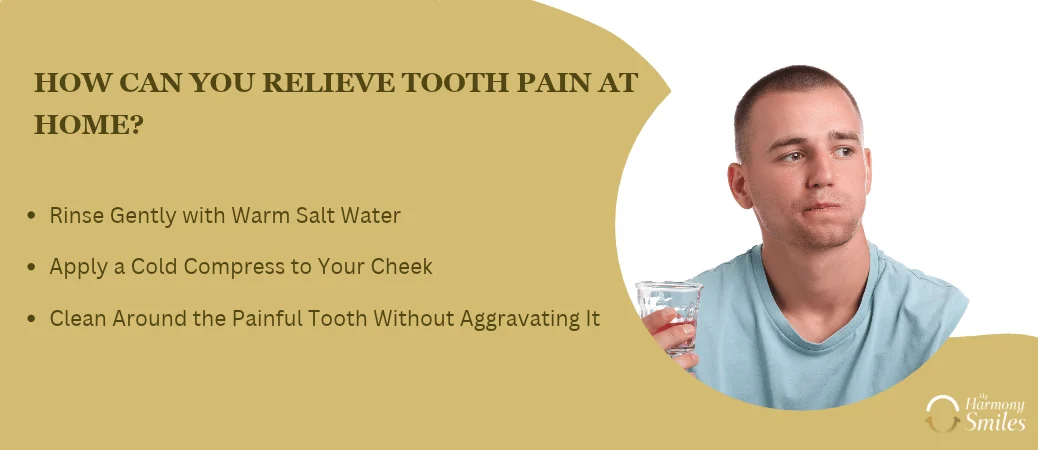
Rinse Gently with Warm Salt Water
Mix about half a teaspoon of salt into a cup of warm water until it dissolves. Swish it around your mouth for 20 to 30 seconds, focusing on the side that hurts, then spit it out.
A saltwater rinse helps clear away food debris and bacteria sitting near the painful tooth. It also soothes irritated gum tissue. You can repeat this every couple of hours as needed, but avoid swallowing the water.
Apply a Cold Compress to Your Cheek
Wrap an ice pack or a bag of frozen vegetables in a thin towel. Hold it against the outside of your cheek, over the area that hurts, for about 15 to 20 minutes, then give your skin a break for the same amount of time before icing again.
Cold narrows the blood vessels near the surface, which can calm swelling and dull the pain signal for a while. Never place ice directly against your skin or your tooth, since that can cause irritation or even frostbite on your cheek.
Clean Around the Painful Tooth Without Aggravating It
Keeping the area clean matters just as much as resting it. Use a soft-bristled toothbrush and small, gentle circles instead of scrubbing, and floss carefully around the sore tooth rather than skipping it altogether.
Good oral hygiene won’t cure what’s causing the pain, but it can stop trapped food from making things worse until you’re seen.
Which Over-the-Counter Products Actually Help?
Over-the-counter pain relievers are usually your most reliable tool for short-term toothache relief, with ibuprofen often working especially well because tooth pain is frequently tied to inflammation.
Numbing products like benzocaine and clove oil can add some relief, but they come with limits worth knowing.
Ibuprofen vs. Acetaminophen: Benefits and Dosing Cautions
Ibuprofen reduces both pain and swelling, which makes it a strong choice for dental pain tied to inflammation.
Acetaminophen manages pain but doesn’t target swelling the same way, which makes it a reasonable option if you can’t take ibuprofen for health reasons.
Follow the dosing instructions on the package, and ask a pharmacist or healthcare professional before taking pain relievers if you have medical conditions or use other medications.
Ibuprofen and acetaminophen may be used individually or together for short-term dental pain when appropriate, but the safest choice depends on your health history.
Avoid exceeding the recommended dose or combining medications without checking for overlapping ingredients.
Can Benzocaine or Clove Oil Numb a Toothache?
Both can offer short, temporary numbing. Benzocaine gels, applied in a thin layer following package directions, numb the surface of the gum for a little while.
Clove oil contains eugenol, which has numbing properties, but concentrated clove oil can irritate or burn gum tissue. Avoid applying undiluted essential oils directly to your gums or tooth.
Ask a pharmacist about products intended for oral use and follow their instructions carefully.
Products and Home Remedies to Avoid
Skip the old trick of placing aspirin directly on your gum. Aspirin is acidic and can chemically burn gum tissue, leaving you with a painful sore layered on top of your original problem.
Avoid applying heat to your face if you suspect an infection, since it can encourage swelling to spread. Don’t poke at the tooth with sharp objects, and resist the urge to pull a loose tooth yourself.
How Can You Stay Comfortable Until Your Appointment?
Staying comfortable mostly comes down to what you eat, how you sleep, and keeping stress off the painful tooth. Small adjustments to your routine can mean the difference between a rough night and a manageable one.
What Should You Eat and Drink with a Toothache?
Stick to soft, room-temperature foods like yogurt, mashed potatoes, scrambled eggs, or smoothies. These put less pressure on a painful tooth and won’t trigger sharp jolts from temperature changes.
Sensitive teeth react strongly to very hot, very cold, sugary, or acidic foods and drinks, so steer clear of citrus, soda, and ice water for now.
Chew on the opposite side of your mouth when you can, and go easy on crunchy or sticky foods that could get stuck near the sore spot.
Does Elevating Your Head Help at Night?
Elevating your head with an extra pillow may help reduce nighttime throbbing for some people. Tooth pain can feel more noticeable when you’re lying down or trying to sleep.
If discomfort makes it difficult to rest, try sleeping at a slight incline and follow the recommended dosing instructions for any pain medication you can safely take.
When Is Home Care No Longer Enough?
Home care stops being enough when pain keeps building despite medication, or when you notice swelling, fever, or a bad taste that won’t go away. These are signs your body is fighting something that needs professional dental care, not just comfort measures.
When to Call an Emergency Dentist
Seek emergency dental care if your pain is severe, doesn’t ease with OTC medication, or comes with swelling in your face or jaw.
A tooth infection can spread if left untreated, so don’t wait several days hoping the pain will go away on its own.
If you’re unsure whether your symptoms require urgent attention, understanding when to call an emergency dentist can help you decide what to do next.
If tooth pain is keeping you awake or getting worse by the hour, contact your dentist to arrange an evaluation as soon as possible.
When to Go to the Emergency Room Instead
Seek emergency medical care immediately if tooth pain comes with difficulty breathing or swallowing, rapidly spreading facial or neck swelling, or swelling near the eye.
Fever accompanied by facial swelling or worsening dental pain also requires prompt medical assessment.
Emergency departments can evaluate serious infections, provide appropriate treatment, and address potentially dangerous complications.
However, follow-up dental treatment is often necessary to eliminate the underlying cause.
What to Tell the Dentist About Your Symptoms
Be ready to describe when the pain started, what makes it better or worse, and whether you’ve noticed swelling, fever, or a bad taste in your mouth. Mention any medications you’ve already taken and when.
This information helps your dentist work faster and more safely once you’re in the chair.
What Might Be Causing the Pain?
Toothaches can have several causes, including decay, cracked teeth, gum problems, and infections.
Understanding the symptoms can help you recognize when care is needed, but a dental examination, sometimes with imaging or other tests, is necessary to identify the cause.
Cavities, Cracks, and Temperature Sensitivity

Cavities form when acid from bacteria wears away tooth enamel, eventually reaching the sensitive layers underneath. This often shows up as sharp pain with sweets, or sensitivity to hot and cold that lingers.
A cracked tooth can cause sudden pain when you bite down, then ease off again. Cracks are often too small to see on your own, and sensitive teeth from worn enamel can feel similar even without an obvious crack.
Using fluoride toothpaste regularly helps strengthen enamel and may ease mild sensitivity over time, though it won’t repair a crack or close a cavity.
Gum Problems and Signs of Infection
Gum disease starts as gingivitis, with red, swollen, or bleeding gums, and can advance into periodontal disease if it isn’t treated. At that stage, the infection can damage the bone holding your teeth in place.
A tooth infection, or abscess, is a pocket of pus caused by bacteria reaching the inner part of the tooth or the surrounding gum. It tends to cause constant, throbbing pain, sometimes with facial swelling or a bad taste from drainage.
Left alone, a tooth infection can spread toward the jaw, which is why professional dental care matters once you notice these signs.
Ease the Pain, Then Treat the Cause
Rinsing, cold compresses, and appropriate OTC medication can make a toothache more manageable while you arrange dental care. However, these measures cannot repair a cavity, treat an infection, or fix a cracked tooth.
Persistent or worsening pain deserves professional attention. Getting the cause diagnosed early may help prevent further complications.
Frequently Asked Questions
How can I relieve unbearable tooth pain before a dentist can see me?
Combine a warm salt water rinse, a cold compress on your cheek, and an OTC pain reliever like ibuprofen taken as directed on the label.
Keep your head elevated at night and avoid hot, cold, or sugary foods that can trigger sharp pain. If the pain stays unbearable despite these steps, treat it as a sign to seek care sooner rather than later.
Can I take ibuprofen and acetaminophen for a toothache?
Some adults can safely use ibuprofen and acetaminophen together or at separate times for short-term dental pain. However, these medications are not appropriate for everyone.
Follow the package directions and consult a pharmacist or healthcare professional if you have medical conditions, take other medications, or are unsure about dosing.
What should I do if I have a toothache over the weekend?
Use the same home care steps: rinse with warm salt water, ice your cheek, and take OTC pain medicine as directed.
Many dental offices have an answering service that connects you to an on-call emergency dentist, so call your regular dentist’s number even outside business hours.
Will the ER do anything for a bad toothache?
An emergency room can treat signs of a spreading infection, severe swelling, or trouble breathing, often with antibiotics and pain control.
They typically can’t treat the tooth itself, such as performing a root canal or extraction, so you’ll still need to see a dentist once the immediate danger passes.
What can an emergency dentist do for tooth pain?
An emergency dentist can examine the tooth, take an X-ray, and identify the exact cause of your pain. From there, treatment might include a dental filling, draining an abscess, starting a root canal, or prescribing antibiotics if an infection is spreading, often providing relief the same day.