

Losing a single front tooth can feel stressful, especially since it affects both your smile and how you chew.
If you’re trying to decide between a dental implant and a dental bridge, you’re not alone in weighing these tooth replacement options.
For most patients with a healthy jawbone, a dental implant offers the most natural look and long-term stability, while a dental bridge can be a faster and more budget-friendly choice.
Your front teeth play a big role in your smile and your confidence, so choosing the right option matters.
Both tooth replacement options, dental implant and a dental bridge can restore your smile, but they work in different ways and offer different benefits for your oral health.
Your dentist in Trinity, FL can help you figure out which option fits your needs, your budget, and your daily routine.
This guide walks you through the key differences between dental implant vs bridge for one missing tooth, how each one affects your gums and jawbone, and what to expect during treatment.
You’ll also learn about cost, insurance, and long-term care so you can feel confident about your choice.
Key Takeaways
- Dental implants and dental bridges both replace a missing front tooth, but they differ in how they protect your jawbone and gums.
- Your treatment timeline, budget, and long-term care needs can help you decide which option fits your lifestyle.
- Talking with a dentist in Trinity, FL can help you choose the best option for your smile and oral health.
The Key Differences at a Glance
A single dental implant and a three-unit bridge fix the same problem in very different ways. Here’s how each option works, and how they stack up on time, cost, and how long they last.
How a Single Dental Implant Replaces the Root and Crown
A single dental implant replaces both the root and the crown of your missing tooth. Your dentist places a small titanium implant post into your jawbone.
This post acts as an artificial tooth root, giving your new tooth a stable base.
Once your jawbone heals around the post, your dentist attaches an abutment on top. The abutment connects the implant post to your implant crown.
This setup means your neighboring teeth stay untouched. Nothing gets filed down or altered to hold your new tooth in place. Your implant stands on its own, just like a natural tooth would.
How a Three-Unit Bridge Uses Neighboring Teeth
A three-unit bridge takes a different approach. Instead of replacing the tooth root, it relies on your two neighboring teeth for support.
Your dentist files down the teeth on either side of the gap. These are called abutment teeth, or anchor teeth. They get shaped to hold crowns that support the bridge.
A fake tooth, called a pontic, fills the gap between the two crowns. All three pieces connect as one solid unit, which is why it’s called a three-unit bridge.
Fixed bridges like this don’t come out. They stay cemented in place, and you care for them the same way you care for your natural teeth.
Side-by-Side Comparison of Treatment Time, Surgery, Cost, and Longevity
Here’s how these two dental restoration options compare on the factors that matter most to you:
| Factor | Single Dental Implant | Three-Unit Bridge |
| Surgery required | Yes, to place the implant post | No surgery needed |
| Treatment time | Several months, due to healing time | Two dental visits over a few weeks |
| Cost | $3,000 to $4,500 per tooth | $500 to $1,200 for the bridge, plus $500 to $2,500 per crown |
| Effect on nearby teeth | None, your other teeth stay untouched | Neighboring teeth get reshaped |
| Longevity | Tends to last longer with proper care | May need replacement sooner |
Your health, budget, and how quickly you need a new tooth all play a role in which option makes more sense for you.
Protecting Your Smile, Gums, and Jawbone
The choice you make will affect more than how your tooth looks. It also changes what happens to your jawbone, gum tissue, and the teeth next to the gap.
Effects on Healthy Adjacent Teeth and Natural Tooth Structure
A bridge needs support from the teeth on either side of the gap. To hold the bridge in place, your dentist has to shave down the enamel on those neighboring teeth.
This means healthy, natural tooth structure gets removed even though those teeth were never a problem. Once enamel is gone, it does not grow back.
Those teeth will need a crown-like covering for the rest of their life.
An implant works differently. It stands on its own in your jawbone and does not touch the teeth next to it.
If your adjacent teeth are healthy and cavity-free, this is worth thinking about. You can compare how dental implants and bridges affect nearby teeth before deciding.
Bone Preservation After Tooth Loss
When you lose a tooth, your jawbone in that spot starts to shrink. This happens because your bone needs pressure from a tooth root to stay strong.
A dental implant acts like a new tooth root. It gives your jawbone the stimulation it needs, which helps keep bone density steady over time.
A bridge sits above the gum. It does not reach down into the bone, so it cannot stop this bone loss.
Over the years, this can lead to a sunken look in your jaw or changes in your face shape near the missing tooth.
If keeping your jawbone health intact matters to you, this is an important factor.
Gum Contours and Natural Appearance in the Smile Zone
Your gum tissue plays a big role in how natural a front tooth looks. Healthy gums hug the base of each tooth in a smooth, even curve.
With an implant, the post fuses with your bone. This helps gum tissue form a natural contour around the crown, much like it would around a real tooth root.
A bridge rests on top of the gum instead of inside it. Over time, the gum under a bridge can shrink or change shape, which may leave a gap or shadow you can see when you smile.
Since the front tooth area is so visible, even small changes in gum health can affect your appearance.
Bite Function and Bite Alignment After Replacement
Losing a front tooth changes how your teeth meet when you bite and chew. Without a replacement, nearby teeth can drift into the empty space, which throws off your bite alignment.
Both implants and bridges fill the gap and restore a surface to bite with. However, they support your bite in different ways.
An implant transfers bite force through the jawbone, just like a natural tooth root. A bridge relies on the anchor teeth to handle that force, which places extra load on those teeth over time.
Fixing bite alignment early also helps protect your jaw joint and keeps your other teeth from shifting out of place.
Treatment Process and Expected Timeline
Getting a dental implant or a bridge involves different steps and different amounts of time. Here’s what you can expect at each stage, from your first exam to your finished smile.
Planning With an Exam and CT Scan
Your treatment starts with a full exam of your mouth, gums, and jaw. Your dentist will check the health of the teeth near the gap and look at your bone in that area.
A CT scan is often used, especially if you’re considering an implant. This 3D image shows your bone density and shape.
It helps your dentist see if you have enough bone for an implant placement or if you might need bone grafting first.
If the tooth is still in your mouth, a tooth extraction may be needed before treatment can begin. Your dentist will talk you through this during your first visit.
Implant Surgery, Osseointegration, and Final Crown Placement
Implant surgery starts with placing a small titanium post into your jawbone. This post acts like a new tooth root.
After surgery, your body needs time to heal through a process called osseointegration. This is when your jawbone grows around the implant post and locks it in place.
This step usually takes 3 to 6 months, though it can vary from person to person.
Once your bone has fully healed, your dentist attaches a small connector piece called an abutment. Then your custom implant crown is placed on top.
This crown is made to match the size, shape, and color of your other front teeth.
Bridge Preparation and Permanent Placement
A traditional bridge takes much less time than an implant. Your dentist first prepares the teeth next to the gap by shaping them so dental crowns can fit over them.
Impressions are taken of your teeth. These are sent to a lab that builds your custom bridge. This part of the process usually takes about 2 weeks.
Once your permanent bridge is ready, you’ll return for a second visit. Your dentist checks the fit, color, and bite before cementing it in place.
From your first visit to your final bridge, the whole process often takes just 2 to 3 weeks total.
Temporary Tooth Solutions While You Wait
You won’t be left with a gap in your smile during treatment. If you’re getting an implant, your dentist may give you a removable flipper, a bonded temporary tooth, or in some cases a same day crown placed right on the implant while your bone heals.
If you’re getting a bridge, you’ll wear a temporary bridge between your first and second appointments. This protects your prepared teeth and keeps your smile looking normal while the lab builds your permanent bridge.
Both options are designed to keep you comfortable and confident. You’ll always have a natural-looking tooth in place, even before your final restoration is ready.
When Each Option May Make More Sense
The right choice for your missing front tooth often comes down to your bone health, gum condition, budget, and how quickly you need a finished smile. Here’s a closer look at when each option tends to work best.
When an Implant Is Often the Better Long-Term Choice
If you have healthy gums and enough bone in your jaw, a single tooth implant is often your best bet for a front tooth. It stands on its own, so it doesn’t put stress on the teeth next to it.
This means your neighboring teeth stay untouched and healthy.
Implants also tend to last the longest of any option, which matters a lot for a tooth you’ll see every time you smile.
You’ll want your dentist to check your bone density first, since the implant post needs solid bone to fuse with over time.
If your bone and gums are in good shape, this option usually gives you the most natural-looking and durable result.
When a Traditional Bridge May Be the Practical Choice
A traditional dental bridge can be a smart pick if you want a faster fix or if the teeth next to your gap already need crowns anyway.
Since a bridge uses those neighboring teeth for support, it skips the months-long healing time that implants require.
This option also works well if your budget is tighter upfront, since bridges often cost less at the start.
Keep in mind that a bridge means shaping down the teeth on either side of the gap, so this choice makes more sense when those teeth aren’t perfectly healthy to begin with.
If you need a quick, reliable solution for your front tooth, a bridge is worth discussing with your dentist.
Considering a Maryland Bridge or Cantilever Bridge for Front Teeth
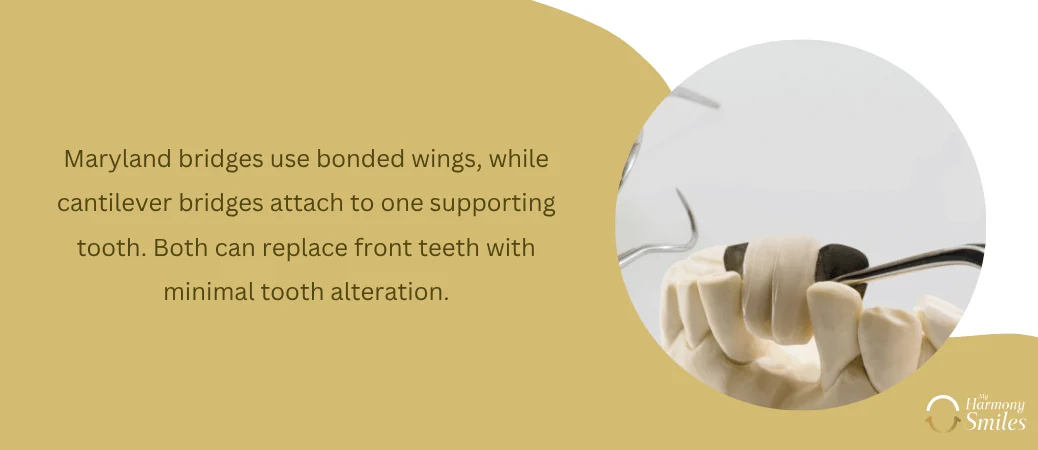
A maryland bridge is a good option when you want to protect your front teeth from major reshaping.
It uses thin metal or ceramic wings bonded to the back of the neighboring teeth instead of full crowns, so it’s less invasive.
A cantilever bridge works a bit differently, anchoring to just one nearby tooth instead of two. This can be helpful if only one side of the gap has a strong, healthy tooth to support the bridge.
Both styles tend to suit front teeth well because they don’t need to handle the heavy chewing forces found in the back of your mouth. Your dentist can tell you which style fits your bite and smile.
Health Conditions and Bone Factors That Affect Candidacy
Your overall health plays a big role in deciding between dental bridges and implants.
Gum disease and uncontrolled diabetes can slow healing and raise your risk of implant failure, so these conditions need to be managed first.
If you’ve lost bone in the area, your dentist may suggest bone grafting to build up support before placing an implant.
Bridges, on the other hand, don’t rely on bone density since they attach to existing teeth. This makes bridges a reasonable choice if bone loss or health issues make implant surgery risky right now.
A personalized treatment plan from your dentist will factor in your gum health, bone strength, and any medical conditions to help you pick the safest, most lasting option for your front tooth replacement.
Cost, Insurance, and Long-Term Care in Trinity, FL
Money matters when you’re choosing between a dental implant and a dental bridge, and so does knowing how to keep either one clean for years to come.
Here’s what you need to know about pricing, insurance, and daily care before you make your decision.
Comparing Upfront and Lifetime Treatment Costs
A single dental implant usually costs between $3,000 and $6,000+, while a dental bridge typically runs $2,000 to $5,000+. That means bridges often win on upfront price.
But your total costs over time tell a different story. Implants can last 25 years or longer without needing replacement. Bridges usually need to be redone every 10 to 15 years, and that adds up.
Here’s a quick breakdown:
- Implant: Higher upfront cost, but fewer replacements
- Bridge: Lower upfront cost, but repeat expenses over time
Think about how long you plan to keep your smile looking good. That will help you decide which option makes more sense for your wallet.
Dental Insurance, Estimates, and Financing Questions
Dental insurance coverage varies a lot depending on your plan. Some plans cover a portion of implant surgery, while others treat bridges as the standard restoration and pay more toward that option.
You should call your insurance provider before you commit to either treatment. Ask specific questions like:
- Does my plan cover the crown, the implant post, or both?
- Is there a waiting period for major dental work?
- What percentage of the bridge cost is covered?
Many dental offices offer written estimates so you know exactly what you’ll pay out of pocket.
Financing plans, like CareCredit or in-house payment options, can also spread the cost over several months. Don’t be afraid to ask your dentist’s office about these choices before your appointment.
Cleaning an Implant Crown and a Fixed Bridge
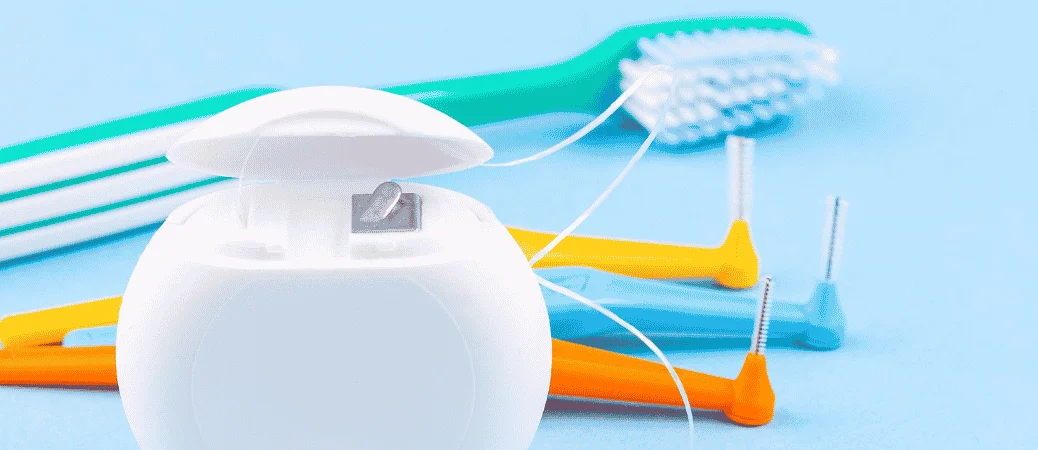
Good oral hygiene keeps either restoration working well for years. But the cleaning steps are a little different for each one.
With an implant crown, you brush and floss it just like a natural tooth. A water flosser can help rinse away food particles around the gum line each day.
A fixed bridge is trickier because it has a gap underneath the false tooth. You’ll need a floss threader or interdental brush to clean under that area.
Floss threaders help guide the floss beneath the bridge, while an interdental brush fits into tight spaces you can’t reach otherwise.
Skipping these steps can lead to gum irritation or decay around the bridge’s support teeth. Ask your dentist to show you the right technique for your specific restoration.
Choosing the Right Dental Professional for Your Case
Replacing a missing tooth requires careful planning to make sure your restoration looks natural, feels comfortable, and supports your long-term oral health.
The right treatment depends on factors such as your jawbone health, neighboring teeth, bite, and whether a dental implant or bridge better fits your needs.
If you’re considering a dental implant, Dr. Bibek Nakarmi at My Harmony Smiles can evaluate your oral health and discuss whether an implant is appropriate for your needs.
If a bridge makes more sense, your treatment plan can consider the strength of the supporting teeth, your bite, and your long-term restoration goals.
Frequently Asked Questions
Choosing between a dental implant and a bridge for your missing front tooth comes with a lot of questions. Here are answers to the most common ones people in Trinity ask before making their decision.
Is a dental implant or bridge better for replacing one missing front tooth?
Both options work well, so the better choice depends on your mouth and your goals. An implant stands on its own and does not touch your neighboring teeth, while a bridge relies on the teeth next to the gap for support.
If you want to protect your natural teeth long-term, an implant is often the stronger pick. If you need a faster fix or your budget is tighter right now, a bridge can still give you a great-looking smile.
How much does a single-tooth dental implant cost compared with a bridge?
A single implant usually runs between $3,000 and $6,000+ once you add up the surgery, the abutment, and the crown.
A three-unit bridge typically costs less upfront, landing between $2,000 and $5,000+, but keep in mind that bridges often need to be replaced every 10 to 15 years.
That replacement cost adds up over time. If you keep your bridge for 20 or 30 years, you might end up paying close to what an implant costs, or even more.
What type of dental bridge works best for a missing front tooth?
Traditional bridges use crowns on both teeth next to the gap to hold the fake tooth in place. This method is strong and reliable, but it means shaving down two healthy teeth to make room for the crowns.
Another option is a bridge that attaches with wings on the back of your teeth instead of full crowns. Your dentist can help you figure out which style fits your bite and the condition of your neighboring teeth.
Is a Maryland bridge a good alternative to a dental implant for a front tooth?
A Maryland bridge can be a solid choice if you want to avoid surgery or keep more of your natural tooth structure intact.
It uses metal or porcelain wings that bond to the back of the teeth next to the gap instead of full crowns, so less of your healthy tooth gets removed compared to a traditional bridge.
How long do dental implants and dental bridges typically last?
Implants are built to last a long time. Many patients keep the same implant for 20 years or longer with good brushing, flossing, and regular checkups.
Bridges have a shorter lifespan. Most bridges last between 10 and 15 years before they need to be replaced or repaired.
Why might a dentist recommend an implant instead of a bridge, or vice versa?
Your dentist looks at several things before making a recommendation, including your jawbone health, the condition of the teeth next to the gap, and your budget.
If your neighboring teeth are already weak or have large fillings, an implant may be the safer choice since it does not put extra strain on them.
On the other hand, if you do not have enough jawbone for an implant and do not want bone grafting, a bridge might be the more practical option.
Your dentist will also think about how a missing tooth can affect your bite and jaw health over time when suggesting the best path forward for your specific case.