Implant dentures combine the stability of dental implants with the functionality of dentures to replace multiple missing teeth. If you’re considering this tooth replacement option, you’re probably wondering about the cost and whether your insurance will help pay for it.
Most dental insurance plans either don’t cover implant dentures or only provide partial coverage, and many plans that do offer coverage have annual benefit caps between $1,000 and $2,000, which falls far short of the total cost.
Some insurance carriers offer implant coverage but may limit it to one implant per year. Even when coverage exists, you’ll likely pay a large portion out of pocket since dental implants often range from $3,000 to $6,000 per implant.
The good news is that understanding how insurance works for implant dentures can help you maximize your benefits.
Some plans may cover certain parts of the procedure even if they won’t pay for the implants themselves. You also have options beyond traditional insurance to make implant dentures more affordable.
Key Takeaways
- Dental insurance rarely covers the full cost of implant dentures due to low annual benefit caps and coverage exclusions
- Your plan may cover some parts of the treatment process even if it excludes the actual implants
- Payment plans, dental savings plans, and health savings accounts can help you afford implant dentures when insurance falls short
Explore insurance coverage for implant dentures and learn how to maximize your benefits.
How Insurance Applies to Implant Dentures
Insurance coverage for implant-supported dentures works differently than regular dental procedures, with most dental insurance plans treating them as major services with specific limitations.
Your coverage depends on your plan type, whether the procedure is medically necessary, and how your insurance classifies implant dentures versus traditional options.
Types of Dental Insurance Plans for Implant Coverage
PPO plans typically offer the most flexibility for dental implant coverage. These plans let you see any dentist, though you’ll pay less if you visit an in-network provider.
Most PPO dental insurance plans cap annual benefits between $1,000 and $2,000, which usually won’t cover the full cost of implant dentures.
HMO dental plans require you to choose a primary dentist from their network. These plans often have lower premiums but may not include implant-supported dentures in their covered services at all.
Discount dental plans aren’t insurance but can reduce your costs by 10% to 60% on implant procedures. You pay an annual fee and get access to negotiated rates with participating dentists.
Some dental insurance plans classify implants as cosmetic, which means they won’t provide any coverage. Even when covered, you’ll likely face a 50% coinsurance for major services like implant dentures, plus waiting periods of 6 to 12 months before coverage kicks in.
What Counts as Medically Necessary
Your insurance might cover implant dentures when they’re medically necessary rather than cosmetic. Medically necessary typically means the procedure is needed to restore basic function like chewing or speaking.
Conditions that may qualify include severe bone loss that prevents traditional dentures from fitting properly, injuries from accidents, or tooth loss from disease.
You’ll need documentation from your dentist explaining why implant dentures are necessary and why other options won’t work.
Medical insurance, not just dental plans, might cover implants in specific medical situations like facial reconstruction after trauma or cancer treatment. Your dentist will need to submit detailed records and justification for pre-authorization.
Differences Between Implant Dentures and Traditional Dentures
Traditional dentures sit on your gums and are removable, while implant-supported dentures attach to posts surgically placed in your jawbone. This difference affects how dental insurance plans view each option.
Most dental insurance covers traditional dentures as a standard major service with typical 50% coinsurance. Implant dentures cost significantly more and may be excluded entirely from your plan’s benefits.
Cost comparison:
- Traditional dentures: $600 to $8,000 per arch
- Implant-supported dentures: $15,000 to $28,000 per arch
Your plan might cover the denture portion of implant-supported dentures but exclude the implant posts themselves. Some plans will pay their usual allowance for traditional dentures and leave you to cover the difference if you choose implants instead.
What Implant Dentures Are and Who Needs Them
Implant dentures combine the stability of dental implants with the tooth replacement benefits of traditional dentures. They offer a middle ground between conventional removable dentures and individual tooth implants for people who have lost multiple teeth.
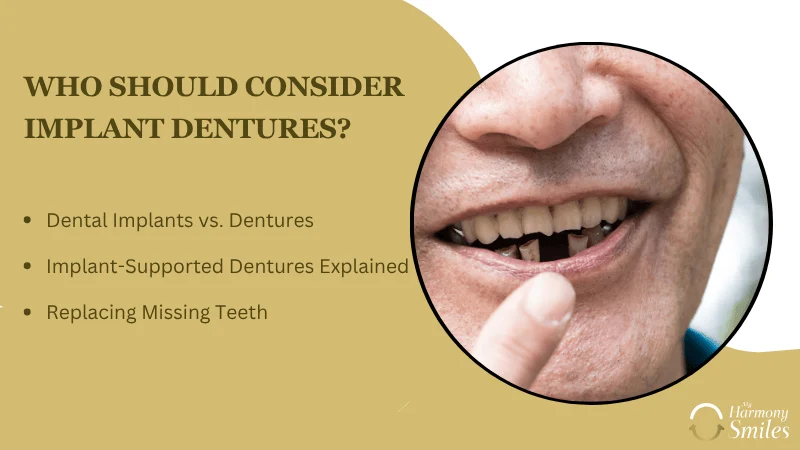
Dental Implants vs. Dentures
Dental implants are metal posts surgically placed into your jawbone to act as artificial tooth roots. A single implant typically holds one replacement tooth.
Traditional dentures are removable appliances that sit on top of your gums. They can replace all your upper or lower teeth without any surgical procedure.
The key differences include:
- Stability: Implants stay permanently in place while dentures can slip or move
- Bone health: Implants help preserve your jawbone but dentures don’t
- Cost: Individual implants cost more upfront than dentures
- Maintenance: Implants need care like natural teeth while dentures require special cleaning
Traditional dentures work well for many people but some find them uncomfortable or worry about them shifting when eating or speaking.
Implant-Supported Dentures Explained
Implant-supported dentures use four or more implant posts to anchor a full arch of replacement teeth. This approach gives you the stability of implants without needing a separate implant for each tooth.
The process involves placing metal posts into your jawbone first. After your jaw heals around these posts, a custom-made denture attaches to them.
These dentures can be:
- Fixed: Permanently attached and only removable by your dentist
- Removable: You can take them out for cleaning but they snap securely onto the implants
A complete arch can cost upwards of $20,000 per arch. This is less expensive than replacing every tooth with individual implants.
Replacing Missing Teeth
You might need implant dentures if you’ve lost most or all of your teeth in one or both arches. Common reasons for tooth loss include gum disease, tooth decay, or injury.
People who struggle with traditional dentures often benefit from the implant-supported option. This includes those who experience frequent slipping or have difficulty eating certain foods.
Your jawbone must be strong enough to support the implant posts. If you don’t have sufficient bone, you might need bone grafting first, which more than half of all dental implant procedures require.
Implant dentures work well for adults whose jaws have stopped growing. They’re rarely given to children since the jaw must be fully developed for successful placement.
Factors Affecting Insurance Coverage for Implant Dentures
Your dental insurance coverage for implant dentures depends on several key factors in your policy.
These include what your plan specifically covers or excludes, your annual spending limits and deductibles, and whether your insurer offers alternative benefits for major procedures.
Plan Inclusions and Exclusions
Most dental insurance plans classify implant dentures as a major dental procedure. This means your coverage will likely be less generous than it would be for routine cleanings or fillings.
Some plans exclude implant dentures entirely. Others may cover only certain parts of the procedure, like the crown or abutment, while excluding the actual implant post. You need to review your policy documents carefully to understand what’s included.
Coverage for dental implants varies widely depending on your specific plan. Many insurers will cover 10% to 50% of implant denture costs if the procedure is deemed medically necessary rather than cosmetic.
Your plan might require pre-authorization before you can receive any benefits for this type of work.
Check whether your policy considers implant dentures a covered service. If your plan does provide implant coverage, it typically won’t pay for 100% of the dental implant cost.
Annual Maximums, Deductibles, and Waiting Periods
Your annual maximum is the most your dental insurance will pay in a single year. Most plans cap coverage between $1,000 and $2,000 annually. Since implant dentures can cost $7,000 or more, you’ll likely hit this limit quickly.
You also need to meet your annual deductible before your insurance pays anything. This amount typically ranges from $50 to $150 per year.
Waiting periods for major procedures can last six to 12 months. This means you won’t be eligible for any coverage until you’ve had the policy for that long. If you just enrolled in a new plan, you might need to wait a full year before receiving benefits for implant dentures.
Alternative Benefits Clauses
Some dental insurance policies include alternative benefits clauses. These provisions allow your insurer to cover a less expensive treatment instead of implant dentures.
For example, your insurance might agree to pay what they would for traditional dentures rather than implant-supported ones. You would then be responsible for paying the difference in cost between the two procedures.
This clause gives insurers flexibility in managing costs while still providing you with some benefit. However, it means your out-of-pocket expenses could be higher than expected.
Ask your insurance company whether your plan includes this type of provision and how it might affect your coverage for implant dentures.
Types of Dental Implants Used for Dentures
When you’re getting implant-supported dentures, your dentist will choose from different implant types based on your jawbone health and specific needs.
The main types include endosteal implants that go directly into your bone and subperiosteal implants that rest on top of it, along with the connecting parts that hold your dentures in place.
Endosteal Implants for Dentures
Endosteal implants are the most common type used for denture support. These are small titanium posts that your dentist surgically places directly into your jawbone.
Once the implants heal and fuse with your bone, they create a strong foundation for your dentures. Most people need between two to six endosteal implants to support a full arch of dentures. The exact number depends on your jaw size and bone density.
Common endosteal implant shapes include:
- Screw-shaped (most popular)
- Cylinder-shaped
- Blade-shaped
These implants work best if you have enough healthy jawbone to support them. Your dentist will check your bone density with X-rays before recommending this option.
Subperiosteal Implants for Special Cases
Subperiosteal implants sit on top of your jawbone but under your gum tissue. Your dentist might suggest these if you don’t have enough bone height for traditional endosteal implants.
These implants use a metal frame that rests on your jawbone. Posts attached to the frame stick through your gums to hold your dentures. You won’t need bone grafting with this option, which makes the process faster.
Subperiosteal implants are less common today because bone grafting techniques have improved. However, they remain a good choice if you can’t have or don’t want bone grafting surgery.
Understanding different types of dental implants and their components helps you make better choices about your dental care.
Components: Abutments and Attachment Methods
The abutment is the connector piece between your dental implant and your dentures. It screws into the top of your implant after the healing period ends.
There are different attachment methods for implant dentures:
- Ball attachments use a ball-shaped abutment that snaps into your denture
- Bar attachments connect multiple implants with a thin metal bar
- Magnetic attachments use magnets to hold dentures in place
Your dentist chooses the attachment method based on how many implants you have and your lifestyle needs. Ball attachments are popular because they’re affordable and easy to clean.
Bar attachments provide more stability but cost more and need more maintenance.
How to Maximize Your Insurance Benefits
Strategic planning can help you get the most value from your dental insurance plan when pursuing implant dentures.
Understanding pre-authorization requirements, timing procedures wisely, and selecting the right providers can significantly reduce your out-of-pocket costs.

Getting Pre-Authorization for Coverage
Before you schedule any implant denture procedures, contact your insurance company to request pre-authorization. This process involves your dentist submitting detailed treatment plans and X-rays to your insurer for review.
Pre-authorization gives you a clear picture of what your plan will cover before you commit to treatment. Your insurance company will send back an explanation of benefits that shows exactly which parts of the procedure they’ll pay for and how much you’ll owe.
Some dental insurance plans may cover preparatory procedures like tooth extractions or bone grafting even if they don’t cover the actual implants.
Getting this information upfront helps you avoid surprise bills and gives you time to explore alternative financing if needed.
Splitting Procedures Across Years
Most dental insurance plans have annual maximum benefits between $1,000 and $2,000. You can maximize these limits by spreading your implant denture treatment across multiple calendar years.
For example, you might schedule tooth extractions and bone grafting in December, then have the implant posts placed in January. This approach allows you to use two years of benefits for one complete treatment.
Your dentist can work with you to create a treatment timeline that maximizes coverage while maintaining proper healing periods between procedures.
Keep in mind that some plans have waiting periods for major procedures. Plan your timing accordingly to ensure you’re eligible for benefits when each phase begins.
Choosing In-Network Providers
Selecting a dentist who participates in your insurance network can dramatically lower your costs. In-network providers have negotiated rates with your insurance company, which means lower fees for covered services.
Out-of-network dentists can charge whatever they want, and your insurance may only reimburse a portion based on their fee schedule. The difference between what they charge and what insurance pays comes directly from your pocket.
Check your dental insurance for implants to see which providers are in-network in your area. If your preferred dentist isn’t in-network, ask if they’re willing to negotiate their fees or match in-network rates.
When Insurance Falls Short: Alternative Ways to Afford Implant Dentures
Several options can help you manage the cost of implant dentures when your insurance doesn’t provide enough coverage. Dental discount plans, health savings accounts, and financing arrangements offer different ways to reduce your out-of-pocket expenses.
Dental Discount Plans Explained
A dental discount plan works differently from traditional insurance. You pay an annual membership fee, usually between $100 and $200, and receive discounts of 10% to 60% on dental procedures at participating providers.
These plans have no waiting periods or annual maximums. You can use them immediately after signing up, which makes them useful when you need implant dentures right away.
The savings can be significant. Some dental discount plans offer 20% to 50% off on implants and related procedures. You’ll need to visit dentists who accept your specific plan to get these reduced rates.
Unlike insurance, these plans don’t file claims or reimburse you. The dentist simply charges you the discounted rate at the time of service. Most plans let you use the discounts for family members too.
Using HSAs and FSAs
Health Savings Accounts (HSAs) and Flexible Spending Accounts (FSAs) let you pay for implant dentures with pre-tax dollars. This reduces your taxable income and saves you money on the total cost.
You can use HSA or FSA funds to pay for the consultation, surgery, implant posts, and prosthetic teeth. The IRS considers these medically necessary dental expenses, so they qualify for tax-free withdrawal.
HSAs have no use-it-or-lose-it rule. Your money rolls over year after year, which means you can save up for expensive procedures like implant dentures. FSAs typically require you to use the money within the plan year.
For 2026, you can contribute up to $4,300 to an HSA if you have individual coverage or $8,550 for family coverage. FSA limits are lower at $3,200 per year.
Payment Plans and Financing Options
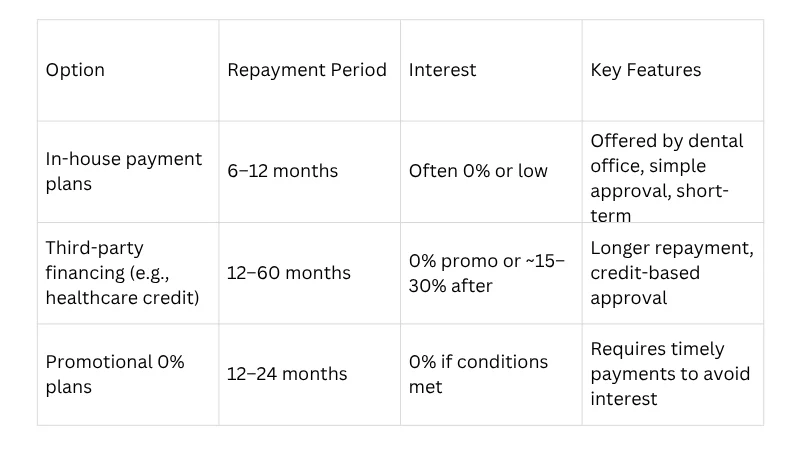
Many dental offices offer in-house payment plans that let you spread the cost over several months. These arrangements often come with little or no interest if you pay within a specific timeframe, usually 6 to 12 months.
Third-party financing companies like CareCredit provide longer-term financing options for dental procedures. You apply for a healthcare credit card and use it to pay your dentist. Payment terms can extend from 12 to 60 months.
Interest rates vary based on your credit score and the repayment period you choose. Some plans offer 0% interest for 12 to 24 months if you make minimum monthly payments. After the promotional period ends, rates can range from 15% to 30%.
You should compare multiple financing options before committing. Ask about origination fees, late payment penalties, and whether paying off early incurs any charges.