
Dental implants are one of the most successful and reliable procedures in modern dentistry, with long-term success rates regularly exceeding 95%.
However, like any medical procedure, things can sometimes go wrong. When they do, patients often hear confusing terms like “implant failure” and “implant rejection.”
Are these the same thing? Not at all!
Understanding the difference between dental implant failure and rejection is crucial for anyone who has or is considering dental implants. One is a predictable biological process; the other is an extremely rare immune reaction.
This guide explains both conditions, helping you recognize problems early and know exactly what to do if something goes wrong.
What Is a Dental Implant?
Before we talk about what can go wrong, let us briefly review what a dental implant actually is.
A dental implant is a small, screw-shaped post made of medical-grade titanium. It is surgically placed into your jawbone to act as an artificial tooth root.
Over a period of several months, your jawbone grows tightly around the implant in a process called osseointegration. Once this bond is complete, a custom-made crown (the visible artificial tooth) is attached to the implant.
The success of an implant depends entirely on successful osseointegration. If the bone fails to bond with the implant, the implant cannot function as a stable foundation for a replacement tooth.
When osseointegration does not happen, or when it is later destroyed, we call this dental implant failure.
Understanding Dental Implant Failure
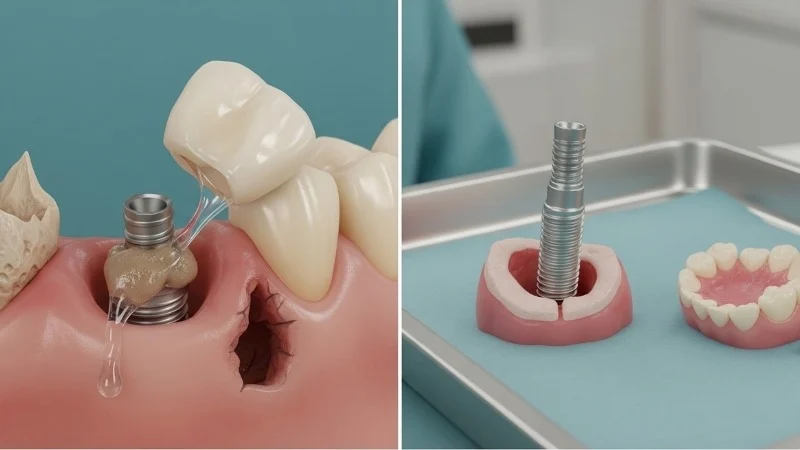
Dental implant failure means that the implant is no longer functioning properly or is at risk of being lost. Failure is almost never a single event. Instead, it is the end result of a process that went wrong somewhere along the way.
Implant failures are generally divided into two broad categories based on timing: early failure and late failure. Knowing when a failure occurs provides strong clues about what caused it.
Early Failure: What Happens in the First Few Months
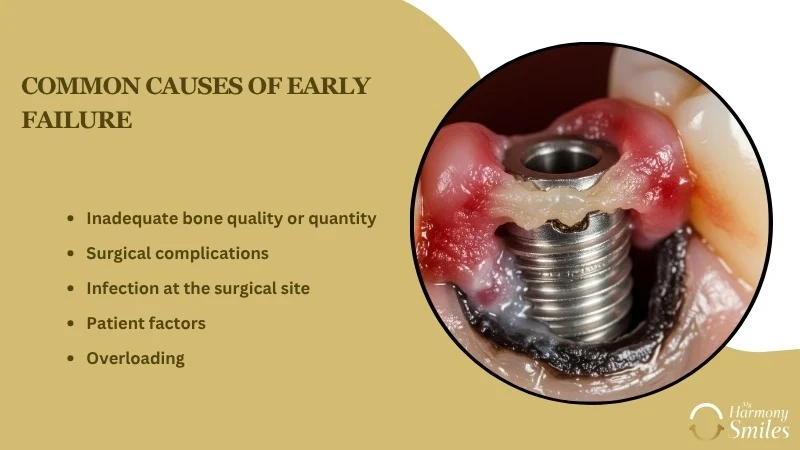
Early failure happens before or during the healing process, usually within the first three to six months after implant placement. The implant never successfully bonds with your jawbone. The reported incidence of early implant failure ranges from 0.7 to 4%.
Common causes of early failure:
- Inadequate bone quality or quantity: The implant needs enough dense, healthy bone to hold it securely.
- Surgical complications: Overheating the bone during drilling, contamination of the implant surface, or failure to achieve good primary stability.
- Infection at the surgical site: Bacterial contamination can prevent healing.
- Patient factors: Heavy smoking, uncontrolled diabetes, or certain medications that interfere with bone healing.
- Overloading: Placing a restoration too soon, before the implant has had time to integrate.
One important risk factor for failure is the timing of implant placement. Research has found that delayed implants (those placed into healed bone) have survival rates of 81.1% at 72 months, compared to only 53.2% for immediate implants placed at the time of tooth extraction.
Late Failure: When Problems Arise After Healing
Late failure occurs after the implant has successfully integrated with the bone and has been in function for some time. The implant initially bonded well, but something later caused that bond to break down. This type of failure is often associated with biological or mechanical complications.
Common causes of late failure:
- Peri-implantitis: An inflammatory condition that destroys the bone and soft tissues around an implant. This is the leading cause of late implant failure. One study found that peri-implantitis was the reason for removal in 82.4% of failed implants.
- Mechanical issues: Fracture of the implant, abutment, or crown due to excessive biting forces or teeth grinding (bruxism).
- Poor oral hygiene: Inadequate cleaning leads to plaque buildup, which fuels inflammation and bone loss.
- Progressive bone loss: Bone loss that continues over time, eventually destabilizing the implant.
Understanding Dental Implant Rejection
Here is where many patients get confused. The term “rejection” suggests that the body is actively attacking the implant like a transplanted organ. This is not what happens with modern dental implants.
Why True Immune Rejection Is Extremely Rare
True immune-mediated rejection of a dental implant is extraordinarily rare. The reason is simple: titanium is biocompatible. The human immune system does not recognize titanium as a foreign invader in the same way it recognizes a virus or a mismatched organ.
What people often call “rejection” is almost always dental implant failure caused by infection or other factors. The body is not rejecting the titanium; it is failing to maintain the bone around it due to disease.
Can the Body Have an Allergic Reaction to Titanium?
While true immune rejection is not a concern, allergic or hypersensitivity reactions to titanium or other metals in implants are possible, though still very rare.
Cases of titanium hypersensitivity have been reported, raising concerns about immune-mediated complications in susceptible individuals. However, hypersensitivity reactions to titanium are very rare.
If a reaction occurs, it is often not to the titanium itself but to other trace metals found in titanium alloys. These may include nickel, beryllium, cobalt, chromium, copper, or palladium.
Symptoms of a metal hypersensitivity reaction may include:
- Erythema (redness of the tissues around the implant)
- Urticaria (hives on the skin or gum surface)
- Bone loss due to chronic inflammation
- Chronic fatigue (in very rare cases).
It bears repeating: these reactions are exceptionally rare. For the overwhelming majority of patients, titanium implants are completely biocompatible and cause no immune response whatsoever.
Signs and Symptoms of a Failed Dental Implant
Early detection of problems greatly increases the chances of successful treatment. Do not ignore the early signs of a failed dental implant.
Early Failure Symptoms (First 3-6 Months)
- Persistent pain: Some pain and discomfort are normal after surgery. However, pain that worsens instead of improving, or that continues well into the healing period, is a red flag.
- Sensation of movement: A properly integrated implant does not move at all. Any feeling of looseness is a significant concern.
- Worsening swelling and redness: Some swelling is expected. Swelling that gets worse, not better, may indicate infection.
- Signs of infection: Pus, a foul taste or smell, or a raised temperature around the implant site are clear warning signs of a failing dental implant.
Late Failure Symptoms (Months or Years Later)
- Implant mobility: The implant crown, or even the implant itself, feels loose or unstable.
- Gum recession: The gum tissue pulls away from the implant, exposing the threads.
- Bleeding and inflammation: Gums that bleed easily when brushing or probing are inflamed.
- Deepening pockets: Pockets deeper than 5 millimeters around the implant indicate bone loss.
- Pain when chewing: Sharp pain when biting down can be a sign of implant overload or fracture.
Most Common Causes of Dental Implant Failure

While failure is multifactorial, research has identified several leading causes.
1. Peri-Implantitis (The Leading Cause)
Peri-implantitis is an inflammatory gum disease that affects the tissues surrounding a dental implant. It is driven by a buildup of bacteria on the implant surface.
The numbers are significant. A large systematic review and meta-analysis found that nearly half (46%) of people with dental implants have peri-implant mucositis (early gum inflammation), and about one in five (21%) have full-blown peri-implantitis with bone loss. Other research has reported peri-implantitis in approximately 22% of patients.
If not treated, peri-implantitis destroys the bone supporting the implant, leading inevitably to failure.
2. Poor Oral Hygiene
The most common causes of implant failure include poor oral hygiene, a history of periodontitis, and smoking. Inadequate oral hygiene allows bacterial plaque to accumulate on the implant surface, causing inflammation that can destroy bone.
3. Smoking
Smoking is one of the most significant and modifiable risk factors for implant failure. It impairs blood flow, reduces oxygen delivery, and delays healing, dramatically increasing the risk of both early and late complications.
4. Medical Conditions
Uncontrolled diabetes is a major risk factor because high blood sugar impairs healing and increases infection risk. Patients with severe osteoporosis may also face higher risks. One study found that osteoporotic patients had a 10.89% failure rate.
5. Overloading and Bruxism
Excessive biting forces can mechanically overload an implant, leading to bone loss and implant fracture. Patients who grind their teeth (bruxism) need to wear a custom nightguard to protect their implants.
6. Poor Surgical Technique
Studies have found that surgical errors are more commonly linked to peri-implantitis (40.8% of cases) than purely plaque-induced factors (28.8%). Choosing an experienced, skilled implant dentist is essential.
Dental Implant Failure After 2 Years
What happens if your implant fails after two years? This is considered late failure. A study of long-term outcomes found that 26.8% of all implant failures occurred in the second and third years after placement. Immediate placement of implants had a survival rate of 94% after two years.
At this stage, failure is almost always due to peri-implantitis or mechanical overload. The good news is that many cases of late failure can be treated if caught early. Treatment may involve deep cleaning, antibiotics, and possibly surgery to regenerate lost bone.
Dental Implant Failure After 10 Years
Beyond the ten-year mark, implants continue to function well. One large study found a cumulative survival rate of 92.5% at 10 years and 86% at 15 years. A 10-year cumulative implant survival rate of 98.3% has also been reported.
However, the risk of peri-implantitis increases with time. Another study found a 10-year success rate of 93.1%, with failure rates between 2.1 and 3.1%. For implant-supported crowns, 40-year survival rates of 95.6% for the implants themselves and 60.9% for the crowns have been documented.
Dental Implant Failure Treatment: What Are Your Options?
If your implant fails, you have several potential treatment paths. The right one depends on the cause and severity of the failure and your overall dental health.
1. Non-Surgical Treatment (For Early Peri-Implantitis)
If peri-implantitis is caught very early, it may be treated with deep cleaning, root planing, and antibiotics. This can arrest the disease and save the implant. However, once significant bone loss has occurred, non-surgical treatment alone is usually insufficient.
2. Surgical Cleaning and Bone Grafting
For more advanced peri-implantitis, the gum is opened to access the implant surface, which is then meticulously cleaned and decontaminated. The bone defects are filled with graft material, and the gum is closed.
3. Implant Removal
If the implant is too loose or the bone loss is too severe, the implant must be removed. The procedure is similar to a tooth extraction.
4. Replacement with a New Implant
After the failed implant is removed, the site is allowed to heal for several months. Bone grafting is often performed to rebuild the area. Once healed, a new implant can be placed.
5. Alternative Restorations
If re-implantation is not possible or desired, a dental bridge or partial denture may be used to replace the missing tooth.
Who Is Responsible for Dental Implant Failure?
This is a difficult question because the answer depends on the cause. Dentists are legally and ethically responsible if a procedure fails because they failed to meet the standard of care.
The number of malpractice suits related to implants has increased significantly in recent years, with awards that are among the largest in dentistry. Common reasons for lawsuits include implant failure, permanent nerve injury, and sinus complications.
If you believe your implant failed due to negligence, you have legal rights. Patients should always get a second opinion and carefully review their documentation. However, it is also true that some failures occur despite the best care, due to patient factors like smoking or medical conditions.
Preventing Dental Implant Failure
The best treatment is prevention. Here is how you can maximize your implant’s chances of long-term success.
- Before surgery, choose a skilled implant dentist with extensive experience and advanced training. Ask to see before-and-after photos and read patient reviews. Ensure that the dentist uses modern technology such as 3D CBCT imaging.
- After surgery, follow all aftercare instructions. Take prescribed medications, keep the area clean, and attend all follow-up appointments.
- For the long term, maintain excellent oral hygiene. Brush twice daily and floss around your implant. Use a water flosser to clean hard-to-reach areas. Visit your dentist for professional cleanings every six months.
- Manage risk factors. If you smoke, quit. If you grind your teeth, get a custom nightguard. Keep medical conditions like diabetes under tight control.
Frequently Asked Questions (FAQ)
What causes dental implants to fail?
The most common causes include peri-implantitis, poor oral hygiene, smoking, uncontrolled diabetes, bruxism, inadequate bone quality, and surgical errors.
Early failures often relate to healing issues, while late failures are usually due to peri-implantitis or mechanical problems.
How can you tell if your dental implant is failing?
Early warning signs include persistent or worsening pain, swelling that does not subside, a sensation of movement or looseness, and signs of infection such as pus or a foul taste.
Later signs include gum recession around the implant, bleeding when brushing, and pain when chewing. If you notice any of these symptoms, contact your dentist immediately.
Are dental implants ever rejected by the body?
True immune-mediated rejection is extremely rare because titanium is biocompatible. What many people call “rejection” is actually implant failure caused by infection or poor healing.
Allergic reactions to titanium are possible but exceptionally uncommon. In almost all cases, the body does not reject the implant material itself.
What happens if my dental implant fails?
Treatment depends on the cause and severity. Early peri-implantitis may be treated with deep cleaning and antibiotics. More advanced cases may require surgical cleaning and bone grafting. If the implant is too loose or bone loss is severe, the implant must be removed.
What should I do if I experience symptoms of implant failure or rejection?
Do not wait. Schedule an appointment with your dentist as soon as possible. Early intervention can often save a failing implant and prevent more extensive treatment. Your dentist will examine the implant, take X-rays, and recommend appropriate treatment based on the cause and severity of the problem.
Final Thoughts: Dental Implant Failure vs Rejection
Let us summarize the key differences.
Dental implant failure is relatively common (affecting 1-5% of implants). It is caused by infection, poor bone quality, overloading, or other predictable biological and mechanical factors. Treatment options are available.
True immune rejection is exceptionally rare. Titanium is highly biocompatible, and the body almost never attacks it. What people call rejection is almost always failure due to peri-implantitis or other common causes.
If you notice any signs of a failed dental implant such as pain, loosening, or gum inflammation, do not wait. Contact your dentist immediately. Early intervention can often save your implant and prevent more extensive and costly treatment later.
If you are in the Ocala area and have concerns about a dental implant or want to explore your options for replacement, the team at My Harmony Smiles is here to help.
We offer comprehensive implant services, from initial placement to managing complications and placing replacement implants.
We have successfully managed dental implant failure treatment and replacement for many patients, helping them get back to smiling with confidence.
Do not let fear of failure keep you from exploring the life-changing benefits of dental implants. With a skilled dentist and good aftercare, the odds are overwhelmingly in your favor.