

Dental implants offer a permanent solution for missing teeth, but your gum health plays a major role in whether you qualify for this treatment. Many people with gum disease worry they might not be eligible for implants at all.
The good news is that while gum disease does affect your candidacy, it doesn’t automatically disqualify you from getting dental implants.
Gum disease must be treated and controlled before dental implant placement because active infection and bone loss can cause implants to fail.
The bacteria and inflammation from periodontal disease create an unhealthy environment that prevents the implant from integrating with your jawbone.
Without proper treatment first, you risk complications that could lead to implant rejection or failure.
Understanding how gum disease and dental implants are connected helps you take the right steps to improve your oral health and restore your smile safely.
Whether you currently have gum disease or have dealt with it in the past, knowing what to expect can guide you through the treatment process and improve your chances of implant success.
Key Takeaways
- Gum disease requires treatment before implant placement to prevent infection and ensure proper healing
- Bone loss from periodontal disease may require grafting procedures to create enough support for implants
- Ongoing maintenance and good oral hygiene are essential for keeping implants healthy after placement
The Link Between Gum Disease and Dental Implant Eligibility
Gum disease directly affects whether you can receive dental implants because it damages the tissues and bone that support them.
The stage of your periodontal disease and the health of your jawbone determine if you’re a suitable candidate for implants.
Why Healthy Gums Matter for Implants
Your gums provide the foundation that keeps dental implants stable and secure. When you have periodontal disease, bacteria infect the gum tissue and create inflammation that weakens this foundation.
Dental implants need healthy gums to integrate properly with your jawbone through a process called osseointegration.
If you place an implant while gum disease is active, the infection can spread to the implant site.
This creates a condition similar to gum disease around the implant, which can cause the implant to fail. Treating gum disease before getting dental implants is essential for long-term success.
Healthy gums also protect against peri-implantitis, which is an inflammatory condition that affects the tissues around your implant.
Without proper gum health, your body can’t heal correctly after implant surgery, leading to complications and potential implant loss.
Stages of Gum Disease That Affect Implant Candidacy
Gingivitis is the earliest stage of gum disease and causes red, swollen gums that bleed easily. If you have gingivitis, you can typically get dental implants after professional cleaning and improved oral hygiene.
This stage is reversible with treatment.
Early periodontitis involves mild bone loss and deeper pockets between your teeth and gums. You may still qualify for implants, but you’ll need scaling and root planing first. Your dentist will monitor your healing before moving forward.
Moderate to advanced periodontitis causes significant bone loss and can significantly impact your implant candidacy. At this stage, you’ll likely need bone grafting and extensive periodontal treatment.
The bacteria from advanced gum disease can attack the bone supporting your missing teeth, making it difficult for implants to anchor properly.
Your implant eligibility depends on controlling the infection and allowing your gums to heal completely before surgery.
Implant Requirements: Bone and Gum Health
Successful dental implants require adequate bone density and bone volume to support the implant post. Gum disease destroys the jawbone over time, reducing the amount of healthy bone available.
Your dentist will use X-rays or CT scans to measure your bone levels and determine if grafting is necessary.
You need a minimum bone thickness for standard implants to work. When periodontal disease has caused bone loss, additional procedures like bone grafting can rebuild the missing structure.
The graft material creates new bone growth over several months.
Your gum tissue must also be thick enough and free from infection. Thin or damaged gums can’t protect the implant or create a natural-looking result.
Some patients need gum grafting procedures to improve tissue quality before receiving implants for their missing teeth.
Worried about gum disease affecting your implants? Visit My Harmony Smiles in Ocala, Palm Harbor, Trinity, Brooksville, or Oldsmar across Florida for expert evaluation and personalized treatment options.
How Gum Disease Compromises Implant Success
Gum disease creates several serious obstacles that can prevent dental implants from integrating properly with your jawbone.
The bacteria and inflammation associated with periodontal disease increase infection risks, weaken bone structure, and interfere with the healing process your body needs for successful implant placement.
Impact on Osseointegration
Osseointegration is the process by which your jawbone fuses with the titanium implant post, creating a stable foundation. This natural bonding is essential for implant success, but gum disease disrupts it significantly.
When you have active periodontal disease, harmful bacteria colonize your gums and can spread to the surgical site during or after implant placement.
These bacteria interfere with the bone cells’ ability to grow around the implant post. Instead of healthy bone forming a strong connection, the presence of infection prevents proper fusion.
Advanced gum disease affects the implant environment by creating chronic inflammation that hampers your body’s natural healing response. Your immune system stays in a constant state of fighting infection rather than supporting new bone growth.
This means the titanium post may never fully integrate, leaving it loose and prone to failure.
Bone Loss and Implant Stability
Periodontal disease progressively destroys the jawbone that supports your teeth and any future implants. As bacteria spread below your gum line, they trigger bone deterioration that weakens the foundation needed for implant stability.
Your jawbone needs sufficient height, width, and density to securely support an implant. When gum disease causes bone loss, these dimensions shrink.
The remaining bone may be too thin or weak to properly anchor an implant.
Without adequate bone support, your implant lacks the strength to withstand normal chewing forces. This instability often leads to implant failure, with the post loosening or falling out completely.
Bone grafting procedures may help rebuild lost bone, but you’ll need to treat your gum disease first before any reconstruction can succeed.
Risks of Infection and Peri-implantitis
Peri-implantitis is an infection around dental implants that closely resembles gum disease. If you get implants with untreated gum disease, the same bacteria causing your periodontal problems can attack your new implants.
This infection causes inflammation, bleeding, and progressive bone loss around the implant. The bacterial buildup forms below the gum line and attacks the surrounding tissues just like it does with natural teeth.
Early signs include swollen gums, discomfort, and bleeding while brushing.
Common warning signs of peri-implantitis:
- Red or swollen gums around the implant
- Bleeding during brushing or flossing
- Pus discharge near the implant site
- Loosening of the implant
- Bad taste or odor in your mouth
If left untreated, peri-implantitis destroys the bone supporting your implant and leads to complete implant failure. Your risk increases significantly when you have a history of periodontal disease.
Gum Recession and Healing Challenges
Gum recession exposes more of your tooth roots and creates an unstable foundation for dental work.
When gum disease causes your gum tissue to pull away from your teeth, it also affects how well your gums can support and protect implants.
Healthy gum tissue needs to wrap snugly around an implant to seal out bacteria and create a protective barrier. With gum recession, gaps form where bacteria can enter and cause infections.
The exposed implant post becomes vulnerable to contamination and inflammation.
Healing after implant placement becomes more difficult when gum tissue is compromised. Your gums may not close properly around the surgical site, leaving it exposed to harmful bacteria.
Poor circulation in diseased gum tissue also slows your body’s natural healing response, extending recovery time and increasing the risk of complications.
Getting Evaluated: Assessing Implant Candidacy with Gum Disease
Your dentist will perform several tests to check if your gums and jawbone are healthy enough for implants.
These evaluations look at your periodontal health, bone strength, and overall medical background to determine your implant eligibility.
Comprehensive Dental and Periodontal Assessment
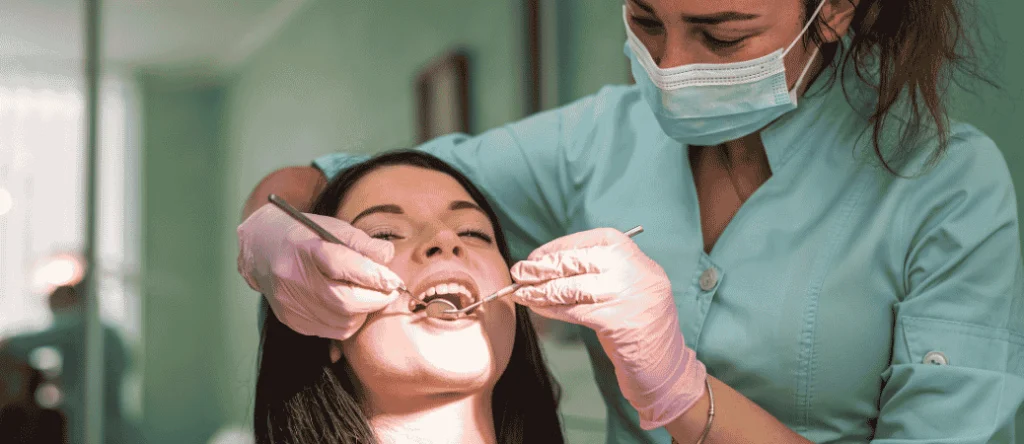
Your dentist or periodontist will start by examining your gums to check for signs of disease. They’ll measure the depth of pockets between your gums and teeth using a special probe.
Healthy gums have pockets of 3mm or less, while deeper pockets indicate gum disease.
The evaluation includes checking for:
- Gum inflammation and bleeding
- Recession of gum tissue
- Loose or mobile teeth
- Plaque and tartar buildup
Active gum disease must be treated before you can move forward with implants.
Your periodontist will assess whether the infection is under control and if your gum tissue is stable enough to support the healing process after implant placement.
Bone Density and Structural Analysis
Your jawbone needs to be strong enough to hold the implant in place. Gum disease can cause bone loss, which weakens the foundation needed for successful implant placement.
Your dentist will use X-rays or CT scans to measure bone density and volume. These images show:
- Height and width of available bone
- Quality of bone structure
- Location of nerves and sinuses
If bone loss has occurred from periodontal disease, you may need bone grafting before getting implants. This procedure rebuilds the bone structure where your missing teeth were located.
The Role of Medical and Dental History
Your complete health background helps determine your implant candidacy. Dentists review medical conditions that could affect healing or increase infection risk.
You’ll need to share information about:
- Current medications you take
- Smoking habits
- Diabetes or autoimmune conditions
- Past periodontal treatments
Your dental history matters too. If you’ve had gum disease before, your dentist needs to know how it was managed and whether it’s stayed under control.
Previous gum disease doesn’t automatically disqualify you from getting implants, but it requires careful monitoring.
Have questions about your gum health and implant eligibility? Contact us today to discuss your situation and create a plan for safe, successful dental implants.
Treating Gum Disease Prior to Implant Placement
Treating gum disease creates a safe and stable foundation before dental implants can be placed. Your dentist will choose from several treatment options based on the severity of your infection and the amount of bone loss.
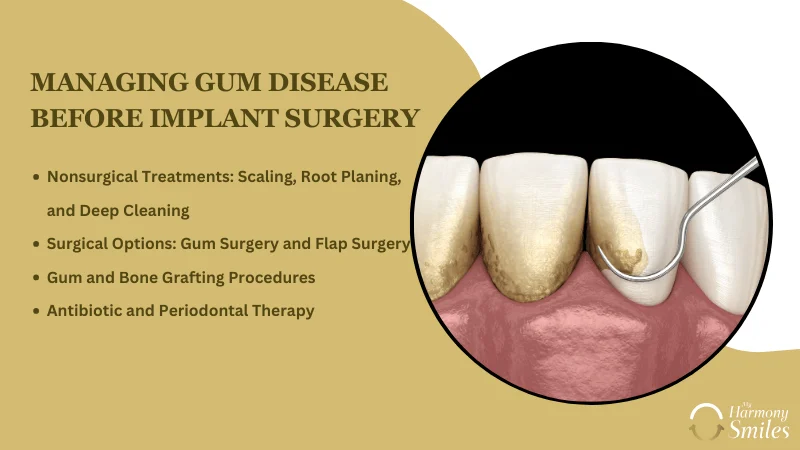
Nonsurgical Treatments: Scaling, Root Planing, and Deep Cleaning
Scaling and root planing is the most common first step in treating gum disease. This deep cleaning procedure removes plaque and tartar from below your gum line, where your toothbrush can’t reach.
During scaling, your dentist cleans the tooth surfaces and removes bacterial buildup from inside the gum pockets. Root planing smooths the tooth roots to help your gums reattach properly.
You might need multiple visits to complete the treatment. The procedure is usually done with local anesthesia to keep you comfortable. Periodontal therapy like this works well for moderate cases of gum disease.
After your deep cleaning sessions, your gums need time to heal before implant placement can begin.
Your dentist will check your progress at follow-up appointments to make sure your gum tissue is healthy enough for the next steps.
Surgical Options: Gum Surgery and Flap Surgery
Flap surgery becomes necessary when gum disease has progressed beyond what deep cleaning can fix.
During this procedure, your periodontist makes small incisions in your gums to lift back the tissue and expose the tooth roots.
This allows for thorough cleaning of deep infection and tartar deposits that regular scaling can’t reach. Your periodontist can also smooth damaged bone during the same procedure.
After thoroughly cleaning the area, the gum tissue is sutured back into place. Gum surgery helps reduce pocket depth and makes it easier to keep your gums clean going forward.
Recovery typically takes a few weeks before you can move on to implant placement.
Gum and Bone Grafting Procedures
Bone grafting rebuilds the jaw structure that gum disease has destroyed. Without enough bone, dental implants won’t have a stable base to support them.
During a bone graft procedure, your periodontist places grafting material into areas where bone has been lost. This material can come from your own body, a donor, or synthetic sources.
The graft encourages your natural bone to grow back over several months.
Gum grafting may also be needed if your gum tissue has receded significantly. Your periodontist may take tissue from another area of your mouth or use donor tissue to cover exposed roots and build up thin gums.
Bone grafting is often required for patients with severe gum disease before they can receive implants. You’ll need to wait for the graft to fully integrate before implant surgery.
Antibiotic and Periodontal Therapy
Antibiotic therapy helps control bacterial infection during and after other gum disease treatments. Your dentist might prescribe oral antibiotics or place antibiotic medication directly into the gum pockets.
Local antibiotics are available as gels, chips, or microspheres that slowly release medication over time. These work alongside scaling and root planing to kill bacteria below the gum line.
Oral antibiotics are sometimes prescribed for more widespread or aggressive infections. Your dentist will determine which approach works best for your specific situation.
Periodontal treatment often combines multiple approaches to fully restore gum health. You’ll need to maintain excellent home care, including daily brushing and flossing, to support the professional treatments.
Regular maintenance cleanings every three to four months help prevent the infection from returning before your implants are placed.
Improving and Maintaining Implant Outcomes After Gum Disease
Once your gum disease is treated and your implants are placed, your daily habits and professional care become the foundation for long-term success.
Patients with a history of periodontal disease need to be especially careful about oral hygiene and regular checkups to prevent complications that could threaten their new implants.
Oral Hygiene Habits for Long-Term Success

Your daily cleaning routine directly affects how long your implants will last. You should brush at least twice a day using a soft-bristled toothbrush and non-abrasive toothpaste to avoid scratching the implant surface.
Flossing around implants is just as important as brushing. Use unwaxed tape, implant-specific floss, or interdental brushes to clean between the implant and your natural teeth.
These tools help remove plaque that regular brushing can’t reach.
Key daily habits include:
- Brushing gently around the implant crown and gum line
- Cleaning between teeth and implants with floss or interdental brushes
- Using an antimicrobial mouth rinse if recommended by your dentist
- Avoiding smoking, which significantly increases the implant failure risk
Proper oral hygiene protects the gum tissue around your implants and prevents bacterial buildup that could lead to infection.
Importance of Professional and Periodontal Cleanings
Regular dental cleanings are essential for maintaining healthy gums after dental implant treatment.
Most patients with a history of gum disease need professional cleanings every three to six months rather than the standard twice-yearly schedule.
During these visits, your dental hygienist uses special instruments designed for implants that won’t damage the metal surface. They remove hardened plaque and tartar that you can’t clean away at home.
Your dentist or periodontist will also check for early signs of problems during these appointments. They measure the depth of the pockets around your implants and look for signs of inflammation or bone loss.
Catching issues early makes them much easier to treat and helps restore gum health before serious damage occurs.
Preventing Peri-implantitis and Gum Disease Recurrence
Peri-implantitis is an infection similar to gum disease that affects the tissue and bone around dental implants. This condition can cause implant failure if not addressed quickly.
Patients who’ve had periodontal disease face a higher risk of developing peri-implantitis.
Warning signs to watch for include:
- Bleeding when brushing or flossing around the implant
- Red or swollen gums near the implant site
- Pus or discharge around the implant
- Loosening of the implant crown
- Persistent bad breath or bad taste
If you notice any of these symptoms, contact your dentist right away. Understanding how gum disease affects dental implants helps you recognize problems before they become serious.
Your dentist may recommend more frequent cleanings, antimicrobial treatments, or minor procedures to stop the infection from spreading.
Alternatives and Special Considerations for Advanced Gum Disease
Some patients with severe periodontal damage may need to consider other tooth replacement options.
Dentures and bridges can restore function and appearance when implants aren’t immediately possible due to insufficient bone or active infection.
When Dental Implants Are Not an Option
If you have significant bone loss from advanced gum disease, your dentist might determine that implants aren’t safe right now.
The implant post needs adequate bone density to fuse properly with your jaw. Without enough bone, the risk of implant failure increases substantially.
Active gum infection also disqualifies you temporarily. The bacteria causing your periodontal disease can prevent proper healing and lead to complications. Your dentist will need to eliminate the infection before considering any surgical procedures.
Sometimes bone grafting isn’t enough to rebuild what was lost. Patients with certain health conditions like uncontrolled diabetes or those taking specific medications may face additional barriers.
Your overall health plays a big role in whether your body can support the healing process implants require.
Dentures and Other Tooth Replacement Solutions
Removable dentures offer a non-surgical way to replace missing teeth when you’re dealing with tooth loss from gum disease.
Full dentures replace all teeth in your upper or lower jaw, while partial dentures fill in gaps between remaining healthy teeth.
Fixed bridges are another option if you still have some stable teeth. A bridge anchors to neighboring teeth and fills the space left by missing ones. This doesn’t require the bone support that implants need.
Implant-supported dentures might work later if you undergo treatment for your periodontal disease and bone grafting. These combine the stability of implants with the coverage of dentures.
They’re more secure than traditional removable dentures but require better bone health than you might currently have.
Each option has different costs, maintenance needs, and longevity. Your dentist can help you choose what works best for your specific situation and budget.
Protect your future implants. Book a periodontal checkup to treat gum disease, strengthen your jawbone, and improve your chances of dental implant success.
Frequently Asked Questions
What factors determine if someone with gum disease can get dental implants?
Your dentist looks at several things to decide if you can get implants. The severity of your gum disease matters most. If you have mild gum disease, treatment is usually simpler than if you have advanced periodontitis.
The amount of jawbone you have left is another key factor. Gum disease can destroy bone over time, and implants need enough healthy bone to hold them in place.
Your dentist will also check how well you control bacteria in your mouth. If you brush and floss regularly and come in for cleanings, you’re showing you can take care of implants after getting them.
Can treating gum disease improve my chances of being a candidate for implants?
Yes, treating your gum disease can make you eligible for implants. Deep cleanings called scaling and root planing remove bacteria from below your gumline. This helps your gums heal and stops more damage.
Some people need periodontal surgery to repair gum tissue. After your gums are healthy again, your dentist can discuss implants with you.
If you’ve lost bone, you might need a bone graft before getting implants. This procedure rebuilds your jawbone so it can support the implant posts.
Are there any risks associated with getting implants if I have a history of gum disease?
The biggest risk is implant failure. If your gum disease isn’t fully treated before placing implants, bacteria can attack the area around the implant. This leads to a condition similar to gum disease that affects implants.
You might also face a higher chance of infection after surgery. People with a history of gum disease need to be extra careful about keeping their mouth clean during healing.
If you don’t have enough bone, additional procedures like bone grafting add time and cost to your treatment. These procedures also come with their own healing periods and potential complications.
How does ongoing gum disease maintenance affect the longevity of dental implants?
Your implants can last for decades if you maintain good oral health. Regular brushing and flossing prevent bacteria from building up around your implants. This is especially important if you’ve had gum problems before.
You need to visit your dentist for checkups and cleanings on schedule. Professional cleanings remove plaque and tartar that regular brushing can’t reach.
Without proper maintenance, gum disease can come back and damage the tissue and bone around your implants. This can cause your implants to loosen or fail completely.
What kind of dental examinations are needed to assess implant eligibility for patients with gum disease?
Your dentist will take X-rays or CT scans to see how much bone you have. These images show if gum disease has destroyed bone in your jaw. They help your dentist plan where to place implants and whether you need bone grafting.
You’ll get a full periodontal examination. Your dentist measures the pockets between your teeth and gums to see how severe your gum disease is.
Your dentist will also review your overall health and any medical conditions you have. Some health issues can affect healing and implant success.
Is there a minimum period of gum health stability required before proceeding with dental implants?
Most dentists want to see your gums stay healthy for several months before placing implants. This proves your gum disease treatment worked and shows you can maintain good oral hygiene.
The exact waiting time depends on how bad your gum disease was. Mild cases might only need a few months of stable gum health. Advanced periodontitis might require healthy gums for 6 months or longer.
If you needed bone grafting, you’ll wait several more months for the graft to heal and integrate with your natural bone. Your dentist will check that everything has healed properly before moving forward with implants.