

You walk out of surgery with a new smile, but the next 72 hours can feel uncertain. Swelling builds. Your mouth feels sore. Eating and speaking take effort. You may wonder what feels normal and what does not.
During the first 72 hours after All-on-X dental implant surgery, you can expect swelling, mild bleeding, and discomfort that peak early and slowly improve with rest, medication, and careful home care.
This short window plays a big role in how well your implants heal. The steps you take now help protect your results and lower the risk of problems.
When you know what is normal and how to care for your mouth, you feel more in control. A clear plan helps you manage pain, protect your new teeth, and support healing from day one.
Key Takeaways
- Expect swelling and soreness to peak within 72 hours and slowly improve.
- Follow care instructions closely to protect your implants and support healing.
- Watch for unusual pain, heavy bleeding, or fever and contact your dentist if they occur.
What to Expect After All-on-X Surgery
The first 72 hours bring numbness, swelling, and strong fatigue. You may also manage prescription pain relief and notice changes in your digestion.
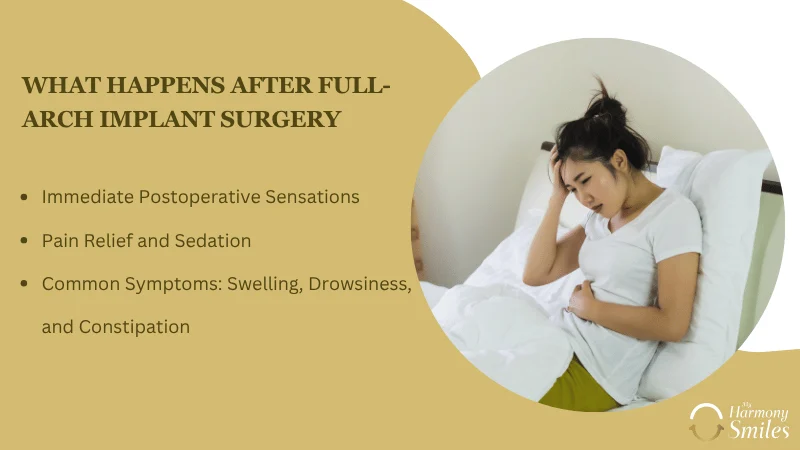
Immediate Postoperative Sensations
Right after surgery, your mouth will feel numb for several hours. Local anesthesia often lasts four to six hours, so your lips, cheeks, and tongue may feel thick or hard to control. You might drool a little without meaning to.
You will likely taste blood. Light bleeding or pink saliva is common during the first 24 to 48 hours. Small oozing is normal, but steady bleeding that fills your mouth is not.
Swelling usually starts the same day. It often peaks around 48 to 72 hours. Your face may feel tight before you see visible swelling.
Your bite may also feel strange. The temporary teeth can feel bulky at first, but this improves as your muscles adjust.
Pain Relief and Sedation
You will go home with a pain relief plan. Many surgeons prescribe a mix of ibuprofen and a stronger medication for the first few days.
If you receive a prescription that includes an opioid, it is a controlled substance. Take it exactly as directed. Do not drive, drink alcohol, or make major decisions while using it.
Sedation drugs from surgery can stay in your system for the rest of the day. You may feel slow, foggy, or unsteady on your feet. Plan to rest and have a responsible adult stay with you for at least 24 hours.
Pain often increases as the numbness fades. This is normal. Use your medication on schedule during the first day instead of waiting for severe pain to start.
Common Symptoms: Swelling, Drowsiness, and Constipation
Swelling is most noticeable during days two and three. Many surgeons note that the first 72 hours are when your body starts its main healing response, including swelling and discomfort.
Use cold packs for 15 to 20 minutes at a time during the first day. Keep your head elevated when you lie down. These steps help limit swelling.
Drowsiness is common. Sedation, pain relief medication, and poor sleep all add to your fatigue. You may nap often and have low energy.
Constipation can start within a few days, especially if you take opioid pain relief.
Drink water, eat soft high-fiber foods if allowed, and ask your surgeon if you should use a stool softener. Acting early makes this easier to manage.
Step-by-Step: The First 72 Hours Timeline
The first three days after dental implant surgery focus on clot formation, swelling control, and protecting the implant site. What you do during this short window supports healing and lowers your risk of implant failure.
Hour-by-Hour Recovery Milestones
Hours 0–6:
You will leave surgery with numbness from anesthesia. As it wears off, mild to moderate pain begins. Start prescribed pain relief before the numbness fades fully.
Keep firm pressure on the gauze to help a blood clot form. Do not spit, rinse hard, bend over, or use a straw.
Hours 6–24:
Swelling usually starts during this period. Use an ice pack on your face for 15–20 minutes at a time.
Rest with your head raised. Follow the strict rest advice often given during the first 72 hours after implant surgery.
Day 2–3:
Swelling and tightness often peak around 48–72 hours. Many patients report this phase as the most uncomfortable, which matches typical patterns in the first 72 hours of dental implant recovery.
Bruising may appear. You should stay on a soft diet and avoid heavy activity.
Managing Side Effects in the Early Days
You can expect swelling, soreness, minor bleeding, and fatigue. These are normal after dental implant surgery.
Use cold compresses during the first 24–48 hours. After that, some surgeons suggest switching to gentle warmth to reduce stiffness.
Take all prescribed pain relief and antibiotics as directed. Do not skip doses.
Eat soft foods like yogurt, eggs, mashed vegetables, and protein shakes. Many All-on-X patients stay on a soft diet for several weeks.
Avoid smoking. Smoking slows blood flow and can interfere with osseointegration, the process where the implant bonds to your jawbone.
Keep your mouth clean. Use a gentle rinse if your surgeon approves, but do not brush directly on the implant site during the first few days.
Signs of Normal Healing vs. Implant Failure
Normal healing includes:
- Mild to moderate pain that improves with medication
- Swelling that peaks around day two or three
- Light oozing during the first 24 hours
- A feeling of pressure or tightness
Osseointegration begins quietly under the surface. You will not feel it happening.
Call your surgeon right away if you notice:
- Severe pain that worsens after day three
- Heavy bleeding that does not stop
- Pus, foul taste, or strong odor
- Fever over 101°F
- An implant that feels loose
Early implant failure is rare, but it can happen if the implant does not bond to bone. Quick action gives your provider the best chance to protect your results.
Critical Care Instructions for Smooth Healing
The first 72 hours after dental implant placement set the tone for healing. Focus on keeping the area clean, protecting the surgical sites, and limiting strain on your body.

Wound Care and Hygiene Best Practices
You may see light bleeding or pink saliva for the first 24 to 48 hours. This is common after dental implants or tooth extraction. If bleeding continues, bite gently on clean gauze for 30 to 60 minutes without checking it too often.
Swelling often peaks around 48 to 72 hours. Place an ice pack on your cheek for 15 to 20 minutes at a time during the first day.
Do not rinse hard, spit forcefully, or use a straw. These actions can disturb the blood clot and slow healing.
Brush your teeth carefully, but avoid the implant sites. If your dentist gave you a medicated rinse, use it as directed. Keep your head elevated when you rest to reduce swelling.
Eating and Drinking After Surgery
Stick to soft, cool foods for the first day. Yogurt, mashed potatoes, scrambled eggs, and smoothies without a straw work well.
Avoid hot, crunchy, sticky, or chewy foods. Many dentists stress avoiding hard or sticky foods during the first 24 hours after surgery.
Drink plenty of water. Do not use straws because suction can disrupt healing.
Pain medicine and reduced activity can cause constipation, especially if you had sedation. Increase fluids and eat soft foods with fiber, like oatmeal or blended fruits. If constipation lasts more than a few days, call your dental office.
Rest, Activity, and Physical Limitations
Your body needs energy to heal after dental implant placement. Plan to rest for the first 24 hours, especially if you had sedation.
Avoid bending, heavy lifting, and intense exercise for at least 48 to 72 hours. Many providers advise limiting strenuous activity during this time.
Most people return to light daily tasks within one to two days. Still, listen to your body.
Keep your head elevated when lying down. Sleep on your back if possible. Skipping workouts for a few days protects the surgical area and lowers your risk of bleeding and swelling.
Medications, Side Effects, and When to Seek Help
During the first 72 hours, you will focus on pain relief, managing sedation, and watching for side effects like constipation or nausea.
You also need to know which symptoms are normal and which ones mean you should call your surgeon right away.
Understanding Prescribed Pain Medications
Your surgeon will likely prescribe a short course of strong pain relief for the first few days. Many offices use a controlled substance, such as hydrocodone or oxycodone, to manage peak soreness during the first 48–72 hours.
Take your medication on a schedule, not just when pain becomes severe. Pain builds fast once anesthesia wears off, and it is harder to control once it spikes.
Some surgeons also recommend ibuprofen because it reduces both pain and inflammation.
Follow dosing instructions exactly. Do not mix medications unless your surgeon tells you to. Avoid alcohol, and never drive while taking prescription pain medicine.
Call your office if:
- Pain suddenly worsens after day three
- Medication does not reduce pain at all
- You notice heavy bleeding that does not slow down
Managing Sedation and Drowsiness

Sedation can linger even after you leave the surgical office. You may feel groggy, slow to react, or mentally foggy for a full day. Prescription pain medicine can increase that drowsiness.
Plan to rest. Do not drive, sign important documents, or operate tools or machinery while you feel sedated. Keep a responsible adult with you during the first 24 hours.
Some people feel lightheaded or dizzy, especially when standing up quickly. Move slowly when getting out of bed. Sit on the edge of the bed for a minute before standing.
Seek help if you experience:
- Trouble staying awake
- Confusion that worsens
- Difficulty breathing
These symptoms are not typical and need medical attention.
Dealing with Constipation and Nausea
Opioid pain medications often cause constipation. This can start within the first two days. Do not wait until you feel uncomfortable to act.
Drink plenty of water. Add soft, fiber-rich foods like oatmeal or mashed beans once your diet allows. Many surgeons suggest starting a stool softener the same day you begin a controlled substance.
Nausea can also happen, especially if you take medication on an empty stomach. Eat a small amount of soft food before each dose unless your surgeon tells you not to. Bland options like yogurt or applesauce work well.
Call your surgeon if you:
- Vomit repeatedly
- Cannot keep fluids down
- Go more than three days without a bowel movement
Quick action prevents small problems from becoming bigger ones during recovery.
Supporting Your Implant Success from Day One
Your implants start healing the moment surgery ends. What you do in the first 72 hours can protect bone, support osseointegration, and lower the risk of implant failure.
The Role of Bone Grafting and Sinus Lifts
You may have received bone grafting or a sinus lift during your All-on-X surgery. These procedures add bone where your jaw lacks enough height or width to hold implants securely.
Bone grafting places natural or synthetic material into thin areas of your jaw. Your body then replaces that material with your own bone over time.
A sinus lift raises the sinus floor in your upper jaw and adds bone beneath it. This creates space for implants in areas where the sinus sits too low.
In the first 72 hours, protect these areas.
- Do not blow your nose.
- Sneeze with your mouth open.
- Avoid heavy lifting.
These actions reduce pressure that could disturb the graft. Swelling and mild bleeding are common, but steady bleeding or sudden pressure in the sinus area needs prompt care.
How Osseointegration Begins
Osseointegration starts right away. This is the process where your jawbone fuses directly to the implant surface.
In the first few days, your body forms a blood clot around each implant. Cells then move in and begin building new bone along the implant threads.
This stage is fragile. Strong chewing forces or trauma can disrupt the early bond.
Follow a strict soft food plan. Many providers outline what to expect during the first 72 hours after implant surgery, including swelling and diet limits.
Keep your head elevated and use ice during the first 48 hours. Facial swelling often peaks around 48 to 72 hours, which matches the normal dental implant healing stages.
Small daily choices now protect the bone-to-implant connection forming under your gums.
Preventing and Detecting Implant Complications
Most patients heal without problems, but you should know the early signs of trouble.
Watch for:
- Pain that worsens after day three
- Pus or foul taste
- Fever over 100.4°F
- Implants that feel loose
Light bleeding and pink saliva are normal early on. Severe or ongoing bleeding is not.
Avoid smoking. Tobacco reduces blood flow and slows bone healing, which raises the risk of implant failure.
Clean your temporary teeth as directed. Gently rinse with salt water after the first day, and avoid aggressive swishing.
The first week focuses on swelling control and site protection. Careful habits during these early days give your implants the stable start they need.
Long-Term Outlook: Setting the Foundation for Lasting Results
The first 72 hours protect your surgical sites, but the next few months protect your investment. What you do during healing affects how strong your implants become and how well your final teeth function.
Benefits of Dental Implants and Restorations
Dental implants fuse with your jawbone over three to six months. During this time, the bone grows around the implant in a process called osseointegration.
This bond gives you stability that removable dentures cannot match. Many patients choose All-on-X because of the long-term benefits of dental implants and restorations, including steady bite force and support for jawbone health.
With implant restorations, you do not remove your teeth at night. You brush and clean around them like natural teeth. Implant dentures also reduce slipping, clicking, and sore spots that often happen with traditional dentures.
You also protect your facial structure. When teeth are missing, bone can shrink. Implants help slow this loss by stimulating the jaw during chewing.
Transitioning to Abutment Placement and Final Prosthetics
After your bone heals, your dentist checks implant stability. This step often happens around months three to six, based on your health and healing speed.
At that stage, you move toward abutment placement if it was not done at surgery. The abutment connects the implant to your final prosthetic teeth.
Your provider then takes impressions or digital scans. A lab designs your final bridge or implant denture for strength and fit.
The full dental implant recovery timeline shows that healing continues even when you feel normal. That is why you must avoid hard foods until your dentist confirms integration.
Once your final prosthetic is placed, you can return to a full diet. You still need daily brushing, flossing tools, and regular checkups to protect the implants.
Cost Considerations and Common Patient Questions
The cost of dental implants depends on several factors:
- Number of implants placed
- Type of implant restorations
- Need for extractions or bone grafting
- Lab materials used for the final teeth
All-on-X often costs more upfront than traditional dentures. However, many patients choose it for stability and long-term function.
Common dental implant FAQs include:
- How long do implants last? With proper care, many last decades.
- Will insurance help with the cost of dental implants? Some plans cover parts of the procedure, such as extractions or prosthetics.
- What if an implant fails? Your dentist can often replace it after healing.
Your early recovery choices matter. Following instructions during the first weeks lowers the risk of problems and helps you protect both your health and your financial investment.
Frequently Asked Questions
The first 72 hours after All-on-X surgery often bring swelling, soreness, light bleeding, and diet limits. Knowing what is normal—and what is not—helps you stay calm and act fast if something feels wrong.
What symptoms are normal in the first 72 hours after All-on-X surgery, and which ones are warning signs?
You can expect mild to moderate pain, facial swelling, and light bleeding or pink saliva during the first 24–48 hours. Many surgeons note that this is the most symptom‑intense period of recovery.
Bruising along your jaw or under your eyes can also appear. Your jaw may feel stiff, and opening wide may be hard.
Call your surgeon right away if you have heavy bleeding that does not slow after steady pressure, swelling that makes it hard to breathe or swallow, a fever over 101°F, or pain that sharply increases instead of slowly improving
These signs need prompt care.
How much swelling and bruising should I expect on days 1–3, and when does it usually peak?
Swelling usually builds during the first two days. It often peaks around 48 to 72 hours after surgery.
Your face may look puffy even if you feel stable. This is normal.
Bruising may turn dark purple, then fade to yellow or green over the next week. Ice packs during the first 48 hours can help limit swelling.
Is throbbing pain around day 3 normal after implant surgery, and what should I do if it’s getting worse?
A dull, throbbing ache around day 2 or 3 can be normal. Swelling peaks during this time, and pressure in the tissues can cause that pulsing feeling.
Pain should slowly improve after day 3. If it becomes sharper, spreads, or feels worse than the day before, contact your office.
Worsening pain after initial improvement can signal infection or implant stress. Do not ignore a sudden change.
What should my gums look like right after surgery, and what changes are normal during early healing?
Right after surgery, your gums may look red, swollen, and slightly shiny. You may see small sutures and mild oozing around the implant sites.
By days 2–3, swelling may increase and the tissue can look more raised. Light bruising on the gums can also appear.
Healthy healing gums gradually shift from bright red to pink over the next week or two. Thick white patches, pus, or a bad smell are not normal and need evaluation.
What foods and drinks should I avoid in the first few days (and why do some surgeons recommend avoiding dairy)?
Stick to liquids and very soft foods for the first few days. Avoid hot foods, alcohol, crunchy snacks, tough meats, and anything that requires chewing.
Hot drinks can increase bleeding during the first 24 hours. Hard or chewy foods can stress your temporary teeth and implants.
Some surgeons suggest avoiding dairy for a short time because it may thicken saliva or upset your stomach when combined with pain medication. Follow your surgeon’s specific instructions if they give this advice.
What can I do at home to help my mouth heal faster during the first 72 hours after surgery?
Rest with your head elevated on two or three pillows. This helps limit swelling.
Use ice packs for 20 minutes on and 20 minutes off during the first 48 hours. Take pain medication on schedule instead of waiting for pain to spike.
Drink plenty of water and eat enough protein through shakes or soft foods. Avoid heavy lifting or exercise, since many surgeons advise avoiding strenuous activity during early recovery.