
Are you tired of hiding your smile because of missing teeth? Do you struggle to chew your favorite foods because your dentures slip and click with every bite? You are not alone.
Every year, millions of adults in the United States face the daily frustration of tooth loss, uncomfortable dentures, and declining self-confidence. But there is a solution that has transformed modern dentistry: dental implants.
Among the most advanced and life-changing options is the All-on-X dental implants, a permanent, fixed full-arch restoration that lets you eat, smile, speak, and live with complete confidence.
This All-on-X dental implants guide covers everything you need to make a confident, informed decision about full arch tooth replacement.
You will learn what they are, how they work, who is a good candidate, the step-by-step procedure, recovery timeline, costs, financing options, risks, benefits, and how they compare to traditional dentures.
We will also share data from trusted sources like the National Institutes of Health (NIH) and the American Dental Association (ADA) to support our guidance.
By the end of this guide, you will have all the knowledge you need to make an informed decision about your smile. Let us begin your journey toward permanent teeth replacement that can last a lifetime.
What Are All-on-X Dental Implants?

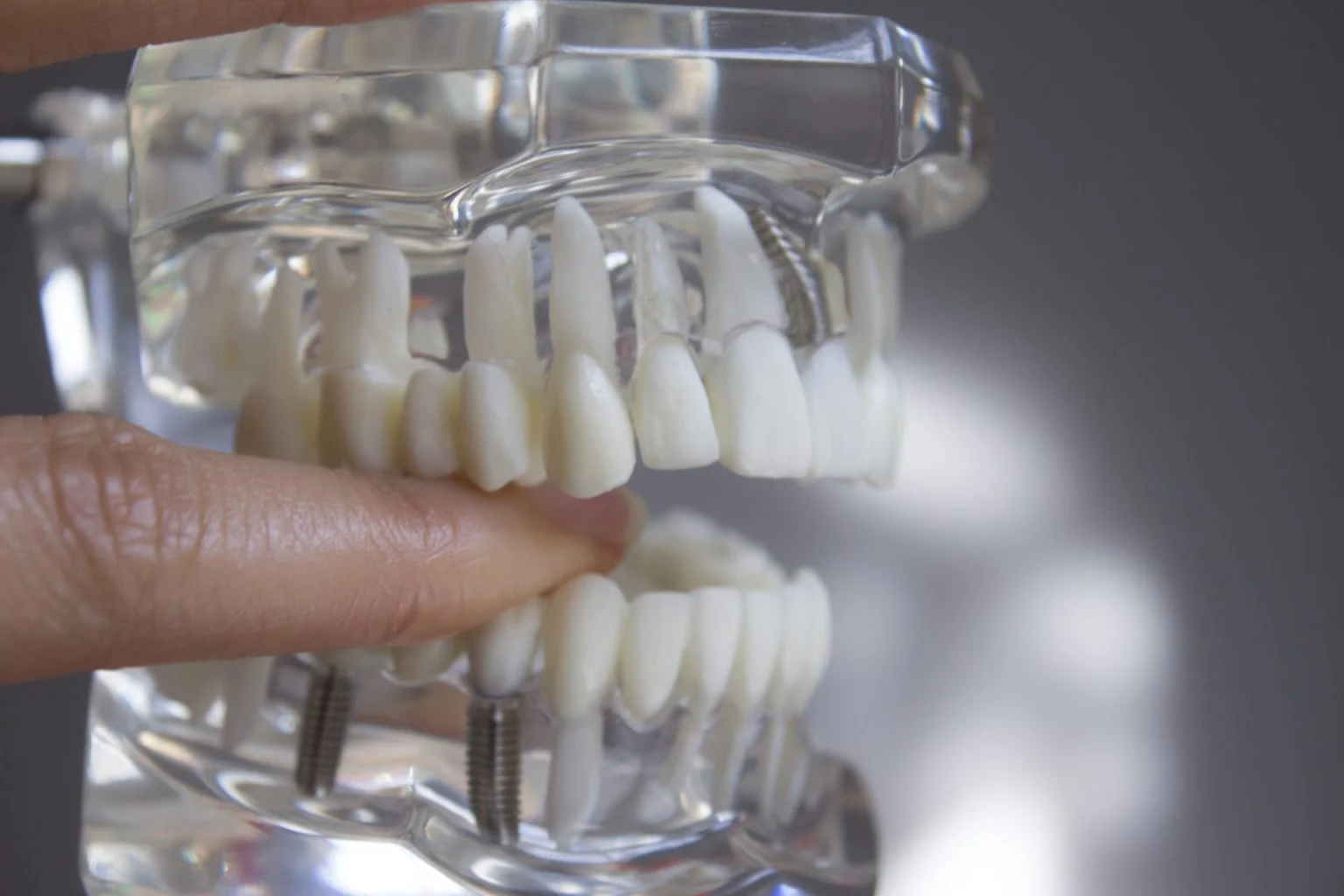
All-on-X dental implants are a full-mouth dental implant solution designed to replace an entire upper or lower set of teeth using a carefully selected number of implants.
The “X” in All-on-X represents the number of implants placed, which typically ranges from 4 to 6, though sometimes up to 8 may be used depending on your jawbone anatomy and functional needs. The most common configurations are All-on-4 (four implants per arch) and All-on-6 (six implants per arch).
Think of it like this: instead of placing one implant for each missing tooth (which would require 10 to 14 implants per arch), we place just a few strategically positioned implants that act as sturdy pillars. These titanium posts are surgically embedded into your jawbone.
A custom-designed bridge of prosthetic teeth is then permanently screwed onto those implants. The result is a complete set of teeth that never comes out. Only a dentist can remove them for maintenance or repair.
The name “All-on-X” is descriptive.
- “All” means all of your teeth on one arch.
- “On” means supported by.
- And “X” stands for the number of implants used.
The technique was pioneered in the late 1990s by Portuguese dentist Dr. Paulo Malo. He discovered that placing the back implants at a 30 to 45 degree angle (tilted implants) could maximize contact with available bone, even in patients with significant bone loss. This innovation eliminated the need for extensive bone grafting in many cases.
Key characteristics of All-on-X dental implants:
- Fixed and non-removable by the patient
- Supported by 4, 5, or 6 titanium implants per arch
- The prosthetic bridge is made of either high-impact acrylic or solid zirconia
- Restores up to 90% of natural chewing power
- Prevents jawbone deterioration and facial collapse
- Does not cover the roof of your mouth (preserves taste and reduces gag reflex)
Other names you might encounter for this treatment include:
- All-on-4 dental implants
- All-on-6 implants procedure
- Full mouth dental implants
- Same-day dental implants
- Implant-supported dentures (though that term often refers to removable overdentures)
- Teeth in a day
- Full arch dental restoration
How All-on-X Differs from Other Tooth Replacement Options
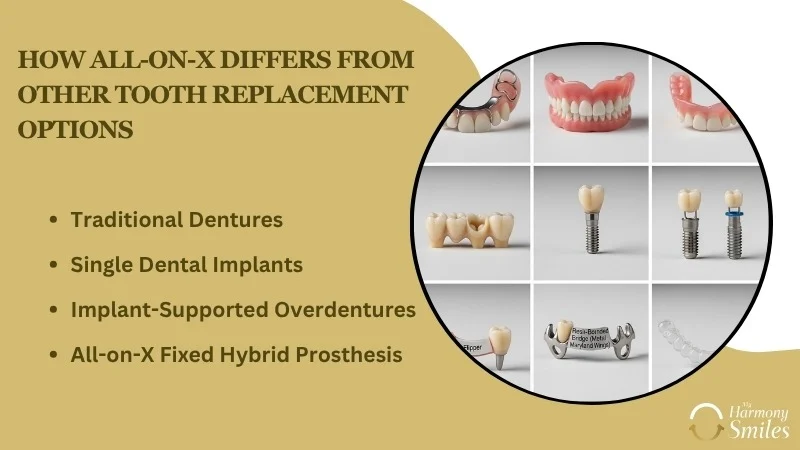
To truly understand the value of All-on-X, you must see how it compares to alternatives. Each option has its place, but they are not equal in outcomes.
Traditional Dentures
Removable dentures are the oldest and most affordable option. They rest on your gums and rely on suction or adhesive to stay in place. However, dentures do not stimulate the jawbone.
According to the National Institute of Dental and Craniofacial Research, denture wearers lose an average of 1 millimeter of bone height every year after tooth loss. Over a decade, this bone loss changes your facial shape, making you look older.
Dentures also limit chewing efficiency to about 20% to 30% of natural biting force. Most denture wearers must avoid sticky, hard, or crunchy foods. And many struggle with clicking, slipping, and embarrassing moments in public.
Single Dental Implants
Single-tooth dental implants replace one missing tooth at a time. A titanium post is placed, allowed to heal, and a crown is attached. This is an excellent solution if you are missing only a few teeth and the rest are healthy.
If you are missing most or all of your teeth, placing 10 to 14 individual implants is invasive, extremely expensive, and often unnecessary. The All-on-X approach achieves the same full-arch result with far fewer implants.
Implant-Supported Overdentures
Also called snap-on dentures, these removable prosthetics attach to 2 to 4 implants using locator attachments. You can take them out at night for cleaning. They are more stable than traditional dentures, offering about60% of natural chewing power.
However, they are still removable, which means you must handle them daily, and they do not provide the same level of bone preservation as fixed implants. Many patients who start with overdentures later upgrade to fixed All-on-X.
All-on-X Fixed Hybrid Prosthesis
This is the gold standard for full-mouth restoration. The teeth are fixed permanently. You never remove them. You brush them like natural teeth. You eat whatever you want.
The implants preserve your jawbone. Your facial structure remains youthful. The only downsides arehigher upfront cost and a longer treatment timeline. For most patients, these trade-offs are more than worth the life-changing benefits.
Types of Full-Mouth Implant Solutions: A Detailed Comparison
Not all full-arch implant solutions are the same. Here is a clear breakdown of the most common types.
| Type | Number of Implants | Stability | Bone Preservation | Chewing Efficiency | Cost Range (Single Arch) | Best For |
| All-on-4 | 4 | Very good | Yes | Up to 90% | $15,000 – $25,000 | Most patients, cost-effective |
| All-on-6 | 6 | Excellent | Yes | Up to 95% | $20,000 – $30,000 | Patients with sufficient bone, heavy bite force |
| All-on-8 | 8 | Maximum | Yes | Up to 98% | $25,000 – $35,000 | Large jaw anatomy, high functional demands |
| Implant-Supported Overdenture | 2 to 4 | Moderate | Partial | 0.6 | $6,000 – $15,000 | Patients wanting removable option |
| Traditional Dentures | 0 | Poor | No | 20-30% | $1,500 – $5,000 | Temporary or budget-limited situations |
Who Is a Good Candidate for All-on-X?
You may be an excellent candidate for All-on-X dental implants if any of the following describe your situation:
- You are missing most or all of your teeth on your upper arch, lower arch, or both
- Your remaining teeth are severely damaged by decay, gum disease, or fractures and cannot be saved with fillings or crowns
- You have been wearing dentures for years and are tired of the slipping, clicking, sore spots, and limitations on what you can eat
- You have chronic dental problems that have led to repeated repairs, extractions, and temporary solutions
- You want a permanent, fixed solution that will last for decades and let you live without fear of your teeth falling out
- You are looking for same-day dental implants that allow you to walk out with a new smile after surgery
Health Considerations
Good overall health is important for successful osseointegration (the process where implants fuse with bone).
Conditions like diabetes, high blood pressure, or osteoporosis do not automatically disqualify you.
A study published in the Journal of Periodontology found that patients with well-controlled diabetes (HbA1c below 7%) have implant survival rates comparable to non-diabetics. However, active, uncontrolled disease increases failure risk.
Smoking
Smoking significantly affects healing. Research shows that heavy smokers (more than 10 cigarettes per day) have 2 to 3 times higher implant failure rates compared to non-smokers.
If you smoke, we strongly recommend quitting or reducing dramatically during the treatment period.
Some patients successfully quit for the 3 to 6 month healing phase and then resume, but the best outcomes occur with long-term cessation.
Bone density
Many patients worry that they have lost too much jawbone to qualify for implants. According to the American Academy of Implant Dentistry, bone grafting success rates exceed90% when performed by experienced clinicians.
Graft materials can come from your own body (autograft), a donor (allograft), or synthetic sources (alloplast).
After grafting, you typically wait 4 to 6 months for new bone to form before implants can be placed. This adds time but makes implant placement possible for almost everyone.
Age
There is no upper age limit for All-on-X. Studies have demonstrated successful outcomes in patients in their 80s and 90s. The key is overall health, not chronological age.
Many older adults are excellent candidates and report dramatic improvements in quality of life after treatment.
Key Benefits of All-on-X Dental Implants

Alt-text: Key Benefits of All-on-X Dental Implants
The benefits of All-on-X go far beyond having a nice smile. They touch every aspect of your daily life.
Permanent, Long-Term Solution
Unlike dentures that need replacement every 5 to 8 years, the titanium implants used in All-on-X can last a lifetime.
According to a 20-year follow-up study published in the International Journal of Oral & Maxillofacial Implants,92% of implants placed in the lower jaw and 85% in the upper jaw remained functional after two decades.
For patients who maintain excellent oral hygiene and attend regular checkups, the success rate exceeds 95% at 20 years.
The prosthetic bridge typically needs replacement every 10 to 15 years due to normal wear, but this is a minor procedure compared to the ongoing costs and frustrations of dentures.
Natural Function and Full Bite Force
Can you bite into a crisp apple with dentures? Probably not. With All-on-X, you can. The implants are anchored directly into your jawbone, restoring up to 90% of your natural biting force.
Research using bite force transducers shows that denture wearers generate only 20 to 30 pounds of force, while natural teeth generate 150 to 200 pounds.
All-on-X patients achieve 130 to 180 pounds. This means you can enjoy steak, nuts, corn on the cob, and all the foods you may have avoided for years.
Your nutrition improves because you can eat a wider variety of healthy, fibrous foods.
Improved Confidence and Lifestyle
The psychological transformation is often the most dramatic benefit. Patients report no longer hiding their smile, laughing freely, and participating in social situations they used to avoid.
A study in the International Journal of Oral & Maxillofacial Implants followed 150 patients for 5 years after All-on-4 treatment.
Using the Oral Health Impact Profile (OHIP-14), researchers found that patients scored 80% lower on measures of functional limitation and physical pain compared to denture wearers. Nearly 98% of patients said they were satisfied or very satisfied with their new teeth.
Bone Preservation and Facial Structure
When you lose teeth, your jawbone begins to shrink. This process is called resorption.
Without the stimulation of tooth roots, the bone dissolves. Over time, your lower face shortens, your chin becomes more prominent, your lips sink inward, and deep wrinkles form around your mouth. You look older than you are.
According to a study in the Journal of Oral Rehabilitation, patients with complete dentures have a 30% reduction in lower facial height over 10 years compared to patients with natural teeth or implants.
All-on-X implants stimulate the jawbone just like natural roots, halting bone loss and preserving your youthful facial contours.
Easy Maintenance
With traditional dentures, you must remove them every night, soak them in cleaning solution, scrub them, and apply adhesives before putting them back in. The daily routine takes 8 to 10 minutes and involves messy, inconvenient steps.
With All-on-X, you brush your teeth twice daily just like natural teeth. You use a soft toothbrush and non-abrasive toothpaste. You floss underneath the bridge using superfloss or a water flosser. That is it. No soaking, no adhesives, no embarrassment.
A clinical study found that All-on-X patients spend an average of 4 minutes per day on oral hygiene, compared to 8 to 10 minutes for denture wearers.
No Denture Limitations
Traditional dentures cover the roof of your mouth. This affects your ability to taste food because taste receptors on the palate are blocked. It also triggers a gag reflex in up to 30% of wearers.
All-on-X leaves your palate uncovered. You can taste fully, and gagging is no longer an issue. Your speech also improves because there is no bulky plastic interfering with tongue movement.
Denture wearers often struggle with “s,” “th,” and “f” sounds. All-on-X eliminates these speech problems.
Permanent Teeth Replacement in as Little as One Day
One of the most exciting benefits is that many patients receive same-day dental implants with a temporary fixed bridge attached immediately after surgery.
You never have to go without teeth. You leave the office smiling. The emotional boost of seeing your new smile on the same day as surgery cannot be overstated. Patients often cry tears of joy. They take selfies. They share the news with their family members. This immediate result changes everything.
The All-on-X Procedure: Step-by-Step
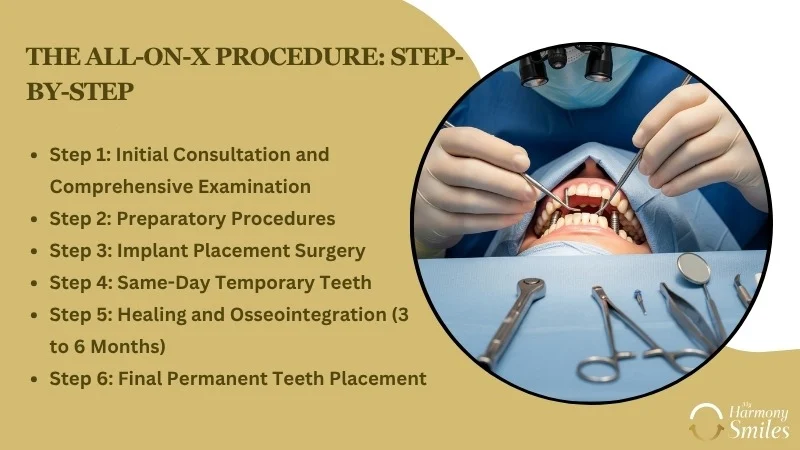
Understanding exactly what happens during treatment reduces anxiety and builds trust. Here is the complete step-by-step journey.
Step 1: Initial Consultation and Comprehensive Examination
Your all-on-x process begins with a 60 to 90-minute consultation. During this visit, we take a detailed medical history. We list all medications, including over-the-counter supplements. We ask about past surgeries, allergies, and chronic conditions like diabetes or heart disease.
Next, we perform a thorough oral examination. We assess your remaining teeth, gum health, jawbone quality, and bite relationships. We look for signs of gum disease, tooth decay, and bone loss.
The most important diagnostic tool is the 3D CBCT scan (cone beam computed tomography).
This machine rotates around your head, capturing over 600 images. The software reconstructs these images into a complete three-dimensional model of your jawbone, teeth, nerves, sinuses, and surrounding structures.
CBCT imaging is essential for safe and precise implant placement. Studies show that CBCT-guided implant placement reduces the risk of nerve injury by 90% compared to traditional 2D x-rays alone.
- During this visit, we also discussed your goals.
- What do you want your new smile to look like?
- Do you have any fears or concerns about surgery?
We explain sedation options, the treatment timeline, and cost. You receive a written treatment plan with a detailed estimate. There are no surprises.
Step 2: Preparatory Procedures (If Needed)
Between20% and 40% of patients need some preparation before implant placement. Common preparatory procedures include:
- Tooth extractions: Any remaining teeth that are severely decayed, fractured, or affected by advanced gum disease must be removed. In many cases, extractions and implant placement can be performed on the same day. This is called immediate implant placement.
- Bone grafting: If your CBCT scan shows insufficient bone height or width, bone graft material is placed into the deficient areas. The graft can come from your own chin or ramus (autograft), a donor (allograft), or synthetic materials (alloplast). Bone grafts take 4 to 6 months to mature into strong, vital bone. According to the American Association of Oral and Maxillofacial Surgeons, bone grafting success rates for dental implants exceed 95%.
- Sinus lift (sinus augmentation): For the upper back jaw, the maxillary sinuses often expand after tooth loss, leaving very little bone height for implants. A sinus lift involves gently lifting the sinus membrane and placing bone graft material underneath. This adds 1 to 3 millimeters of bone height. Healing takes 4 to 6 months. Sinus lift success rates are 90% to 95% in published studies.
- Gum disease treatment: Active periodontitis must be treated before implants can be placed. Treatment includes scaling and root planing (deep cleaning), antibiotics, and sometimes gum surgery. Once your gums are healthy and stable, you can proceed with implants.
Step 3: Implant Placement Surgery
On the morning of surgery, you will be given sedation to keep you comfortable and anxiety-free. Sedation options include:
- Local anesthesia with oral sedation: You take a pill (usually a benzodiazepine like Halcion) about an hour before surgery. You are awake but very relaxed. Many patients doze off during the procedure.
- IV moderate sedation (twilight sleep): Medication is delivered through an intravenous line. You are conscious but deeply drowsy. Most patients remember nothing of the surgery. This is the most popular choice for All-on-X because it balances comfort with safety.
- General anesthesia: You are completely asleep, typically administered by an anesthesiologist or nurse anesthetist. Reserved for very complex cases or extremely anxious patients.
What happens during surgery
- Even with sedation, we inject local anesthetic (numbing medication) to ensure you feel no pain.
- We make small incisions in your gum tissue to expose the jawbone.
- Using a 3D-printed surgical guide that was created from your treatment plan, we drill precise holes at the exact angles and depths planned in the software.
- The titanium implants are screwed into these holes. Implants come in various lengths (8 to 16 millimeters) and diameters (3 to 5 millimeters). We select the size that best fits your bone.
- Healing abutments (small caps) or multi-unit abutments are placed on top of the implants. These will support your temporary bridge.
- In most cases, we attach a temporary fixed bridge on the same day. This bridge is made of acrylic and is screwed onto the abutments.
The surgery takes 2 to 4 hours for one arch, or 4 to 6 hours for both arches. You will need a driver to take you home. Most patients describe the experience as painless and surprisingly easy. You may hear drills and feel vibration, but you will not feel sharp pain.
Step 4: Same-Day Temporary Teeth (Immediate Loading)
The concept of same-day teeth is called immediate loading. How is it possible to place a bridge on implants that are only hours old?
The answer lies in primary stability.
When we place an implant, we torque it into the bone. If the insertion torque is 35 to 50 Newton-centimeters or higher, the implant is sufficiently stable to support a temporary bridge.
The temporary bridge is also designed to be non-occluding (not touching the opposing teeth when you bite down) to avoid overload.
What you can expect from your temporary bridge
- It looks natural and esthetic
- It allows you to eat soft foods (yogurt, smoothies, mashed potatoes)
- You must NOT bite into hard or crunchy foods with it
- It protects the implants during healing
- It gives you an immediate smile and confidence boost
If immediate loading is not possible (due to poor bone quality, low torque values, or heavy bruxism), you will wear a conventional denture during healing. Your dentist will make it as comfortable as possible with soft liners.
Step 5: Healing and Osseointegration (3 to 6 Months)
After surgery, your body begins the natural process of osseointegration. This term comes from the Greek “osteon” (bone) and the Latin “integrare” (to make whole).
The titanium implants fuse with your living jawbone at the microscopic level. The bone grows right up to the implant surface, locking it in place.
During the healing phase
- You follow a soft or semi-soft diet for 4 to 8 weeks
- You avoid chewing directly on the temporary bridge
- You practice gentle oral hygiene using a soft toothbrush and a water flosser on low setting
- You do NOT use traditional string floss around the implants until cleared by your dentist
- You attend follow-up appointments at 2 weeks, 1 month, 3 months, and 6 months
- X-rays are taken periodically to monitor bone growth around the implants
The healing phase is critical. According to research published in Clinical Oral Implants Research, the success rate of osseointegration is 98% when patients follow post-operative instructions.
The most common causes of failure during this phase are smoking, eating hard foods too soon, and poor oral hygiene.
Step 6: Final Permanent Teeth Placement
Once your dentist confirms (through clinical examination and X-rays) that osseointegration is complete, you are ready for your permanent teeth. The process takes 2 to 3 weeks:
- Your dentist removes the temporary bridge.
- Digital impressions are taken of your implants and surrounding gums using an intraoral scanner. No goopy impression material required.
- The digital files are sent to a dental laboratory.
- Skilled technicians design your final bridge using CAD/CAM technology (computer-aided design and computer-aided milling).
- The prosthesis is milled from a solid block of either high-impact acrylic or zirconia.
- You return to the office for a try-in appointment to check fit, esthetics, and bite.
- After any adjustments, the final bridge is screwed onto the implants and torqued to the manufacturer’s specification.
- The screw access holes are filled with composite resin, making the bridge look completely natural with no visible screws.
Your final permanent teeth are fully customized for:
- Color: Shade-matched to your skin tone, age, and personal preference
- Shape: Proportions that complement your face and smile line
- Size: Proper lip support and tooth display at rest and when smiling
- Bite: Even contact across all teeth for comfortable chewing
One-Day Smile: Immediate Results Explained in Depth
How does a patient go from failing teeth or no teeth to a beautiful fixed bridge in just one appointment?
- The All-on-X technique uses strategic implant placement.
- Two implants are placed straight in the front (anterior) region, where bone is usually densest.
- Two implants are placed at a 30 to 45 degree angle in the back (posterior) region.
This angulation allows the implants to reach longer, stronger bone, even if the back part of the jaw has resorbed. The four implants form a tripod-like support structure.
Because the implants are splinted together with a rigid bridge, their stability multiplies. One implant alone might withstand 20 to 30 pounds of force. Four splinted implants can withstand 100 to 120 pounds. This is more than enough to support a temporary bridge during the healing phase.
The temporary bridge itself is designed to be “passive.” It does not contact the opposing teeth when you bite down. This prevents excessive force on the healing implants. You eat only soft foods, which further protects the implants.
According to a multicenter study published in the Journal of Oral Implantology, immediate loading of All-on-4 implants achieved a98.5% success rate at 1 year, compared to 99.1% for traditional delayed loading.
The difference was not statistically significant. This means same-day teeth are just as safe and effective as waiting for healing before placing the bridge.
The emotional benefit cannot be measured in statistics alone. Patients who have lived for years with missing teeth or embarrassing dentures walk out of the office with a complete smile makeover.
Advanced Technology Behind Successful All-on-X
Modern implant dentistry relies on sophisticated technology that makes treatment safer, more predictable, and more comfortable.
3D CBCT Imaging
CBCT provides a complete three-dimensional view of your jaw. Unlike traditional 2D x-rays, which flatten anatomy, CBCT shows exactly where your nerves, sinuses, and adjacent teeth are located.
The dentist can measure bone height and width with sub-millimeter accuracy. The radiation dose is low (50 to 100 microsieverts, equivalent to 5 to 10 dental X-rays or a few hours of background radiation). CBCT has become the standard of care for complex implant cases.
Digital Treatment Planning Software
Using the CBCT data, we import the images into specialized software (such as coDiagnostiX, NobelClinician, or Simplant).
This software allows us to place virtual implants on the screen, adjusting angle, depth, and position. We can see exactly where each implant will sit in relation to nerves and sinuses.
We can measure bone density (Hounsfield units) to predict how well the implants will integrate. The software then generates a 3D-printed surgical guide.
Computer-Guided Implant Placement
The surgical guide is a custom-made plastic template that fits over your teeth or gums. It has metal sleeves that direct the implant drill to the exact position and angle planned on the computer.
Guided surgery achieves placement accuracy within 0.3 to 0.5 millimeters and 2 degrees of angulation, compared to 1 to 2 millimeters with freehand placement.
This precision reduces the risk of damaging the inferior alveolar nerve (which runs through the lower jaw) by 90%. It also allows for immediate loading because the implants are placed exactly where planned.
Intraoral Scanning
An intraoral scanner is a wand-like device that uses structured light or laser technology to capture millions of data points as the dentist moves it around your mouth.
The software stitches these points into a highly accurate 3D digital model. Digital impressions are more accurate than traditional impressions, with studies showing 50% less distortion. They are also faster and more comfortable for patients.
CAD/CAM Prosthetics
Computer-aided design (CAD) and computer-aided milling (CAM) have revolutionized dental laboratories.
Your final bridge is designed on a computer screen, where the technician can adjust every contour, contact point, and color gradient. The design file is sent to a milling machine that carves your bridge from a solid block of zirconia or acrylic.
Milled restorations have no porosity, meaning they are stronger, less likely to harbor bacteria, and more durable than traditional hand-layered bridges.
Intraoral Photography and Digital Smile Design
We use high-resolution cameras and digital smile design software to preview your results before treatment begins.
We take photos of your face at rest and smiling. The software superimposes a digital mockup of your new teeth onto the photos. You can see exactly how your smile will look before we even schedule surgery.
This allows you to provide feedback on tooth shape, size, and color. There are no surprises. You get exactly the smile you want.
Why Full-Mouth Implant Cases Require Specialists
All-on-X is not a procedure for a general dentist who places a few single implants each year. It requires advanced training, extensive experience, and a team approach.
- Prosthodontist: A prosthodontist is a dental specialist with 3 years of additional training beyond dental school focused on restoring and replacing teeth. They are experts in occlusion (bite), esthetics, and materials. They design the final bridge and ensure it fits perfectly with your jaw function.
- Oral surgeon: An oral surgeon has 4 to 6 years of residency training in surgical procedures. They perform the implant placement, bone grafting, and sinus lifts. They are experts in managing complications and working near vital structures like nerves and sinuses.
- Periodontist: A periodontist specializes in the gums and supporting structures. They are experts in soft tissue management, ensuring your gums heal beautifully around the implants.
- Dental laboratory technician: The technician crafts your final bridge. High-quality technicians have years of experience and use the best materials. The difference between an average bridge and an exceptional bridge is often the skill of the technician.
At My Harmony Smiles, our team includes experienced implant specialists who have placed over 200 full arches since 2019. We work closely with a certified dental laboratory to ensure outstanding esthetics and function.
Recovery Timeline and Healing Process: Week by Week
Knowing what to expect day by day reduces fear and helps you prepare.
Day of Surgery (Day 0)
- You are groggy from sedation. Most patients sleep for several hours after arriving home.
- Bite on gauze for 30 to 60 minutes to control bleeding.
- Apply ice packs to your face (20 minutes on, 20 minutes off).
- Eat nothing until the anesthesia wears off completely.
- Take prescribed pain medication before the local anesthetic wears off.
Days 1 to 3 (Early Recovery)
- Swelling peaks around day 2 or 3. Use ice packs during the first 48 hours, then switch to warm compresses.
- Stick to cold soft foods: yogurt, smoothies, ice cream, pudding, applesauce, protein shakes.
- Avoid hot foods and drinks because they increase bleeding.
- Rinse gently with warm salt water (1 teaspoon salt in 8 ounces of water) 4 to 5 times daily, starting 24 hours after surgery. Do not spit; let the rinse fall out of your mouth.
- Most patients rate pain as 2 to 3 out of 10. Over-the-counter ibuprofen or acetaminophen usually controls it.
Days 4 to 7 (Transition)
- Swelling begins to subside.
- You can transition to warm soft foods: mashed potatoes, scrambled eggs, soup, well-cooked pasta, and cottage cheese.
- Avoid chewing on the surgical site.
- Take over-the-counter pain medication as needed. Most patients stop all pain medication by day 5.
- You can return to non-strenuous work. Avoid lifting heavy objects or exercising for at least 2 weeks.
Weeks 2 to 4 (Healing Continues)
- Swelling is mostly gone.
- You can slowly introduce semi-soft foods: soft bread without crust, pancakes, tender chicken, fish, and ground meats.
- Avoid anything crunchy, hard, or sticky: nuts, chips, raw vegetables, crusty bread, caramel.
- Practice gentle oral hygiene using a soft toothbrush. Use a water flosser on low setting from the outside of the bridge only (do not direct water under the bridge until cleared).
- Attend your 2-week follow-up appointment for a checkup.
Months 2 to 6 (Osseointegration Phase)
- You continue with a modified soft to semi-soft diet. Avoid biting directly into whole fruits, nuts, hard candies, or ice.
- You can eat most cooked foods as long as you cut them into small pieces.
- Monthly follow-up appointments include X-rays to monitor bone integration.
- By month 3, if bone integration is excellent, you may start eating firmer foods like well-cooked steak cut into small pieces.
- By month 6 (the typical end of osseointegration), you can gradually return to a normal diet.
After Final Teeth Placement (Months 6 to 8)
- Congratulations, you are fully healed.
- You can now eat a completely normal diet, including steak, whole apples, nuts, popcorn, and corn on the cob.
- Your permanent teeth are designed to withstand normal chewing forces.
- Avoid using your teeth as tools (opening bottles, tearing packages).
- Avoid chewing ice or very hard candies.
- Schedule your 6-month recall appointment for professional cleaning and examination.
Detailed Diet Guidelines During Healing
| Phase | Allowed Foods | Avoid |
| Days 1-3 | Yogurt, smoothies, pudding, ice cream, applesauce, protein shakes, cold soup | Hot foods, crunchy foods, any chewing |
| Days 4-7 | Mashed potatoes, scrambled eggs, soup (warm), cottage cheese, oatmeal, refried beans | Nuts, chips, raw vegetables, bread crusts |
| Week 2-4 | Soft bread (no crust), pancakes, tender chicken, fish, pasta with soft sauce, meatloaf | Steak, whole fruits, sticky candy, popcorn, crusty bread |
| Month 2-6 | Most cooked foods are cut into small pieces, ground meats, cooked vegetables, and soft fruits like bananas | Whole apples, nuts, hard rolls, corn on the cob, ice |
| After healing (month 6+) | Normal diet including steak, apples, nuts, corn on the cob, sticky candy | Ice, hard candies, using teeth as tools |
Risks and Potential Complications: A Balanced, Evidence-Based View

Alt-text: Risks and Potential Complications
All surgical procedures carry some risk. However, dental implants have an excellent safety record.
According to a comprehensive review in the Journal of Dental Research, the overall implant survival rate at 10 years is95.2% for All-on-4 and 96.7% for All-on-6. Let us look at specific risks and their frequencies.
Infection (2% to 5% of cases)
Infection can occur at the implant site, especially in patients with poor oral hygiene, uncontrolled diabetes, or who smoke. Symptoms include increasing pain, swelling, redness, and discharge (pus).
Most infections are treated with antibiotics. Severe infections may require implant removal. Proper pre-operative antibiotics (usually amoxicillin or clindamycin) and post-operative chlorhexidine rinses reduce infection risk to below 2%.
Implant Failure (1% to 5% of implants placed)
Failure means the implant does not fuse with bone (early failure) or loses bone support after initial healing (late failure).
Early failure is usually due to inadequate bone quality, overheating during surgery, contamination, or patient habits like smoking. Late failure can result from peri-implantitis (inflammation around the implant similar to gum disease).
A 15-year study of 5,000 implants found that 96.7% survived at 5 years, 95.2% at 10 years, and 92.1% at 15 years. Failed implants can often be replaced after the site heals for 2 to 3 months.
Nerve Injury (0.5% to 1% of lower arch cases)
The inferior alveolar nerve runs through the lower jaw and provides sensation to the lower lip, chin, and gum. Implants placed too close can cause temporary or permanent numbness.
With modern CBCT planning and guided surgery, this risk has been reduced to below 0.5%. Even if an injury occurs, sensation returns within 6 to 12 months in most cases. Permanent numbness is extremely rare (less than 0.1%).
Sinus Complications (1% to 2% of upper arch cases)
Implants placed in the upper back jaw can protrude into the maxillary sinus, causing sinusitis, congestion, facial pain, or discharge.
Careful planning with CBCT and sinus lifts prevents this. If a sinus complication occurs, it usually resolves with antibiotics or minor endoscopic surgery.
Prosthetic Fracture (5% to 10% over 10 years)
The acrylic or zirconia bridge can crack or break, especially in patients with heavy bite forces or bruxism (teeth grinding).
Acrylic bridges are more prone to fracture than zirconia. Most fractures are repairable in the dental office. Some require a new prosthesis. Using a nightguard reduces fracture risk by 60% in bruxers.
Peri-Implantitis (10% to 20% of patients over 10-20 years)
Peri-implantitis is inflammation and bone loss around implants, similar to gum disease. It is caused by plaque accumulation. Risk factors include smoking, poor oral hygiene, and lack of regular professional maintenance.
With daily brushing, flossing, and 6-month cleanings, the risk is low. Once diagnosed, peri-implantitis can often be treated with deep cleaning and antibiotics, though advanced cases may require surgery.
The vast majority of patients undergo All-on-X treatment without any serious complications. A prospective study followed 217 patients for 3 to 13 years and reported a96.9% implant survival rate. Only four implants failed during osseointegration, and all were successfully replaced. Patient satisfaction remained above 95% throughout the study period.
How Long Do All-on-X Implants Last? Evidence-Based Answers
The titanium implants can last a lifetime with proper care. The prosthetic teeth (bridge) typically last 10 to 15 years before needing replacement due to normal wear, staining, or microfractures.
Factors that extend lifespan:
- Daily brushing and flossing (implants can develop peri-mucositis if plaque accumulates)
- Professional cleanings every 6 months (special plastic or carbon fiber instruments are needed to avoid scratching titanium surfaces)
- Wearing a nightguard if you grind your teeth (bruxism generates 3 to 5 times normal chewing force)
- Not smoking (smokers have 2 to 3 times higher implant failure rates)
- Controlling diabetes (HbA1c below 7% is ideal)
- Avoid using your teeth as tools or chewing ice/hard candy
According to a 20-year follow-up study published in the International Journal of Oral & Maxillofacial Implants, 92% of implants placed in the mandible (lower jaw) and 85% in the maxilla (upper jaw) remained functional after two decades. For patients who maintained excellent oral hygiene and attended regular recalls, the success rate exceeded 95% at 20 years.
All-on-X vs Dentures: Which Is Better? Comprehensive Comparison
After reviewing the evidence, most patients conclude that dental implants vs dentures is not a close contest. However, each patient’s financial situation and health status may influence the decision.
| Feature | All-on-X Implants | Traditional Dentures |
| Stability | Fixed permanently. Never moves. | Removable. Can slip, rotate, or fall out. |
| Chewing ability | 90% of natural force (130-180 lbs) | 20-30% of natural force (20-30 lbs) |
| Bone preservation | Yes, stimulates the jawbone, prevents resorption | No, bone loss continues, leading to facial collapse |
| Maintenance | Brush and floss (4 min/day) | Soak overnight, use adhesives, scrub (8-10 min/day) |
| Comfort | Feels like natural teeth. No palate coverage. | Can cause sore spots, gagging, bulky feeling. |
| Longevity | Implants: lifetime; Bridge: 10-15 years | 5-8 years before reline or replacement needed |
| Upfront cost per arch | $15,000 – $35,000 | $1,500 – $5,000 |
| 20-year cost (including replacements) | $15,000 – $45,000 (one bridge replacement) | $18,500 – $32,000 (3-4 sets plus adhesives) |
| Speech | Normal, clear | Possible clicking, whistling, slurring |
| Taste | Full taste sensation | Reduced due to palate coverage |
| Confidence | High | Low to moderate |
Which is better? For patients who can afford the upfront investment and are healthy enough for surgery, All-on-X is overwhelmingly superior.
A 2019 health economics study found that All-on-4 implants were cost-effective over 20 years compared to conventional dentures when quality-adjusted life years (QALYs) were considered.
The incremental cost per QALY was well within accepted thresholds for cost-effective medical interventions.
For patients who are not surgical candidates due to severe medical conditions or who truly cannot afford implants, modern dentures with soft liners and denture adhesives remain a viable option. However, most denture wearers express regret and wish they had chosen implants sooner.
Alternatives to All-on-X Implants: When Each Is Suitable
All-on-X is not the only option. Here is when alternatives make sense.
Traditional Dentures
Suitable for: Patients who are not surgical candidates, have extremely severe bone loss that cannot be grafted, or have very limited budgets.
Also appropriate as a temporary solution while saving for implants.
However, the American College of Prosthodontists reports that denture wearers have significantly lower quality of life scores compared to implant patients.
Implant-Supported Overdentures
Suitable for: Patients who want implant stability but prefer to remove their teeth at night for cleaning, or who have limited bone and cannot support a fixed bridge.
Also, a good option for patients who have previously had implant failure and cannot receive a fixed prosthesis.
Provides about 60% of natural chewing force, which is better than dentures but still far from All-on-X.
Single Implants
Suitable for: Patients missing only 1 to 4 teeth with healthy remaining teeth.
If you are missing most teeth (more than 5 per arch), it is usually more efficient and cost-effective to extract the remaining compromised teeth and place All-on-X rather than trying to save them.
Fixed Bridge Supported by Natural Teeth
Suitable for: Patients who cannot have implants (rare now) or who want a short-term solution.
However, traditional bridges require grinding down healthy adjacent teeth. This damages them. Implants preserve neighboring teeth. Most dentists now recommend implants over traditional bridges whenever possible.
No Treatment
Some patients choose to live with missing teeth. However, this leads to progressive bone loss, shifting of remaining teeth, difficulty eating, and eventual loss of more teeth. The ADA strongly recommends replacing missing teeth to maintain oral and overall health.
Why Timing Matters: The Consequences of Delay
Do not wait too long to address missing teeth. Every year you go without teeth, you lose an average of 0.5 to 1.0 millimeters of jawbone height and width. This bone loss makes future implant placement more difficult and may require extensive bone grafting.
What happens over time:
- 1 year after tooth loss: 30% of bone width is lost. Implants are still possible without grafting in many cases.
- 3 years after tooth loss: 50% of the bone width and 30% of the bone height are lost. Complex grafting or sinus lifts are almost always required.
- 10 years after tooth loss: 70% of the bone width and 50% of bone height are lost. Implant placement may be impossible without major reconstruction, including block bone grafts from your hip or tibia.
Your facial appearance also changes as bone resorption progresses. The lower third of your face shortens, your lips collapse inward, and your chin rotates forward. This aged appearance is difficult to reverse, even with implants. Early treatment leads to simpler procedures, faster healing, better outcomes, and lower overall cost.
A study in the Journal of Oral Rehabilitation quantified these changes. After 10 years of denture wear, the average reduction in lower facial height was 5.2 millimeters. That is enough to make a person look 10 to 15 years older.
The nasolabial folds (the deep lines from nose to mouth) deepened significantly. Implant patients showed no significant change in facial height over the same period.
Life After All-on-X: What Changes? A Patient’s Perspective
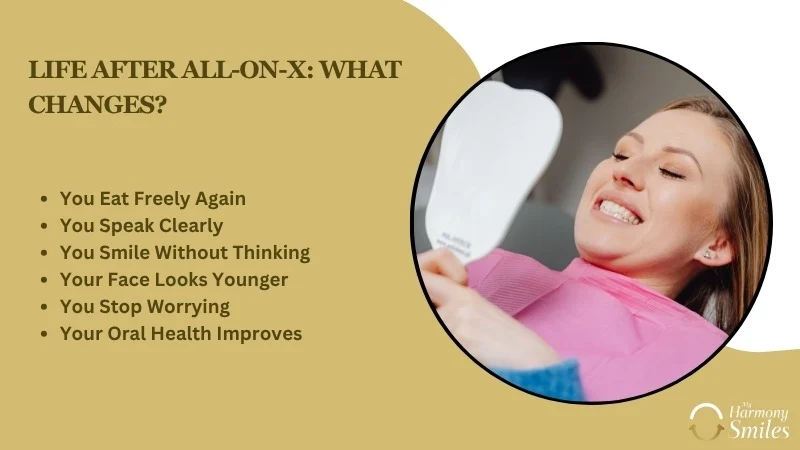
Patients who receive permanent teeth replacement with All-on-X describe a transformation that goes beyond dentistry. Here is what you can expect based on published patient testimonials and clinical studies.
You Eat Freely Again
No more cutting food into tiny pieces. No more avoiding restaurants because you cannot chew the menu items. You order steak and bite into it with confidence.
One patient reported, “I ate an apple for the first time in 15 years. I cried with joy.” Your nutrition improves because you can eat a wider variety of healthy, fibrous foods like raw vegetables, nuts, and whole fruits.
You Speak Clearly
No clicking dentures. No slurred words. Your speech is natural and effortless.
A 2018 study measured speech intelligibility in denture wearers versus implant patients. Implant patients scored 98% on word recognition tests, while denture wearers scored only 85%.
You no longer worry about embarrassing sounds during conversations.
You Smile Without Thinking
The automatic reaction to cover your mouth disappears. You smile at strangers. You laugh openly at jokes. Photographs no longer terrorize you.
A survey of All-on-4 patients found that 94% reported improved social interactions and 91% said they smiled more often after treatment. Your confidence radiates in every interaction.
Your Face Looks Younger
By preserving your jawbone, All-on-X restores your natural facial proportions. Friends and family may tell you that you look years younger.
Before and after photos show dramatic improvements in lip support, nasolabial folds, and chin projection. The psychological boost of looking younger and healthier is profound.
You Stop Worrying
The constant anxiety about your teeth falling out or your dentures slipping vanishes.
- You no longer pack denture adhesives in your purse.
- You no longer scan restaurant menus for soft foods.
- You no longer avoid kissing or intimate moments for fear of embarrassment.
You simply live your life without that background hum of dental anxiety.
Your Oral Health Improves
Fixed teeth are easier to keep clean than dentures, and you are more motivated to maintain excellent hygiene.
Gum inflammation decreases, and your overall health benefits from better nutrition and reduced chronic inflammation.
Some studies suggest a link between oral health and systemic conditions like heart disease and diabetes. By improving your oral health, you may also improve your overall health.
Choosing the Right Implant Dentist for All-on-X
Full mouth dental implants require advanced training and experience. When selecting a provider, look for the following credentials and characteristics.
Credentials to Look For
- Prosthodontist: A specialist with 3 years of additional training beyond dental school in replacing teeth and restoring implants. Look for board certification from the American Board of Prosthodontics.
- Oral surgeon: A specialist with 4 to 6 years of residency training in surgical procedures. Look for board certification from the American Board of Oral and Maxillofacial Surgery.
- Periodontist: A gum specialist with 3 years of training in implant placement and soft tissue management. Look for board certification from the American Board of Periodontology.
- General dentist with advanced implant training: Many general dentists complete hundreds of hours of continuing education in implant dentistry. Look for fellowship or mastership status in the International Congress of Oral Implantologists (ICOI) or the American Academy of Implant Dentistry (AAID).
Technology to Look For
- In-office 3D CBCT imaging (not a referral to an outside imaging center)
- Digital intraoral scanner (no more goopy impressions)
- Computer-guided surgery capabilities with in-house 3D printing of surgical guides
- In-house or local dental laboratory with CAD/CAM milling
Experience to Verify
- How many full arch All-on-X cases has this dentist performed? Ask for a number. Over 50 cases indicates significant experience. Over 200 cases is expert level.
- Ask to see before and after photos of actual patients (not stock photos). Pay attention to the gum contours, tooth proportions, and overall harmony with the face.
- Ask for patient testimonials or, if permitted, contact information for a past patient. Most happy patients are glad to share their experience.
Red Flags to Avoid
- Prices that seem too good to be true (extremely low fees often mean poor quality materials, outdated technology, or inadequate training)
- Dentists who cannot show you before-and-after photos
- No CBCT imaging on site (using only 2D x-rays is below the standard of care for All-on-X)
- High-pressure sales tactics or time-limited discounts that pressure you into a decision
- Poor online reviews or unresolved complaints on sites like Google, Healthgrades, or the Better Business Bureau
Our implant team has placed over 200 full arches since 2019. We use state-of-the-art CBCT imaging, digital planning, guided surgery, and CAD/CAM prosthetics.
Our patients consistently rate us 5 stars for communication, comfort, and results. We serve patients throughout Central Florida and welcome you for a consultation.
Frequently Asked Questions
Are All-on-4 implants painful?
No. During surgery, you are under sedation and feel nothing. Afterward, most patients describe mild soreness similar to a tooth extraction. Over-the-counter pain medication usually controls any discomfort.
A study of 100 All-on-4 patients found that80% rated their post-operative pain as 2 or less on a 10-point scale, and only 5% required narcotic pain medication beyond day 2.
How long does the full procedure take?
The implant placement surgery takes 2 to 4 hours per arch. The complete process from consultation to final permanent teeth typically takes 4 to 6 months for simple cases.
Cases requiring bone grafting or sinus lifts take 9 to 12 months. Same-day temporary teeth are placed in about70% to 80% of cases.
Can dental implants fail?
Yes, but failure is rare. The success rate for full mouth dental implants is 95% or higher in healthy non-smokers. Most failures happen within the first 3 months due to poor bone quality, infection, or smoking.
Failed implants can often be replaced after the site heals for 2 to 3 months. If a second failure occurs, alternative treatments like implant-supported overdentures may be considered.
How do I clean my All-on-X teeth?
- Brush them twice daily with a soft toothbrush and non-abrasive toothpaste.
- Use superfloss (a stiff-ended floss with a spongy segment) or a water flosser (such as Waterpik) to clean underneath the bridge.
- Pass the floss or water stream between the bridge and your gums. Your dentist will show you the proper technique.
- Professional cleanings every 6 months use specialized plastic or carbon fiber instruments to avoid scratching the titanium.
Can I eat normally with All-on-X?
After complete healing (6 months), yes. You can eat steak, apples, nuts, corn on the cob, and all the foods you love.
During the healing phase (first 6 months), you must stick to soft foods to protect the implants while they fuse with bone. Attempting to eat hard foods too early is the most common cause of implant failure.
Are dental implants covered by insurance?
Some dental insurance plans cover part of the cost, especially for the prosthetic teeth. Coverage typically ranges from $1,000 to $3,000 per arch.
Medical insurance may also contribute if tooth loss resulted from an accident or medical condition such as cancer treatment or congenital defect. We will help you maximize your benefits by submitting claims to both dental and medical plans when applicable.
What is the success rate for All-on-X in smokers?
Heavy smokers (more than 10 cigarettes per day) have a 10% to 20% higher implant failure rate than non-smokers.
Smoking reduces blood flow to the gums, impairs healing, and increases infection risk. However, many smokers still achieve success if they quit smoking during the healing period (at least 3 months).
Can I get All-on-X if I have gum disease?
You must complete periodontal therapy to eliminate active gum disease before implant placement. Active gum disease increases implant failure risk by 300%.
Treatment includes deep cleaning (scaling and root planing), antibiotics, and sometimes gum surgery. Once your gums are healthy and stable (usually after 4 to 6 weeks of healing), you can proceed with implants. You will need more frequent maintenance visits (every 3 months) to prevent recurrence.
How much does full mouth reconstruction cost with All-on-X?
Full mouth reconstruction using All-on-X for both arches typically costs $30,000 to $70,000 depending on materials, number of implants, and preparatory procedures.
A single arch costs $15,000 to $35,000. These prices include all consultations, imaging, surgery, temporary teeth, lab fees, and final prosthesis.
Financing options can reduce the monthly payment to $300 to $800 per month over 3 to 7 years.
Is the All-on-X procedure safe for older adults?
Yes, age alone is not a risk factor. Studies show that patients over 80 have implant success rates within2% of younger patients, provided they are in good general health. The key is managing chronic conditions like diabetes, heart disease, and osteoporosis.
Older patients may heal slightly slower, but the final outcome is equally successful. Many patients in their 80s and 90s have successfully received All-on-X and report dramatic improvements in quality of life.
What is the difference between All-on-4 and All-on-6?
- All-on-4 uses four implants per arch (two straight in front, two tilted in back).
- All-on-6 uses six implants (all straight or with mild angulation).
All-on-6 provides more even load distribution and may be recommended for patients with dense bone and heavy bite forces.
Can I get All-on-X if I have bruxism (teeth grinding)?
Yes, but you must wear a custom nightguard while sleeping. Bruxism generates forces 3 to 5 times higher than normal chewing, which can fracture the prosthetic bridge or overload the implants.
A hard acrylic nightguard distributes these forces and protects your restoration. Without a nightguard, bruxers have a significantly higher risk of prosthetic fracture.
Are All-on-X Implants Worth It? A Value Analysis
For the right patient, All-on-X implants are absolutely worth the investment. Let us do the math over 20 years.
Traditional dentures over 20 years:
- Initial dentures: $1,500 – $5,000
- Replacement every 5-8 years: 3 sets x $2,000 = $6,000
- Adhesives (average $50/month): $50 x 12 x 20 = $12,000
- Relines and repairs: $2,000 – $5,000
- Total 20-year cost: $21,500 – $28,000
- Plus: Ongoing frustration, limited diet, bone loss, facial collapse, low confidence
All-on-X (one arch) over 20 years:
- Initial implant surgery and bridge: $15,000 – $35,000
- One bridge replacement after 10-15 years: $5,000 – $10,000
- Total 20-year cost: $20,000 – $45,000
- Plus: Excellent function, normal diet, preserved bone, youthful face, high confidence
The cost difference over two decades is minor, depending on options. For that small premium, you get a lifetime of eating whatever you want, smiling without shame, and never worrying about your teeth. Most patients say they would pay twice as much for the peace of mind and quality of life they have gained.
Conclusion
If you are tired of living with missing teeth, uncomfortable dentures, or a smile you hide from the world, All-on-X dental implants offer a permanent, life-changing solution.
- You can eat your favorite foods again.
- You can smile without shame.
- You can speak clearly without clicking or slipping.
- And you can preserve your youthful facial structure for years to come.
Dental implants are not just about replacing teeth. They are about restoring your confidence, your health, and your joy in life. The journey takes a few months, but the reward lasts a lifetime.
According to the American Dental Association, over 5 million implants are placed each year in the United States, with patient satisfaction exceeding 95%. You are not alone in this journey.
Take the first step today. Schedule a consultation to learn if All-on-X is right for you.
Our team offers personalized treatment plans, flexible financing options with monthly payments as low as $300 per month, and compassionate care from consultation through your final smile.
We have transformed hundreds of smiles, and we are ready to transform yours.
Contact My Harmony Smiles today to book your appointment and start your transformation. Restore your smile, restore your confidence, and reclaim your life.