


A wisdom tooth ache that fades after a few days can feel like good news. Many people assume the pain went away because the problem healed on its own, so they put off calling the dentist.
But intermittent wisdom tooth pain rarely means the issue resolved itself.
More often, it means the underlying cause is still there, quietly cycling between flare-ups and calm stretches.
Wisdom teeth, also called third molars, often erupt slowly over months or years, and the surrounding gum tissue reacts to pressure, trapped food, and bacteria in waves rather than all at once.
That is why the ache seems to come and go instead of staying constant.
If your wisdom tooth pain comes and goes, a dental exam is still important. An exam and dental X-rays can help determine whether the tooth is impacted, decaying, or surrounded by irritated gum tissue.
Pain frequency alone cannot tell you that. A dentist looks at the tooth’s position, the health of the gum around it, and any damage to nearby teeth before deciding whether to monitor, treat, or recommend removal.
Key Takeaways
- Pain that disappears for days or weeks does not mean the wisdom tooth problem has healed.
- An exam and X-ray, not the pattern of pain, determine whether monitoring or removal is the right next step.
- Certain symptoms, like swelling, fever, or jaw stiffness, call for prompt care instead of waiting out another quiet spell.
Does Recurring Pain Mean Wisdom Teeth Need Removal?
Recurring pain does not automatically mean a wisdom tooth has to come out, but it does mean the tooth needs a proper look.
A dentist has to weigh the cause of the pain, the tooth’s position, and the condition of the surrounding gum before making that call.
Why Temporary Relief Does Not Confirm the Problem Is Gone
Pain fading does not mean healing happened. Inflammation naturally rises and falls as your immune system fights off bacteria trapped around a partially erupted wisdom tooth, so symptoms can quiet down for a while even though the trigger is still sitting there.
Once food debris builds back up or the tooth shifts slightly, the same cycle starts again.
This back-and-forth pattern is common with pericoronitis and impacted third molars, and it tends to repeat until the actual cause gets addressed.
When Monitoring May Be Reasonable
Not every wisdom tooth needs to come out. If a tooth has erupted fully in a good position, sits at a normal angle, and the gum and bone around it look healthy on X-ray, a dentist may recommend simply watching it at routine cleanings instead of removing it right away.
This approach only works when there is no active decay, no gum infection, and no crowding pushing against neighboring teeth or existing braces.
How a Dentist Determines Whether Extraction Is Needed
X-rays reveal what symptoms alone cannot. A dentist checks the tooth’s angle, how much space is available in the jaw, whether it presses on the second molar, and whether cysts or bone loss have started to form.
Wisdom teeth removal becomes the recommended path when the tooth is impacted, repeatedly infected, decayed beyond repair, or actively damaging the tooth next to it.
Immediate wisdom tooth extraction is not always necessary, but a timely evaluation helps you avoid reaching that point.
What Causes a Wisdom Tooth Ache to Flare Up?
A wisdom tooth ache usually flares because of trapped bacteria, pressure from a tooth trying to erupt, or irritation from chewing near partially exposed tissue.
Several distinct problems can create this same stop-and-start pain pattern, and they often overlap.
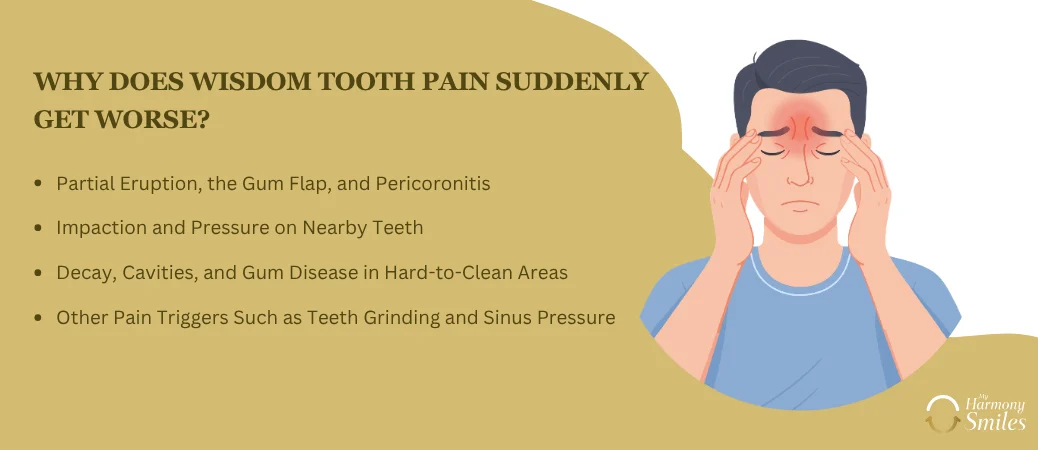
Partial Eruption, the Gum Flap, and Pericoronitis
When a wisdom tooth only partly breaks through the gum, a flap of tissue called an operculum covers part of the crown. Food and bacteria collect underneath it, and your toothbrush cannot reach that hidden space.
This buildup leads to pericoronitis, an infection of the gum tissue around a partially erupted wisdom tooth.
Symptoms often include swollen gums, a bad taste, and jaw stiffness that improves for a while once the immune system knocks bacteria levels back down, then returns once debris builds up again.
Impaction and Pressure on Nearby Teeth
An impacted wisdom tooth is one that cannot fully emerge because there is not enough room in the jaw. It may push sideways into the second molar instead of coming in straight.
This pressure can cause crowding, wear down the neighboring tooth’s root, or raise the risk of decay on both teeth because the tight space is hard to clean.
Decay, Cavities, and Gum Disease in Hard-to-Clean Areas
The back corner of your mouth is difficult to reach with a toothbrush or floss, especially around a partially erupted tooth.
Plaque builds up in these hidden spots and leads to cavities or gum disease over time.
Once decay reaches the nerve, pain can flare sharply with hot or cold food, then settle down until the next irritation.
Other Pain Triggers Such as Teeth Grinding and Sinus Pressure
Pressure from an erupting wisdom tooth can lead to teeth grinding, especially at night, which adds jaw soreness on top of the original ache.
Upper wisdom teeth sit close to the sinuses, so sinus pressure from a cold or allergies can sometimes mimic or worsen wisdom tooth pain.
Which Symptoms Need Prompt Dental Care?
Swelling, pus, fever, or jaw stiffness alongside wisdom tooth pain call for a dental visit soon, not a wait-and-see approach. These signs point toward infection, which can spread if it goes untreated.
Signs of Infection Around a Wisdom Tooth
Watch for swollen or tender gums around the back molar, a bad taste or persistent bad breath, and visible pus near the gum line.
These symptoms suggest bacteria have built up faster than your immune system can clear them.
A low fever combined with gum swelling is also a signal that the infection has moved beyond simple irritation.
When Jaw Pain, Stiffness, or Headaches Are Concerning
Jaw stiffness that makes it hard to open your mouth fully, along with headaches that radiate from the jaw toward the temple or ear, often means inflammation has spread past the tooth itself.
If jaw pain has started affecting your ability to chew or sleep, it is worth mentioning at your visit, and our page on TMJ headaches and ear pain explains how jaw-related pain can overlap with wisdom tooth symptoms.
When to Seek Urgent or Emergency Care
Fever, facial swelling that spreads toward the eye or neck, or difficulty swallowing are signs of a dental emergency and need same-day attention.
Infections near the jaw can move into deeper tissue spaces quickly, and our guide on tooth infection spreading to the jaw walks through why prompt treatment matters in these cases.
If you cannot reach your regular dentist, emergency dentistry services exist specifically for situations like this.
What Can You Do Until Your Dental Appointment?
Warm saltwater rinses, a cold compress, and over-the-counter pain relievers can ease discomfort while you wait for your appointment.
None of these steps fix the underlying cause, so they work best as short-term comfort measures.
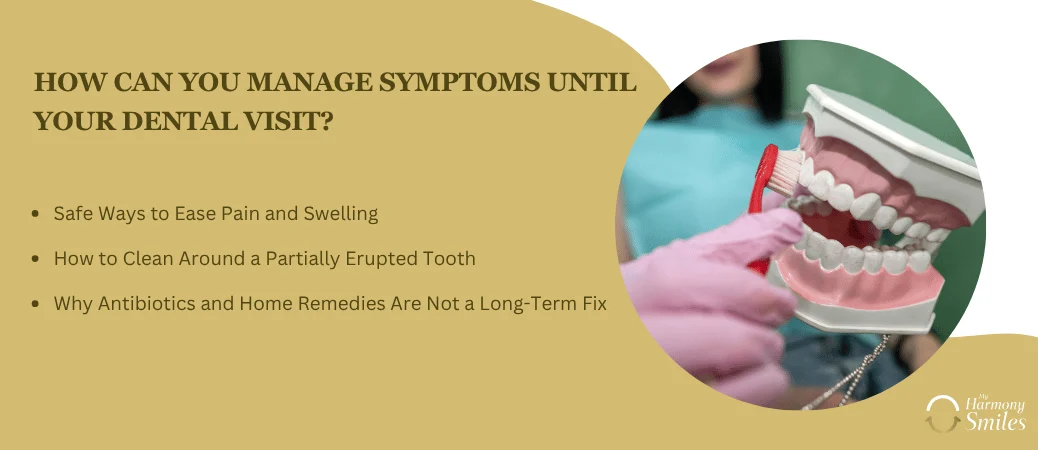
Safe Ways to Ease Pain and Swelling
A warm saltwater rinse, about half a teaspoon of salt in a cup of warm water, swished gently several times a day, helps flush out food particles and calm irritated gum tissue.
An ice pack held against the outside of your jaw for 15 to 20 minutes can reduce swelling.
Over-the-counter pain relievers like ibuprofen help with both pain and inflammation. Always follow the dosing instructions on the package.
How to Clean Around a Partially Erupted Tooth
Gentle flossing around the edges of a partially erupted wisdom tooth helps clear out trapped food that feeds bacteria under the gum flap.
A soft-bristled brush angled toward the back of the mouth reaches areas a straight brushing motion misses.
Rinsing with warm salt water after meals adds another layer of cleaning when brushing alone cannot reach the space under the gum tissue.
Why Antibiotics and Home Remedies Are Not a Long-Term Fix
Antibiotics may help control certain bacterial infections, but they do not correct an impacted tooth, persistent gum flap, or another structural cause of recurring symptoms.
Your dentist can determine whether additional treatment is needed after the infection settles.
Home remedies work the same way. They buy time and comfort, not a cure, which is why a dental exam still needs to happen even if the ache fades again on its own.
What Happens if Removal Is Recommended?
Wisdom tooth removal usually involves an X-ray review, a choice of anesthesia based on the tooth’s position, and a short recovery period.
An oral surgeon or dentist plans the approach around exactly where the tooth sits and how it is angled in the jaw.
If removal is recommended, your dentist will explain what to expect from a tooth extraction and how the tooth’s position affects the procedure.
Why X-Rays and Tooth Position Affect the Plan
X-rays show whether a tooth is fully impacted, partially erupted, or sitting close to a nerve.
This image guides whether the extraction can be done by a general dentist or needs an oral surgeon experienced with more complex impactions.
At My Harmony Smiles, Dr. Bibek Nakarmi can evaluate your symptoms and review dental imaging to determine the position of the wisdom tooth and whether monitoring, treatment, or extraction may be appropriate.
Anesthesia and Sedation Options
Options range from local anesthesia, which numbs just the area around the tooth, to sedation or general anesthesia for patients who feel anxious or need multiple teeth removed at once.
The choice depends on the complexity of the extraction and personal comfort level.
Your dentist will walk through which option fits your situation during the consultation, so you know what to expect before the day of surgery.
Risks of Delaying Treatment for Problem Wisdom Teeth
Leaving a problem wisdom tooth untreated can allow cyst formation around the tooth, ongoing damage to the neighboring molar, and repeated infections that become harder to treat over time.
Left long enough, some of these issues can affect the jawbone itself.
Delaying care rarely makes the pain permanently go away. It usually means the same problem returns, often with more discomfort the next time.
If you are unsure whether your symptoms warrant a same-day visit or a scheduled appointment, this guide on immediate dental care versus scheduled treatment can help you decide.
Use Pain-Free Periods to Get a Clear Answer
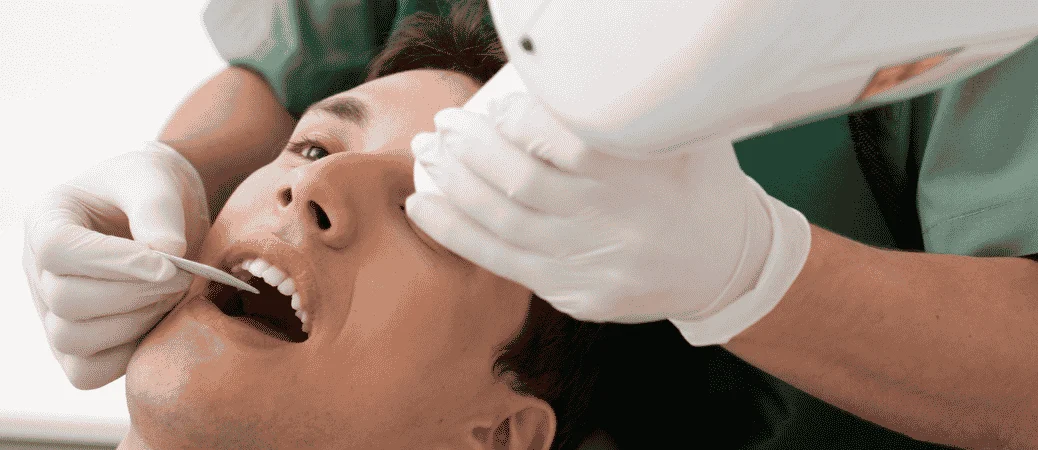
A quiet stretch between flare-ups is the easiest time to get answers, not a sign to skip the appointment.
Once the wisdom tooth ache fades, it is tempting to cancel your visit and hope it stays gone.
But a pain-free window is actually a good time to see a dentist.
Without active swelling or discomfort, an exam and X-ray can show exactly what is happening with the tooth, whether it is impacted, decaying, or simply erupting normally.
Waiting for the next flare-up to schedule care means you are more likely to be dealing with active infection or sharp pain by the time you’re seen.
Getting ahead of it protects your oral health and gives you time to make a calm, informed decision about extraction instead of a rushed one during a painful flare.
Frequently Asked Questions
Should you remove wisdom teeth if the pain comes and goes?
Removal depends on what the exam and X-ray show, not on how often the pain returns.
If the tooth is impacted, infected, or damaging a neighboring tooth, removal is often recommended even if the pain comes and goes rather than staying constant.
How long can I ignore wisdom tooth pain?
It is not safe to ignore recurring wisdom tooth pain for more than a few days without getting it checked.
Pain that returns even after quiet stretches usually points to an ongoing issue like pericoronitis or impaction that will not resolve without treatment.
Can a partially erupted wisdom tooth heal on its own?
Whether a partially erupted wisdom tooth continues to erupt depends on its position and the amount of available space.
If it remains partly covered by gum tissue, food and bacteria can collect around it and cause recurring irritation or infection.
Why does my wisdom tooth pain return after eating?
Food particles get trapped under the gum flap covering a partially erupted wisdom tooth every time you chew.
This trapped debris irritates the tissue and triggers inflammation, which is why the ache often flares within hours of eating, especially with sticky or chewy foods.
Is it dry socket or normal pain after wisdom tooth removal?
Normal post-extraction pain gradually improves each day and responds to prescribed pain medication.
Dry socket pain tends to get worse around day three, often with a throbbing ache that radiates to the ear, and our guide on dry socket symptoms on day three after extraction explains what to watch for and when to call your dentist.