

If you’ve been dealing with persistent headaches or unexplained ear pain, your jaw might be the hidden culprit.
The temporomandibular joint connects your jawbone to your skull, and when problems develop in this joint or the surrounding muscles, the effects can radiate far beyond your jaw itself.
Yes, TMJ disorders can cause both headaches and ear pain because the temporomandibular joint sits very close to your ear canal and shares nerve pathways with areas of your head and neck.
TMJ disorders trigger symptoms like pressure in the ears, ringing, and head pain that many people don’t realize are connected to their jaw.
Understanding this connection helps explain why treating the jaw joint can provide relief from pain you might have thought was unrelated.
The good news is that most TMJ-related pain doesn’t last forever.
With the right approach like Botox for TMJ, you can find relief through treatments ranging from simple home care to specialized therapies that target the root cause of your discomfort.
Key Takeaways
- TMJ disorders cause headaches and ear pain because the jaw joint is located near your ear and shares nerve connections with your head and neck
- Common symptoms include jaw tenderness, aching around the ears, difficulty chewing, clicking sounds, and pain that spreads to your face and temples
- Most people find relief through conservative treatments like physical therapy, mouth guards, stress management, and self-care before needing advanced interventions
Understanding the Temporomandibular Joint and TMD
The temporomandibular joint connects your jawbone to your skull and allows you to talk, chew, and yawn. When this joint or the muscles around it don’t work properly, you develop temporomandibular disorders that can affect your daily life.
What Is the Temporomandibular Joint?
Your temporomandibular joint works like a sliding hinge on each side of your jaw. The TMJ connects your jawbone to your skull and combines hinge movements with sliding motions to let you open and close your mouth.
The joint has several important parts working together. Cartilage covers the bones where they meet, and a small shock-absorbing disk sits between them to keep movement smooth.
Muscles attached to and around the joint help control your jaw movements when you chew, speak, or swallow.
You have one temporomandibular joint on each side of your face, just in front of your ears. These joints work together every time you move your jaw.
When both joints function properly, you can open your mouth wide, move your jaw side to side, and chew without pain.
How TMJ Disorders Develop
TMJ disorders, also called temporomandibular disorders or TMD, happen when something disrupts the normal function of your jaw joints or muscles.
Any problem that prevents your muscles, bones, and joints from working together in harmony can lead to a temporomandibular disorder.
The disk inside your joint can erode over time or shift out of position. When this happens, the cushioning between your bones breaks down and movement becomes painful.
Your ligaments and soft tissues can also get sprained or strained from overuse. The cartilage in your joint may wear down from arthritis.
An injury or blow to your jaw can damage the joint directly. Your jaw muscles might go into spasms, causing pain and limited movement.
Many times, TMJ disorder develops from a combination of factors rather than one single cause. This makes it harder to figure out exactly what started your symptoms.
Common Causes of TMD
Repetitive habits put stress on your temporomandibular joint and surrounding muscles. Teeth grinding and teeth clenching, also known as bruxism, are leading causes of TMD. Many people grind their teeth at night without realizing it.
Other habits that contribute to TMJ disorder include:
- Chewing gum frequently
- Biting your nails
- Clenching your jaw when stressed
- Resting your chin on your hand
Physical factors also play a role in developing temporomandibular disorders. Arthritis can damage your joint’s cartilage, making movement painful. A direct injury to your jaw from an accident or impact can harm the joint structure.
Stress and tension affect how you hold your jaw throughout the day. When you’re anxious or under pressure, you might clench your teeth without noticing. This constant muscle tension leads to facial pain and jaw pain over time.
Prevalence and Risk Factors
TMD commonly affects adults and often starts between ages 20 and 40. Women experience temporomandibular disorders more frequently than men, though researchers aren’t entirely sure why.
Several factors increase your risk of developing a TMJ disorder. If you have rheumatoid arthritis or osteoarthritis, you’re more likely to experience joint problems in your jaw. Previous jaw injuries raise your risk significantly.
Your mental health affects your temporomandibular joint too. Stress, anxiety, depression, and post-traumatic stress disorder all increase your chances of developing TMD.
These conditions often lead to muscle tension and bruxism.
Additional risk factors include:
- Fibromyalgia
- Connective tissue diseases
- Sleep disturbances
- Smoking
- Ankylosing spondylitis
People who work in high-stress jobs or have demanding schedules often develop symptoms. The temporalis muscle and other jaw muscles become overworked from constant tension, leading to chronic facial pain.
Key Symptoms Linking TMJ to Headaches and Ear Pain
TMJ disorders create a distinct pattern of symptoms that can affect your jaw, head, ears, and neck. Your nerves in these areas share pathways, which means problems in your jaw joint can trigger pain that shows up in unexpected places.
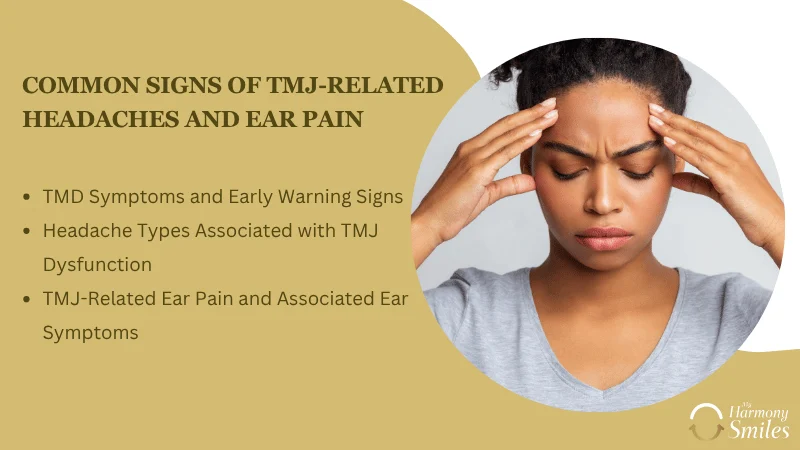
TMD Symptoms and Early Warning Signs
The most common symptoms of TMJ include pain or tenderness in your jaw joint itself. You might notice jaw clicking or popping sounds when you open your mouth or chew food.
Many people experience pain while chewing or find it hard to bite down on food. Your jaw might feel stiff or locked, making it difficult to open or close your mouth fully.
TMJ symptoms often include pain that spreads beyond your jaw. You may feel discomfort in your face, neck, or shoulders. Some people notice their symptoms get worse when they talk, yawn, or eat chewy foods.
Headache Types Associated with TMJ Dysfunction
TMJ headaches typically feel like dull, aching pain around your temples and forehead. These headaches caused by TMJ disorders can mimic tension headaches or even migraines.
Tension-type headaches are the most common type linked to TMJ problems. You might feel a tight band of pressure around your head. The pain usually starts near your jaw and moves up to your temples or the back of your head.
TMJ headache symptoms can include pain behind your eyes and sensitivity to light. These headaches often happen in the morning if you grind your teeth at night.
TMJ-Related Ear Pain and Associated Ear Symptoms
TMJ ear pain feels similar to an ear infection, which confuses many people. Your temporomandibular joint sits right in front of your ear, so inflammation in this joint can create ear-related symptoms.
You might experience ear pressure or a feeling of ear fullness, like your ears need to pop. TMJ-related ear pain can also cause tinnitus, which is ringing or buzzing sounds in your ears.
Some people notice muffled hearing or a clicking sensation inside their ears. The pain might get worse when you move your jaw or chew food.
How TMJ Dysfunction Triggers Headaches
TMJ dysfunction creates headaches through muscle tension, nerve irritation, and referred pain patterns that extend from your jaw into your head.
The temporalis muscle plays a central role in transmitting pain signals, while the connection between your temporomandibular joint and neurological pathways can activate both tension-type headaches and migraines.
Mechanisms Behind TMJ Headaches
When you have temporomandibular disorder, your jaw joint doesn’t move smoothly. This causes muscles around your jaw to work harder than normal. These overworked muscles send pain signals that travel to your head.
TMJ headaches stem from pain spreading from your jaw to your face and head through shared nerve pathways. The trigeminal nerve connects your jaw, face, and head.
When your TMJ is inflamed or stressed, this nerve carries pain signals throughout these areas.
Your body also responds to jaw dysfunction by tightening nearby muscles. This creates a cycle where muscle tension causes more joint stress, which leads to more muscle tension.
The result is persistent head pain that feels similar to a band tightening around your skull.
Temporalis Muscle Involvement
Your temporalis muscle covers the side of your head above your ear. This muscle helps you chew and close your jaw. When you clench your teeth or grind them at night, your temporalis muscle stays contracted for long periods.
Teeth clenching and jaw clenching put constant strain on this muscle. Bruxism, the habit of grinding or clenching teeth, forces your temporalis muscle to work overtime.
This creates trigger points in the muscle that radiate pain across your temple and forehead.
You might notice tmj headache symptoms get worse after eating chewy foods or waking up in the morning. That’s because these activities either overwork or keep your temporalis muscle engaged for extended times.
Migraine and Tension-Type Headache Connections
TMJ disorders can trigger both tension-type headaches and migraines. Research shows that TMJ pain often contributes to headaches, including migraines, and can activate them in people already prone to these conditions.
Tension headaches from TMD feel like steady pressure around your head. They happen when jaw muscles stay tight and transfer that tension to muscles in your neck and scalp.
These tmj headaches typically cause dull, aching pain rather than sharp or throbbing sensations.
Migraines connected to your temporomandibular joint work differently. The stress on your jaw can activate the trigeminal nerve in ways that trigger your brain’s migraine pathways.
This means jaw pain can set off the same neurological cascade that causes migraines, complete with throbbing pain and sensitivity to light.
Why TMJ Disorders Cause Ear Pain and Related Issues
The temporomandibular joint sits extremely close to your ear structures, and when problems develop in this joint, the pain and pressure can easily affect your ears.
The shared nerve pathways and physical proximity between your jaw and ears explain why TMJ problems often feel like ear problems.
Anatomical and Nerve Connections
Your temporomandibular joint is located just millimeters in front of your ear canal. When you experience TMJ-related ear pain, it happens because these joints share many of the same nerves and muscles with your ears.
The nerve pathways from your jaw pass directly near your auditory system. This creates what doctors call referred pain, where you feel discomfort in your ear even though the actual problem is in your jaw joint.
Your temporalis muscle connects your jaw to the side of your head near your temples and ears. When this muscle becomes tight or inflamed from TMJ problems, it can trigger pain that radiates into your ear area.
The joint inflammation can also irritate surrounding tissues that connect to your ear structures.
Ear Fullness, Pressure, and Tinnitus Explained
Eustachian tubes balance ear pressure, and blockage can cause ear fullness, pain, and tinnitus. Your jaw joint sits so close to these tubes that TMJ disorders can trigger ear pressure problems.
When your temporomandibular joint becomes strained or misaligned, the resulting pressure can create a sensation of fullness in your ears.
You might feel like your ears are clogged or need to pop, similar to what happens on an airplane.
Tinnitus, or ringing in your ears, is another common complaint with TMJ problems. The inflammation and nerve irritation from your jaw joint can cause buzzing, ringing, or whooshing sounds.
Some people also experience dizziness that feels like it’s coming from their ears.
Differentiating TMJ Ear Pain from Ear Infections
Many people struggle to tell whether their discomfort comes from TMJ vs ear pain from an actual ear condition.
TMJ ear pain typically gets worse when you chew, talk, or move your jaw, while ear infection pain stays constant regardless of jaw movement.
You won’t have fever or drainage with TMJ-related ear pain like you would with an infection. TMJ pain often comes with jaw clicking, facial tenderness, or difficulty opening your mouth wide.
If chewing gum makes your ear fullness worse, that’s a strong sign your symptoms are TMJ-related rather than from an ear infection.
Ear infections usually respond to antibiotics, but TMJ ear pain requires different treatments focused on your jaw joint.
Evaluation, Diagnosis, and When to See a TMJ Specialist
Getting a proper TMJ evaluation involves multiple steps to identify the source of your symptoms.
Doctors use physical exams, imaging tests, and your medical history to diagnose temporomandibular disorders and rule out other conditions that might cause similar pain.
TMJ Evaluation and Diagnostic Process
Your doctor will start with a physical exam of your jaw. They’ll listen for clicking or popping sounds when you open and close your mouth.
They’ll also check how far you can open your jaw and press on areas around your temporomandibular joint to find tender spots.
A proper TMJ evaluation includes asking about your symptoms and medical history. Your doctor needs to know when the pain started, what makes it worse, and if you grind your teeth at night.
They’ll ask about habits like gum chewing or nail biting that can contribute to TMD.
Many people visit different specialists before getting the right diagnosis. You might see an ENT doctor who rules out ear infections or a neurologist who checks for migraines.
TMJ specialists evaluate your symptoms to determine if jaw problems are causing your headaches and ear pain.
Imaging and Specialized Testing
Your doctor may order imaging tests to see the joint structure. X-rays can show bone problems in your jaw. MRI scans give a detailed view of the disk and soft tissues in your temporomandibular joint.
CT scans help doctors see the bone in more detail. These tests can reveal arthritis, disk displacement, or damage from an injury.
Not everyone needs imaging tests, but they help confirm the diagnosis when symptoms are severe or don’t improve with basic treatment.
Your dentist might also check your bite alignment. An uneven bite can put extra stress on your TMJ and lead to pain.
When to Seek Professional Help
Seek medical attention if you have constant pain or tenderness in your jaw that occurs suddenly. You should also see a doctor if you can’t open or close your jaw completely or if your jaw locks in place.
See a TMJ specialist when:
- Your pain lasts more than a few weeks
- Home care methods don’t help
- You have trouble eating or speaking
- Your symptoms get worse over time
- You experience severe headaches with jaw pain
When to see a TMJ specialist depends on how much your symptoms affect daily life. Early treatment can prevent the condition from getting worse and help you feel better faster.
Evidence-Based Treatments and Self-Care Approaches
Treatment for TMJ disorders focuses on reducing pain and improving jaw function through physical therapy, protective devices, medications, and daily habit changes that address the root causes of your symptoms.
Jaw Exercises and Physical Therapy
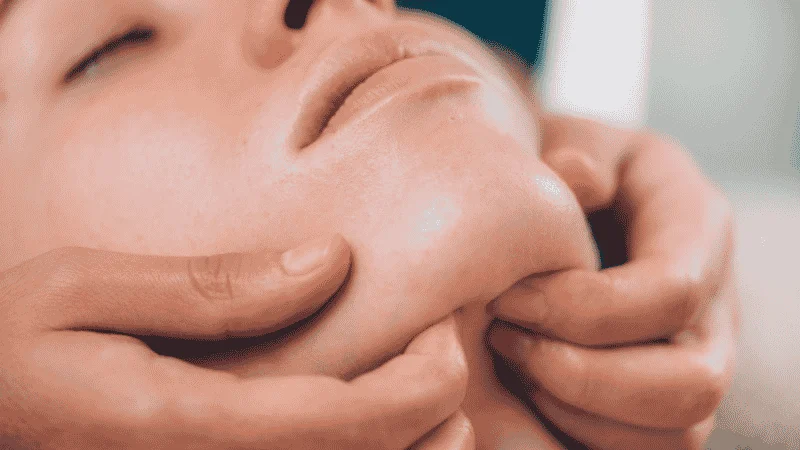
Physical therapy offers one of the most effective non-invasive treatments for TMJ pain and headaches.
Your therapist can teach you specific jaw exercises that strengthen the muscles around your temporomandibular joint and improve flexibility.
These exercises typically include gentle stretching movements, controlled opening and closing of your mouth, and resistance training with your hand.
Manual therapy techniques like joint mobilization can provide immediate relief from TMJ-related pain and headaches.
You should practice these exercises daily for the best results. Most people notice improvement within a few weeks of consistent practice.
Splints, Bite Guards, and Mouth Guards
A splint or bite guard worn over your teeth can protect against teeth grinding and bruxism, especially during sleep. These devices help reduce pressure on your jaw joint and prevent damage to your teeth.
Your dentist can create a custom-fitted mouth guard that positions your jaw in a more comfortable alignment. Over-the-counter options are available, but custom devices typically work better for TMD symptoms.
You’ll usually wear your bite guard at night when teeth grinding is most common. Some people also benefit from wearing a splint during stressful daytime activities.
Medications and Pain Relief Options
Over-the-counter pain relief medications like ibuprofen or acetaminophen can help manage TMJ pain and associated headaches. These anti-inflammatory drugs reduce swelling around the joint.
Your doctor might prescribe muscle relaxants if your jaw muscles are very tight or in spasm. Some people benefit from low-dose antidepressants that help with chronic pain management.
You should use medications as directed and combine them with other treatments for best results. Pain relief alone doesn’t fix the underlying problem causing your TMJ disorders.
Lifestyle Adjustments for Relief
Poor posture, stress, and sleep disorders can worsen TMJ-related headaches and ear pain. You can reduce symptoms by maintaining good posture, especially when working at a computer or looking at your phone.
Stress management through meditation, deep breathing, or yoga helps reduce jaw clenching. Avoid chewing gum, biting your nails, or eating hard foods that strain your jaw.
Apply ice packs to reduce inflammation or use moist heat to relax tight jaw muscles. Eating soft foods during flare-ups gives your jaw time to rest and recover.
Frequently Asked Questions
Jaw-related ear symptoms can be confusing because the pain often feels like it’s coming from inside your ear. Understanding where the discomfort is located, what it feels like, and who can help diagnose it makes it easier to get the right treatment.
What does jaw joint–related ear pain usually feel like?
Jaw-related ear pain often feels like a dull ache or pressure deep inside or around your ear. You might also notice a sharp pain in front of your ear opening, especially when you chew or open your mouth wide.
The pain can come and go throughout the day. It often gets worse after eating tough foods, talking for a long time, or during stressful periods when you’re more likely to clench your teeth.
Some people describe it as a tender, sore feeling rather than the throbbing pain you’d get with an ear infection. You might be able to press on the jaw muscles near your ear and make the pain stronger.
Why do some people get ear pressure or fullness along with jaw discomfort?
Your jaw and ears share nerve pathways and nearby muscles. When your jaw muscles are tense or overworked, that tension can affect the muscles inside your ear.
The tensor tympani muscle in your middle ear and the muscles that open your Eustachian tube work closely with your jaw muscles. When jaw muscles stay tight from clenching or grinding, these ear muscles can become overactive too.
This creates the feeling that your ear is clogged or full, even though there’s no actual blockage. The sensation is real, but it’s coming from muscle tension rather than fluid or pressure problems in your ear.
Is it common for jaw issues to cause pain on only one side of the head and ear?
Yes, it’s very common to have one-sided symptoms. Many people experience TMJ-related pain on just one side because most people favor one side when chewing or tend to clench more on one side.
You might also sleep on one side more than the other, which puts extra pressure on that jaw joint. If you rest your chin on your hand while working or have had an injury to one side of your jaw, symptoms often stay on that side.
One-sided ear pain or headaches can also come from other causes, though. If your symptoms stay on one side and don’t improve with jaw care, it’s important to get checked by a doctor.
Where is ear pain from jaw tension typically located, and how can you tell it apart from an ear infection?
Jaw-related ear pain usually sits right in front of your ear opening or feels like it’s radiating from your jaw into your ear. When you press just in front of your ear or on your cheek muscles, you can often make the pain worse.
An ear infection typically causes pain deeper inside your ear canal. You’ll often have other signs like fever, drainage from your ear, or pain when you tug on your earlobe.
TMJ-related ear symptoms often change when you move your jaw. If your ear pain gets worse when you chew, clench, or open wide, that points to a jaw problem. Ear infections don’t usually respond to jaw movement.
You might also notice that jaw-related ear pain comes with clicking or popping in your jaw, morning jaw stiffness, or temple headaches. These symptoms rarely happen with ear infections.
What are some gentle exercises that may help relieve ear discomfort linked to jaw tension?
Start by placing a warm compress on your jaw and cheek area for 10 to 15 minutes. This helps relax tight muscles before you do any exercises.
Try slow, controlled jaw opening and closing. Open your mouth about halfway, hold for a few seconds, then close slowly. Repeat this five to ten times, staying in a pain-free range.
Gentle jaw stretches can also help. Place your tongue on the roof of your mouth and slowly open your jaw as wide as you comfortably can. This helps your jaw move in a controlled way.
Massage the muscles at your temples and along your cheeks using small circular motions. You can also press gently on tender spots for 10 to 15 seconds at a time.
Practice keeping your lips together and teeth apart throughout the day. This “resting jaw” position gives your muscles a break and reduces tension that contributes to ear discomfort.
Can an ENT help determine whether ear symptoms are coming from the jaw rather than the ear?
Yes, an ENT can examine your ears and rule out ear infections, Eustachian tube problems, or other ear conditions. If your ear exam and hearing tests come back normal but you still have symptoms, that’s a strong clue your jaw might be the problem.
ENT doctors often work with dentists and jaw specialists when symptoms overlap. They can check your middle ear pressure and eardrum movement to see if those are normal.
If the ENT finds your ears are healthy, they’ll often refer you to a dentist who specializes in TMJ or an orofacial pain specialist. Getting a clear diagnosis helps you avoid treating the wrong problem and wasting time on treatments that won’t help.