


A sore spot that keeps coming back in the same place is your mouth trying to tell you something.
It usually means the pressure or rubbing causing it hasn’t actually gone away, even if the pain fades for a day or two between flare-ups.
Many denture wearers try to power through with soft foods and salt water rinses, hoping the spot will heal on its own. Sometimes it does.
But when the same raw patch reappears week after week, a simple adjustment might not be the whole answer anymore.
Recurring denture sore spots often point to a deeper issue with fit, bite alignment, changes in the jawbone, or irritation or infection beneath the denture base.
This article looks at why sore spots return, what might really be causing the pressure or irritation, and how to get lasting relief instead of a short-term fix.
Key Takeaways
- A denture sore that returns in the same spot often signals a fit, bite, or tissue problem that needs more than a quick adjustment.
- Home care like soft foods, salt water rinses, and cold compresses can ease pain temporarily but won’t fix the underlying cause.
- Lasting comfort usually comes from a professional check for pressure points, bone changes, infection, or a reline, rebase, or implant-supported option.
Why Recurrent Sore Spots Need a Different Response
A sore spot that shows up in the exact same place more than once usually means something mechanical or biological is repeating itself, not healing.
That’s different from the soreness many people feel when they first start wearing dentures.
New denture wearers often deal with mild gum irritation for the first few weeks as their mouth adjusts to a new object resting on soft tissue.
That kind of soreness tends to ease as the tissue toughens and small adjustments smooth out rough spots.
Recurring soreness in someone who has worn dentures comfortably for months or years is a different story, and it deserves a closer look.
What a Recurring Denture Sore Can Look and Feel Like
A recurring denture sore often looks like a small red or white patch, sometimes with a shallow ulcer at the center.
It may feel tender to the touch, sting when you eat, or throb after the denture has been in for several hours.
Some people notice the area feels raw right where the denture edge sits, especially along the ridge or in the fold where gum meets cheek.
When New Dentures Are Still in the Normal Adjustment Period
New dentures commonly cause mild soreness during the first two to four weeks as your mouth learns the shape and pressure of the appliance.
This is a normal part of adapting, and small adjustments during this window are expected, not a sign of a poor fit.
Soreness that lingers well past this early period, or that keeps returning after each adjustment, suggests something beyond typical adjustment is going on.
Why the Same Area Can Become Sore Again
The same spot often becomes sore again because the underlying cause, whether it’s a pressure point, an uneven bite, or shifting bone, hasn’t been resolved.
Gum tissue is thin and sits close to bone, so it has limited ability to tolerate repeated friction without breaking down again.
Once tissue in one spot has been irritated, it can stay more sensitive and prone to further pain while chewing until the actual source of pressure is addressed.
What Is Causing the Pressure, Friction, or Inflammation?
Recurring denture pain can have several causes, including poor fit, an uneven bite, dry mouth, daily wear habits, or inflammation or infection beneath the denture.
Ill-fitting or loose dentures create pressure points because the base no longer sits evenly across the gum ridge.
Poorly fitting dentures rock or shift slightly with every bite, concentrating force on one small area instead of spreading it out.
Uneven pressure like this is one of the most common triggers for sore gums that won’t stay healed.
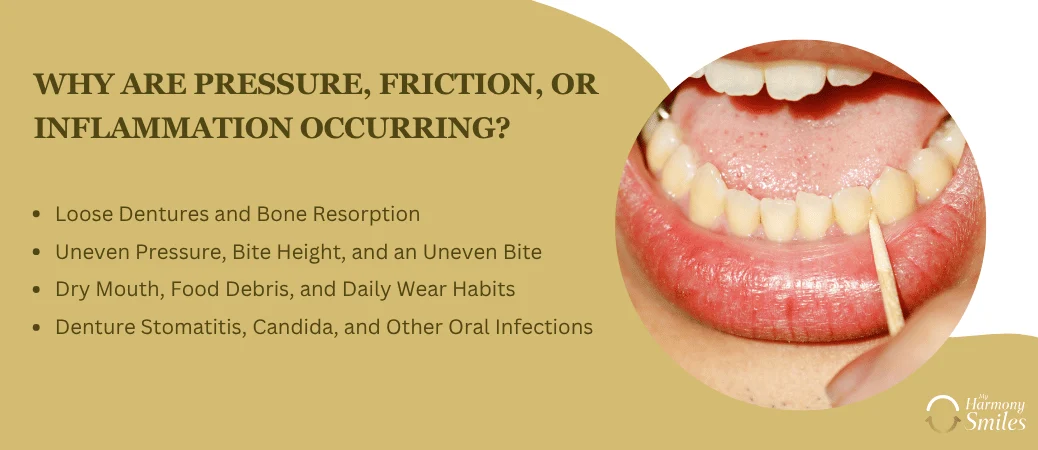
Loose Dentures and Bone Resorption
Loose dentures are often the result of bone resorption, a natural process where the jawbone gradually shrinks after teeth are removed.
Jawbone shape can gradually change after teeth are removed, especially during the earlier stages of healing.
As the ridge changes over time, a denture that once fit well may become loose or uneven.
Uneven Pressure, Bite Height, and an Uneven Bite
Uneven bite forces send too much pressure to one area every time you chew.
This can happen if the denture teeth have worn down unevenly, if the bite height was set incorrectly, or if you tend to chew mostly on one side.
Over time, this uneven pattern wears grooves into the tissue that never get a chance to fully heal between meals.
Dry Mouth, Food Debris, and Daily Wear Habits
Dry mouth reduces the natural lubrication that helps dentures glide instead of rub, which raises the risk of friction sores.
Food debris trapped under the denture adds grit that can scrape delicate gum tissue with every bite.
Wearing dentures overnight without giving your gums a rest also keeps tissue under constant pressure instead of letting it recover.
Denture Stomatitis, Candida, and Other Oral Infections
Denture stomatitis is a common fungal infection, usually caused by candida, that inflames the tissue under the denture and can mimic or worsen pressure-related soreness.
It often shows up as redness or a burning feeling across the palate rather than a single sharp sore spot.
Poor oral hygiene around the denture and gums allows this fungus to build up, but even careful wearers can develop it if the fit traps moisture against the tissue.
How to Calm Denture Pain While You Arrange Care
You can ease denture pain at home while you wait for a dental appointment, but these steps manage symptoms rather than fix the cause. Think of them as first aid, not a long-term plan.
Give Your Gums a Break and Choose Soft Foods
Soft foods take pressure off sore areas and give irritated tissue a chance to calm down. Reach for options like scrambled eggs, mashed potatoes, soup, or yogurt for a few days.
Taking your dentures out for a few hours during the day, when possible, also gives sore gums a real break from pressure.
Use a Warm Salt Water Rinse Safely
A warm salt water rinse can soothe inflamed tissue and help keep the area clean while it heals. Stir about half a teaspoon of salt into a cup of warm water and swish gently two to three times a day.
Avoid rinsing with water that’s too hot, since that can irritate already tender gum tissue further.
Temporary Options for Swelling and Soreness
A cold compress held against the outside of your cheek may help with swelling near a painful area. Over-the-counter pain relief may also help with temporary discomfort when used as directed.
Staying hydrated can be especially helpful if dry mouth is contributing to irritation.
Why Denture Adhesive Is Not a Fix for a Bad Fit
Denture adhesive can add short-term stability, but leaning on it to manage a loose or poorly fitting denture often masks a problem that needs a professional fix.
Extra adhesive can trap food particles and bacteria against the gum, which sometimes adds to irritation instead of solving it.
If you find yourself using more adhesive just to get through the day, that’s a sign the fit itself needs attention.
When an Adjustment Is Not Enough
A sore spot that returns after more than one adjustment usually means the fit, bite, or tissue health needs a deeper evaluation, not another quick trim.
This is the point where seeing a dentist for denture sores becomes the right next step rather than trying another round of home remedies.
How a Dental Professional Finds Hidden Pressure Points
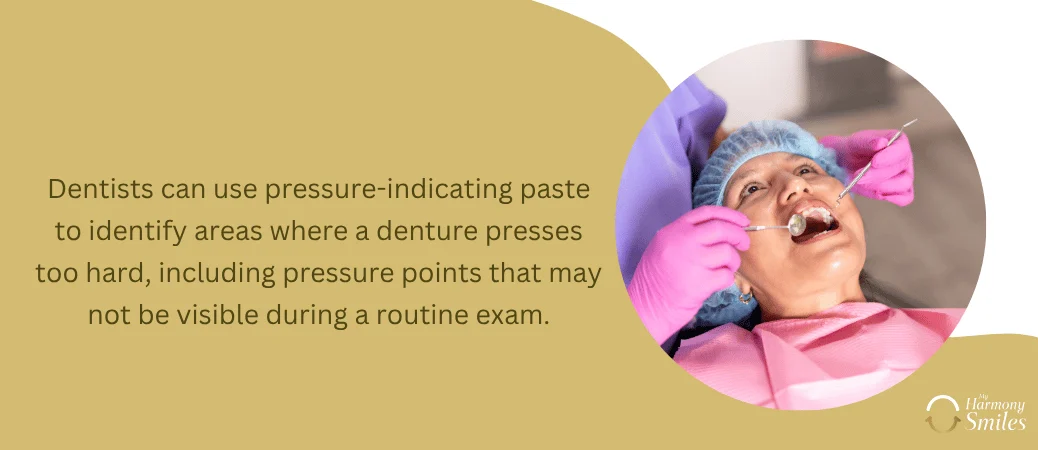
An experienced dental provider often uses pressure-indicating paste, a special material applied to the fitting surface of the denture, to reveal exactly where it presses too hard against the gum.
When you bite down, the paste thins or clears in high-pressure areas, showing the dentist precisely where to adjust.
This method catches pressure points that aren’t obvious from a visual exam alone, including spots hidden along the ridge or in the folds of tissue.
When a Reline, Rebase, or Replacement May Help
A reline adds new material to the fitting surface of your existing denture to match your current gum shape, while a rebase replaces the entire base while keeping the same teeth.
Both can restore even pressure after bone resorption has changed your gum contour.
When a denture is older or has been relined multiple times already, full replacement often makes more sense, whether that’s a new set of permanent dentures or partial dentures built to your mouth’s current shape.
When Antifungal Treatment or Other Care Is Needed
Antifungal treatment is often necessary when denture stomatitis or another oral infection is contributing to the pain, not just pressure from the denture itself.
Your dentist may prescribe an antifungal rinse or ointment alongside advice on denture hygiene to clear the infection fully.
Skipping this step and only adjusting the denture can leave the underlying infection to keep irritating the tissue.
Could Implant-Supported Dentures Reduce Recurrent Rubbing?
Implant-supported dentures anchor to dental implants rather than relying only on the gums for support. For some patients with loose or unstable dentures, this added stability may reduce movement and rubbing against the gum tissue.
If you’re curious whether this route fits your situation, exploring dental implants or full mouth dental implants with your dentist can clarify whether it’s a good match for your bone health and goals.
Daily Habits That Help Sore Spots Stay Gone
Good daily denture care reduces the friction, bacteria, and moisture buildup that lead to sore spots coming back. These habits work best alongside a proper fit, not as a substitute for one.
Clean Dentures and Oral Tissues Every Day
Clean your dentures and your gums, tongue, and palate every day, not just the appliance itself. Food debris and bacteria that build up on your natural tissue can contribute to irritation just as much as buildup on the denture.
A quick gentle brush of your gums each morning and night keeps tissue healthier and less reactive to pressure.
Use the Right Denture Brush and Denture Cleaner
A denture brush has firmer, differently shaped bristles than a regular toothbrush, designed to clean every curve of the appliance without scratching it.
Pair it with a denture cleaner made for that purpose rather than regular toothpaste, which can be too abrasive and leave tiny grooves where bacteria collect.
Soaking your dentures as directed by the cleaner’s instructions helps lift stains and microbial buildup that brushing alone might miss.
Remove Dentures as Recommended and Book Regular Reviews
Removing your dentures overnight gives gum tissue time to recover from a full day of pressure.
Regular dental exams, even when nothing feels wrong, let your dentist catch small fit changes before they turn into recurring sore spots.
Comfortable Dentures Start With the Right Long-Term Fix
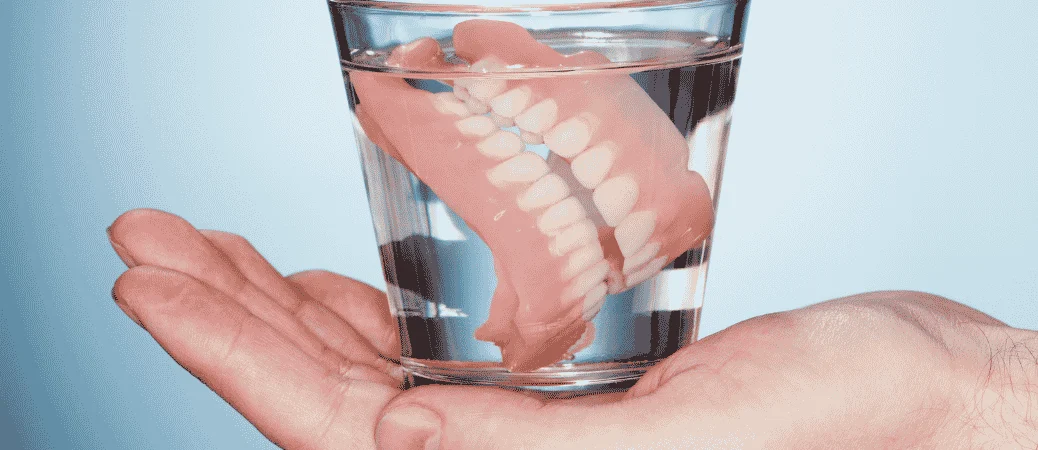
Lasting comfort with dentures comes down to matching your denture fit to how your mouth actually looks and moves right now, not how it looked when the denture was made.
Recurring denture problems can be a sign that something has changed underneath the appliance, whether that’s bone shape, bite alignment, denture fit, or tissue health.
Chasing short-term relief for denture discomfort can feel manageable for a while, but it rarely resolves the root cause on its own.
A proper reline, adjustment, or, in some cases, a switch to implant-supported teeth gives your gums a real chance to heal and stay healed.
Frequently Asked Questions
Why does my denture sore keep coming back in the same place?
A sore spot that returns in the same place usually means the denture is pressing unevenly on that area every time you wear it.
This can happen because of a fit change from bone resorption, an uneven bite, or a rough spot on the denture surface that keeps rubbing the same patch of tissue.
What is the fastest way to heal sore gums from dentures?
Removing your dentures for part of the day and rinsing gently with warm salt water gives irritated gum tissue the best chance to heal quickly.
Soft foods and a cold compress can also ease pain while the area recovers. If the sore doesn’t improve within a week or two, a dental visit is the next step.
What does a denture ulcer look like?
A denture ulcer often looks like a small, shallow sore with a red or yellowish center, usually where the denture edge or a pressure point sits against the gum.
It can feel tender or sting when you eat. Ulcers that persist beyond two weeks should be checked by a dentist.
What are the signs of denture stomatitis?
Denture stomatitis often shows up as redness across the roof of the mouth or gums under the denture, sometimes with a burning feeling rather than sharp pain.
It’s linked to a buildup of candida fungus on the denture surface or tissue. A dentist can confirm it and recommend antifungal treatment if needed.
Can denture adhesive stop sore spots from coming back?
Denture adhesive can add temporary stability, but it doesn’t fix the fit problem causing the sore spot in the first place.
Relying on adhesive to manage a loose or poorly fitting denture can also trap food debris against the gum, which sometimes adds to irritation instead of solving it.
When should I see a dentist for denture sores?
See a dentist for denture sores if a spot hasn’t healed within two weeks, if it keeps returning in the same place after an adjustment, or if you notice burning, swelling, or a sore that seems to be getting worse.
Early evaluation can catch fit, bite, or infection issues before they become harder to treat.