

You just finished your Invisalign treatment and your teeth look amazing. You might think the hard work is done and wonder if you really need to wear a retainer.
The truth is that skipping the retainer phase can quickly undo all the progress you made with your clear aligners.
Without a retainer, your teeth can start shifting back to their original positions within weeks or even days, completely reversing months of orthodontic treatment.
This happens because your teeth are not permanently fixed in their new spots right after Invisalign. The bone and tissue around your teeth need time to adjust and stabilize.
Many people don’t realize how important retainers are until they see their teeth moving again. The gaps you worked so hard to close can reopen.
Your bite can change. All the time and money you spent on Invisalign can go to waste if you skip this final step.
Key Takeaways
- Your teeth can shift back to their old positions quickly without a retainer after finishing Invisalign
- Retainers are necessary to hold your teeth in place while the surrounding bone and tissue adjust
- Skipping retainer wear can undo your treatment results and may require additional orthodontic work to fix
The Critical Role of Retainers After Invisalign
Retainers hold your teeth in place while the surrounding bone and tissue adjust to their new positions. The months following your Invisalign treatment are when your smile needs the most support to prevent shifting.
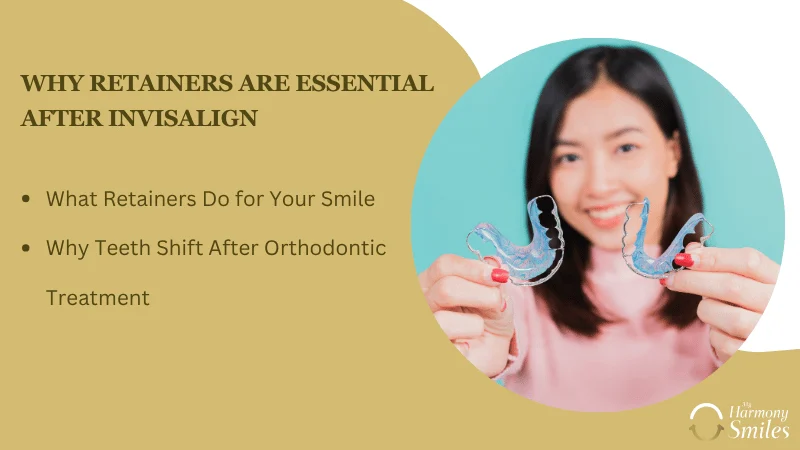
What Retainers Do for Your Smile
Your retainer acts as a holding device that keeps your teeth exactly where your Invisalign clear aligners moved them. After you finish orthodontic treatment, retainers prevent your teeth from moving back to their original positions.
Think of retainers as the final piece of your treatment plan. While Invisalign clear aligners did the work of moving your teeth, retainers maintain those results.
They stabilize your teeth in their new placements by applying gentle, constant pressure.
Your retainer gives your jaw time to adapt to the changes. It protects the investment you made in your smile by keeping everything aligned while your mouth adjusts.
Why Teeth Shift After Orthodontic Treatment
Your teeth sit in flexible bone and tissue that stays soft for months after treatment ends. The bone and ligaments around your teeth remain flexible during this adjustment period, which means your teeth can easily move.
Teeth have a natural memory of their old positions. They want to drift back to where they were before treatment started.
Daily activities like chewing, talking, and even sleeping put pressure on your teeth that can cause gradual movement.
Without a retainer, your teeth might return to their original positions and undo all your progress. The shifting can happen quickly in the first few months or slowly over years.
Consequences of Skipping the Retainer Phase
When you skip wearing your retainer after Invisalign, your teeth can shift back toward their original positions, affecting both your bite and appearance. These changes can happen quickly and may require additional treatment to fix.
Risk of Teeth Reverting to Original Positions
Your teeth naturally want to move back to where they started. Without a retainer, your teeth can gradually shift back through a process called orthodontic relapse.
This happens because the bone and tissues around your teeth need time to stabilize in their new positions.
The movement can start within days or weeks of stopping your retainer. Skipping your retainer or not wearing it as directed can cause your teeth to shift, even if the changes seem small at first.
You might notice gaps between teeth appearing again or crowded teeth returning to their overlapped positions.
The longer you wait to replace a lost retainer, the more likely your teeth will shift. This means more time without your retainer leads to bigger problems that become harder to fix.
Effects on Bite Alignment and Jaw Health
Your bite alignment depends on all your teeth staying in their corrected positions. When teeth shift, your bite can change too. This affects how your upper and lower teeth meet when you close your mouth.
Changes in your bite can occur when you don’t wear your retainer. An overbite that was corrected might return. An underbite could come back.
You might also develop a crossbite or open bite if your teeth move into the wrong positions.
These bite problems can cause jaw pain and discomfort. Your jaw muscles have to work harder when your teeth don’t fit together properly. You might also experience headaches or difficulty chewing food.
Some people even develop speech difficulties when their teeth shift enough to affect how they form certain sounds.
Appearance Changes and Loss of Treatment Investment

Your smile’s appearance can change noticeably when you skip retainers. The straight teeth you worked hard to achieve can become crooked again.
Gaps between teeth might reappear, or crowded teeth can overlap once more.
Skipping retainers can undo your results fast. You invested time and money into Invisalign treatment to get a better smile. Without retainers, that investment starts to disappear as your teeth move.
The aesthetic changes affect your confidence. You might feel embarrassed to smile if your teeth shift back to their old positions.
If you stop wearing your retainer completely, your teeth will gradually move over time, making the changes more obvious.
You face an increased risk of future orthodontic treatment if your teeth shift significantly. This means paying for additional treatment to fix problems that could have been prevented by simply wearing your retainer as directed.
How Quickly Teeth Can Shift Without a Retainer
Teeth can start moving within just a few days of not wearing your retainer, with noticeable changes appearing in weeks to months.
The speed of this movement depends on how recently you finished treatment and your unique dental factors.
Timeline of Relapse
Your teeth can begin to shift within days if you stop wearing your retainer after Invisalign. This movement happens fastest right after you complete your orthodontic treatment.
First Few Days to Weeks:
- Minor tooth movement starts almost immediately
- You might not notice visible changes yet
- Your retainer may still fit but feel slightly tighter
3-6 Months After Treatment: The first few months following orthodontic treatment are critical because tooth movement can be rapid without a retainer.
Even a few days without your retainer can lead to minor shifts. After a few weeks, your retainers might not fit at all.
6-12 Months and Beyond: Skipping a few days could lead to mild shifting during this period. Longer gaps may cause significant relapse where your teeth move noticeably back toward their original positions.
Factors Influencing Tooth Movement
Several factors affect how fast your teeth shift after completing Invisalign treatment. Your age plays a role because younger patients often experience faster tooth movement than older adults.
The severity of your original bite issues matters too. If you had major crowding or spacing before Invisalign, your teeth have a stronger tendency to shift back.
Key factors include:
- Bone density – Softer bone allows teeth to move more easily
- Gum health – Healthy gums provide better tooth stability
- Teeth grinding – This habit can accelerate shifting
- Treatment duration – Longer treatments may need more retention time
Your genetics also influence how quickly teeth move without a retainer. Some people naturally have more stable teeth while others experience faster relapse.
Solutions If You’ve Skipped or Lost Your Retainer
Acting quickly gives you the best chance to prevent your teeth from shifting too far. Your orthodontist can evaluate your situation and recommend the right fix based on how long you’ve gone without your retainer.
What to Do Right Away
If you realize you’ve stopped wearing your retainer or lost it, try to put it back in if you still have it. Even if it feels tight, wearing it can help prevent further movement.
Missing just a few days means your retainer might feel snug, but your teeth likely haven’t shifted much yet.
When you’ve lost your retainer, call your dental office as soon as possible. Don’t wait weeks hoping nothing will change. Teeth can start shifting within 24 to 72 hours without your retainer in place.
While waiting for your appointment, avoid trying DIY fixes or ordering retainers online without professional guidance.
DIY impressions can lead to poorly fitting retainers that don’t protect your smile properly. Your orthodontist needs to check if your teeth have moved before making a new retainer.
When to Contact Your Orthodontist
Schedule an appointment right away if your retainer no longer fits comfortably. If your retainer won’t seat properly, your teeth have likely shifted enough that you need professional help.
Your orthodontist will examine your teeth and take new impressions or scans. They can then create a replacement retainer that fits your current tooth positions.
Most dental practices can order new retainers quickly once they have accurate measurements.
Be honest about how long you’ve gone without wearing your retainer. This information helps your orthodontist decide the best treatment plan.
They might recommend wearing your new retainer full-time for a few weeks before switching to night-only wear.
Potential for Needing Additional Invisalign Treatment
Sometimes teeth shift back enough that you need more orthodontic work. Your orthodontist will measure how much your teeth have moved to determine if Invisalign clear aligners are needed again.
Minor shifts might only require wearing a retainer consistently to hold your current positions. More significant movement could mean a few months of clear aligners to correct the changes.
Full treatment is rarely needed unless you’ve skipped retainers for years.
Many orthodontists offer shorter Invisalign treatment plans for patients who need touch-ups. These plans use fewer aligners than your original treatment.
The cost and time required depend on how far your teeth have shifted from their corrected positions.
Keeping Your Smile Straight: Tips and Best Practices
After completing Invisalign treatment, you need to follow specific care steps to protect your new smile. Wearing your retainer correctly and maintaining good oral habits will help keep your teeth in their new positions.

Retainer Wear and Care
You should wear your retainer for at least the first six months after completing treatment. Most dentists recommend wearing it full-time during this period, removing it only for eating and brushing.
After the initial six months, you can usually switch to nighttime wear only. Your dentist will give you specific instructions based on your situation.
Proper retainer care includes:
- Rinsing it with cool water after each use
- Brushing it gently with a soft toothbrush
- Storing it in its case when not wearing it
- Avoiding hot water that can warp the plastic
- Keeping it away from pets who might chew it
Clean your retainer daily to prevent bacteria buildup. You can use mild soap and water or special retainer cleaning tablets.
Avoiding Common Mistakes Like Skipping Retainers
Skipping retainers, even for short periods, can cause your teeth to shift back. Your teeth need time to settle into their new positions, and the bone and tissue around them must adapt.
Many people make the mistake of stopping retainer wear too soon. They think their teeth are permanently fixed after treatment ends. This is not true.
Common mistakes to avoid:
- Leaving your retainer at home during trips
- Forgetting to wear it several nights in a row
- Stopping wear completely after a few months
- Not replacing damaged or lost retainers quickly
If you notice your retainer feels tight after missing wear time, your teeth have already started moving. Contact your dentist right away to prevent further shifting.
Maintaining Results With Diet and Oral Hygiene
Good oral hygiene helps keep your teeth healthy and in position. Brush twice daily and floss once per day to prevent gum disease that can cause teeth to shift.
Unlike during active Invisalign treatment, you have no dietary restrictions with retainers. You remove them before eating, so you can enjoy all your favorite foods. Just remember to brush before putting your retainer back in.
Regular dental checkups every six months let your dentist monitor your teeth positions. They can spot early signs of movement and adjust your retainer schedule if needed.
Avoid habits that put pressure on your teeth, like chewing on pens or ice. These actions can undo your treatment results over time.
Cost, Insurance, and Financing of Retainers and Additional Treatment
Retainers cost less than your original Invisalign treatment, but they still require financial planning.
Most dental insurance plans offer some coverage for retainers, and financing options can help spread out payments if you need retreatment.
Understanding the Cost of Replacement Retainers
Replacement retainers typically cost between $100 and $500 per set. The exact price depends on the type of retainer you need and your dental provider’s fees.
Fixed retainers that bond to the back of your teeth usually cost more upfront. Removable retainers like clear aligners or wire retainers tend to be less expensive.
The cost for retainers varies based on your insurance coverage, provider, and retainer type.
If you skip wearing your retainer and your teeth shift back, you’ll face much higher costs. Retreatment with Invisalign can cost thousands of dollars, similar to your original treatment.
This makes replacing a lost or damaged retainer much more affordable than fixing shifted teeth later.
Dental Insurance Coverage and Flexible Payment Options
Many dental insurance plans cover part of your retainer costs. Check your policy to see what percentage they’ll pay and if you have a lifetime orthodontic maximum.
Some plans cover retainers at 50% after you meet your deductible. Others include retainers as part of your original orthodontic benefit.
Your insurance may have waiting periods or restrictions on how often they’ll cover replacement retainers.
If your plan doesn’t fully cover retainers, ask your dentist about payment plans. Many offices offer in-house financing that lets you pay monthly without interest.
This makes retainer replacement more manageable for your budget.
Alternatives Like CareCredit and Delta Dental
CareCredit is a healthcare credit card that covers dental expenses including retainers and orthodontic work. You can apply online and get approved quickly.
CareCredit offers promotional periods with no interest if you pay off the balance within 6, 12, or 24 months depending on the amount.
Delta Dental is one of the largest dental insurance providers in the country. Their plans often include orthodontic coverage that extends to retainers after treatment.
Delta Dental PPO and Premier plans typically cover retainers as part of your lifetime orthodontic maximum.
Other third-party financing companies also work with dental offices. These include Lending Club and Sunbit, which offer similar payment plans to help you afford necessary dental care without paying everything upfront.
Frequently Asked Questions
Many people wonder what happens when they stop wearing their retainer and how quickly their teeth might move. The good news is that most situations can be managed if you understand the risks and act quickly when problems arise.
What happens to your teeth if you don’t wear your retainer after Invisalign?
Your teeth will start to shift back toward their original positions if you don’t wear your retainer. This movement happens because the fibers and tissues around your teeth have a memory of where your teeth used to be.
Skipping or shortening retainer wear can gradually undo treatment results. The changes might be small at first, but over time they can become significant enough that you notice gaps, crowding, or other alignment issues returning.
How quickly can teeth shift if you skip wearing your retainer?
Teeth can start shifting within days or weeks of not wearing your retainer. The speed depends on several factors, including how long it’s been since your treatment ended and how your body responds to the changes.
Even just a few nights without wearing your retainer can cause teeth to shift. Some people notice their retainer feels tight after skipping just one or two nights, which means their teeth have already started to move.
The first few months after finishing Invisalign are the most critical time. Your teeth are still settling into their new positions and are more likely to shift quickly during this period.
Do you really need to wear a retainer forever after Invisalign?
Yes, you need to wear your retainer long-term to keep your teeth in their new positions. Most dentists recommend wearing retainers every night for life, though the schedule may vary based on your specific situation.
The tissues and fibers around your teeth continue trying to pull them back to their original spots even years after treatment. These fibers retain a memory of where your teeth used to be and will keep applying pressure over time.
Wearing your retainer at night becomes a simple habit that protects your investment in your smile. It only takes a few minutes each evening to put in your retainer.
If your teeth shift, can wearing your retainer again move them back?
It depends on how much your teeth have moved. If you catch the shifting early and your retainer still fits, wearing it consistently might move your teeth back to their correct positions.
However, if your teeth have shifted significantly, your retainer may not fit at all or may cause pain when you try to wear it. Forcing a retainer that doesn’t fit properly can damage your teeth or the retainer itself.
Contact your dentist or orthodontist right away if you notice any shifting. They can evaluate whether your current retainer will work or if you need new treatment to fix the problem.
What are Vivera retainers, and how do they compare to other retainer options?
Vivera retainers are clear plastic retainers made by the same company that makes Invisalign aligners. They’re designed to be 30% stronger than other clear retainer materials, which means they typically last longer.
These retainers look similar to Invisalign aligners and fit over your teeth. They’re nearly invisible when you wear them, which many people prefer over wire retainers.
Other retainer options include traditional wire retainers with a metal bar across the front of your teeth or permanent retainers bonded to the back of your teeth.
Each type has benefits and drawbacks depending on your needs and preferences.
What happens if you stop wearing your retainer after a couple of years?
Your teeth can still shift even years after finishing Invisalign treatment. The risk might be lower than in the first few months, but the potential for movement never completely goes away.
Some people experience minor changes that they don’t mind, while others see significant shifting that bothers them. Your individual risk depends on factors like your age, your original bite issues, and how your body responds to changes.
If you stop wearing your retainer after years of consistent use, you might not notice problems right away. But over months and years, small movements can add up to visible changes in your smile.