

Your face changes after 40 in ways that affect how it responds to cosmetic treatments. The skin gets thinner, bones shift, and fat pads move downward.
These changes mean that fillers work differently than they might have in your 30s.
After 40, your facial aesthetics and structure becomes more important than just filling wrinkles, so treatments need to focus on restoring volume and supporting your face’s natural shape.
The good news is that dermal fillers can still help you look refreshed and natural. You just need to understand how your face has changed and what that means for treatment.
Many people wonder if fillers are worth trying after 40. The answer depends on choosing the right type of filler for your specific needs and working with someone who understands mature skin.
This guide will help you know what to expect and how to get the best results.
Key Takeaways
- Facial anatomy changes significantly after 40, requiring different filler placement strategies than younger patients need
- Understanding the differences between fillers, Botox, and other treatments helps you choose what works best for your goals
- Natural-looking results come from restoring facial structure and volume rather than overfilling specific wrinkles
How Facial Anatomy Evolves After 40
Your face undergoes specific structural changes after 40 that affect how it holds volume and responds to treatments like dermal fillers.
These changes happen in your bone structure, fat distribution, and skin quality at different rates based on your genetics and lifestyle choices.
Understanding Facial Volume Loss
After 40, your face loses volume in predictable patterns. Your cheekbones start to lose density, which causes the middle part of your face to flatten.
The fat pads that kept your cheeks full begin to shift downward due to gravity and weakening facial ligaments.
Bone resorption in the jaw and cheekbones changes the contours of your face significantly. Your face may shift from a youthful heart shape to a more rectangular or triangular appearance.
This happens because the bone that once supported your facial tissues shrinks back.
The temples also hollow out during this time. Fat loss in this area makes your face look thinner and more aged. Your under-eye area may appear sunken as the fat pads there diminish or shift position.
Facial aging becomes multidimensional after 40, involving bone changes, fat pad movement, and tissue weakening all at once.
Hyaluronic acid fillers can replace some of this lost volume, but they work differently on mature facial structures than on younger faces.
Changes in Skin Elasticity and Collagen
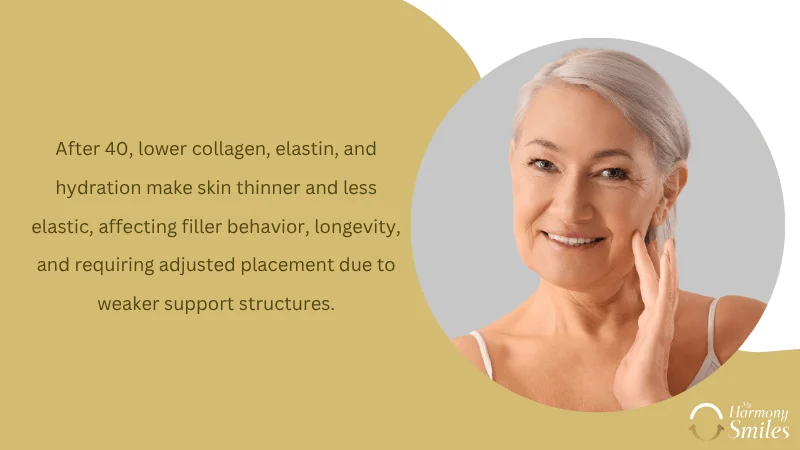
Your skin produces less collagen and elastin after 40. This makes your skin thinner and less able to bounce back after movement. The skin becomes looser and forms deeper creases where it once showed only fine lines.
Elasticity loss means your skin doesn’t hold its shape as well. When you get hyaluronic acid fillers at this age, the skin responds differently to injections.
The tissue is less firm, so fillers may spread differently than they would in younger skin.
Your skin’s ability to retain moisture also drops. This affects how long dermal fillers last and how natural they look.
Drier, thinner skin shows aging signs more clearly and may need different treatment approaches than younger, thicker skin.
The weakening of support structures beneath your skin happens alongside surface changes. Your facial muscles stay strong, but the tissues connecting them to your skin lose strength.
This combination creates a different foundation for filler placement.
The Role of Genetics, Lifestyle, and Sun Exposure
Your genetics determine much of how your face ages after 40. Some people naturally maintain more facial volume and skin elasticity than others.
Your genetic background influences how quickly your bones resorb and where you lose volume first.
Sun exposure speeds up collagen breakdown significantly. If you’ve spent years in the sun without protection, your skin will be thinner and less elastic.
This accumulated damage affects how your face holds dermal fillers and how natural the results look.
Lifestyle habits like smoking, diet, and sleep patterns impact your facial aging timeline. Smoking reduces blood flow to your skin, which damages collagen faster. Poor nutrition deprives your skin of the building blocks it needs to stay healthy.
Your overall health matters too. Conditions that affect your bones or circulation can change how your face ages.
Weight fluctuations after 40 can also affect facial volume, sometimes dramatically changing your facial structure and how treatments work for you.
Dermal Fillers and Their Role in Midlife Aesthetics
After 40, your facial structure changes as collagen decreases and fat pads shift downward, making strategic filler placement essential for natural-looking results.
The type of injectable you choose and where you place it matters more now than it did in your younger years.
Which Areas Benefit Most From Fillers After 40
Your midface sees some of the biggest changes during this decade. The cheeks lose volume and start to sag, creating a tired appearance. Dermal fillers can restore lost facial volume in these areas effectively.
The under-eye area often develops hollows that cast shadows. Careful filler application here can address the appearance of “sunken” eyes that make you look exhausted.
Your temples may also hollow out, which changes your face shape. Filling this area provides subtle lift and better facial balance.
The nasolabial folds deepen as facial fat descends. However, treating these directly isn’t always the best approach. Lifting the midface often softens these lines more naturally.
Your jawline loses definition as skin becomes less firm. Fillers placed along the jaw can restore contour and provide some lifting effect.
Choosing the Right Injectable for Volume Restoration
Hyaluronic acid fillers remain the most popular choice for patients over 40. These injectables come in different densities for specific needs.
Thicker formulas work well for:
- Deep volume loss in cheeks
- Jawline definition
- Chin augmentation
Softer formulas suit:
- Under-eye hollows
- Fine lines around the mouth
- Lip enhancement
The key advantage of hyaluronic acid is reversibility. If you don’t like the results, your provider can dissolve them. This safety feature becomes more important as your face requires more product.
Longer-lasting fillers exist, but they carry higher risks. Your skin’s thinner texture at this age makes complications from certain materials more visible if they occur.
Work with an experienced injector who understands facial anatomy. They’ll select products based on your specific volume loss patterns, not just your age.
Expected Treatment Outcomes Compared to Younger Patients
You’ll likely need more product than someone in their 30s. By your 40s, most people have lost up to 20% of facial collagen and fat volume, which means addressing actual structural changes rather than just preventing them.
Your results will look different than they would have a decade ago. The goal shifts from enhancement to restoration. Fillers can soften the visual impact of aging without trying to erase it completely.
You may need treatment more frequently in some areas. As your skin loses elasticity, it holds filler differently than younger, firmer skin.
Results typically last 6-18 months depending on the product and placement area. Movement-heavy zones like around your mouth break down filler faster than static areas like your cheeks.
Comparing Dermal Fillers, Botox, and Other Injectables
Understanding how different injectables work helps you make better choices for your skin after 40. Each treatment targets specific aging concerns through different methods and delivers results that last varying amounts of time.
Differences in Mechanism and Results
Botox and dermal fillers work in completely different ways on your face. Botox relaxes muscles to reduce wrinkles caused by repeated facial movements like frowning or squinting.
It stops the muscle contractions that create lines over time.
Dermal fillers take a different approach. They don’t affect your muscle activity at all. Instead, fillers add volume and enhance facial contours by filling in areas that have lost fullness.
The timeline for results differs between these injectables. Botox begins working within 3-7 days of your injection and typically lasts 3-6 months.
Dermal fillers show results immediately and last 6-12 months depending on the type. Some cheek fillers can even last up to two years.
Botox works best for:
- Forehead lines
- Crow’s feet around eyes
- Frown lines between eyebrows
Dermal fillers excel at:
- Restoring cheek volume
- Plumping thin lips
- Filling deep nasolabial folds
- Smoothing marionette lines
Combining Botox and Fillers for Best Results
Many people over 40 get better results by using both treatments together. Botox relaxes muscles that pull skin downward while filler adds lift and volume.
This combination addresses both dynamic wrinkles from movement and static lines from volume loss.
Your practitioner can create a tailored plan that uses each injectable where it works best. For example, you might get Botox in your forehead and around your eyes while using hyaluronic acid fillers in your cheeks and lips.
Studies show that combining these treatments significantly reduces perceived age while increasing how healthy and attractive people look. The treatments complement each other rather than competing.
When to Choose Each Approach
Choose Botox when your main concern is lines that appear during facial expressions. If you notice wrinkles forming when you smile, frown, or raise your eyebrows, Botox prevents those movements from deepening existing lines.
Pick dermal fillers when you see sagging, hollowness, or lines that stay visible even when your face is relaxed. Fillers work best for static wrinkles that don’t disappear when you stop moving your face.
They restore the volume you’ve lost with age.
Your budget and schedule matter too. Since Botox requires more frequent touch-ups every few months, it needs ongoing maintenance. Fillers last longer but cost more per treatment session.
Treatment Experience and Safety in the 40s and Beyond
Getting dermal fillers in your 40s involves different considerations than treatments in earlier decades, from how your skin responds during the procedure to how long results typically last.
Your mature skin requires specific techniques and realistic expectations about recovery and maintenance.
What to Expect During and After Injections
Your provider will likely take more time marking injection sites because your face has more complex volume loss patterns than younger patients.
The actual injection process feels similar to treatments at any age, with small pinches or pressure sensations that most people tolerate well.
You might notice more immediate swelling after your appointment. This happens because mature skin has less elasticity and retains fluid differently.
The swelling usually peaks within 24 to 48 hours and gradually fades over the next week.
Bruising becomes more common in your 40s and beyond. Blood vessels become more fragile with age, making them easier to injure during injections.
Your provider can use a cannula instead of a needle for some areas to reduce this risk.
Results appear gradually as the hyaluronic acid settles into place. You’ll see initial changes right away, but your final look develops over two weeks as swelling resolves and the filler integrates with your tissue.
Minimizing Downtime and Side Effects
Botox is considered safe for healthy adults in their 40s when you work with a qualified provider, and the same applies to dermal fillers. You can take steps before and after treatment to reduce common side effects.
Stop taking blood thinners like aspirin, ibuprofen, and fish oil for one week before your appointment if your doctor approves. These medications increase bruising risk significantly.
Apply ice packs for 10 minutes every hour on the day of treatment. This simple step reduces swelling and makes you more comfortable.
Sleep with your head elevated on two pillows for the first two nights to prevent fluid from pooling in your face.
Avoid intense exercise, alcohol, and saunas for 24 to 48 hours after injections. These activities increase blood flow and can worsen swelling or cause the filler to shift before it settles properly.
Longevity of Results and Touch-Up Frequency
Your metabolism slows down in your 40s, which means injectables often last longer than they would have in your 30s. Hyaluronic acid fillers typically last 9 to 18 months, with some lasting up to two years in areas that don’t move much.
You’ll need touch-ups less frequently as you continue treatments. Your tissue builds some structural memory, and patients transition to using less filler over time once they establish their desired look.
Most people schedule maintenance appointments every 12 to 15 months. Your provider will assess how much filler remains and add only what you need to maintain results.
This approach prevents overfilling and keeps your appearance natural as you age.
Tips for Achieving Natural-Looking Results After 40
Getting fillers in your 40s requires a different approach than in earlier decades. Working with the right provider and tailoring treatments to your specific facial changes makes the biggest difference in how natural your results look.

Importance of an Experienced Provider
You need a provider who understands how aging affects facial structure after 40. An experienced injector knows that your face loses volume in specific areas like the cheeks, temples, and under-eye region.
They won’t just fill wrinkles but will address the underlying volume loss that causes them.
Your provider should start with conservative amounts. Using small amounts of filler initially lets you see how your face responds before adding more.
This approach prevents the overfilled look that can happen when too much product is used at once.
Look for someone who has specific training in facial anatomy and aging patterns. They should be able to explain which dermal fillers work best for different areas of your face.
The right injector will also understand that skin in your 40s has different elasticity and needs than younger skin.
Personalizing Treatment to Your Facial Changes
Your treatment plan should address your specific concerns, not follow a standard template. Filler treatments can target frown lines, eye bags, or volume loss in your cheeks based on what you need most.
Your provider should evaluate which areas have lost the most fat pad volume. Some people need more support in the midface while others need help with jawline definition.
The placement and type of injectables matter more in your 40s because you’re working with a face that has changed significantly.
Key factors to personalize:
- Amount of volume loss in each facial area
- Skin thickness and texture changes
- Your natural facial proportions
- How quickly your body metabolizes fillers
You can adjust results over time as you see how your face responds. Staying hydrated after treatment helps fillers work better since they attract water to plump your skin.
Frequently Asked Questions
As you enter your 40s, your skin’s natural structure changes in ways that affect how fillers work and how long results last. Understanding these differences helps you make better choices about treatment and know what to expect.
How does aging after 40 change the way dermal fillers settle and look in the face?
After 40, your skin has less collagen and elastin than it did in your younger years. This means the tissue that holds filler in place isn’t as firm or bouncy.
When you get fillers in your 40s and beyond, they may spread more than they would in younger skin. The filler can settle differently because there’s less structure to keep it where it was injected.
Your body also breaks down hyaluronic acid fillers at different rates depending on your metabolism and the area treated.
The decreased fat pads in your face create more hollow areas that need support. This means you might need filler placed deeper in the tissue or in different layers compared to someone in their 20s or 30s.
Your skin’s thinner texture after 40 can make filler more visible if it’s placed too close to the surface. This is why technique matters more as you age.
Which areas of the face typically need a different filler approach once you’re in your 40s and beyond?
The midface area becomes a primary concern after 40. Your cheeks lose volume and start to sag, which creates a deflated look that needs deeper structural support rather than surface-level filling.
The temples often become hollow in your 40s and beyond. This area requires careful treatment with specific types of filler designed for deeper placement.
Your jawline and chin need more attention to restore definition that’s been lost. The approach shifts from enhancement to restoration and structural support.
The under-eye area becomes trickier to treat after 40. Your skin is thinner and shows irregularities more easily, so this area needs a very light hand and specific filler types.
Lip treatment changes focus from volume to addressing fine lines and maintaining natural proportion. Overfilling becomes more obvious and less natural-looking on mature skin.
What long-term side effects can happen from facial fillers, and how common are they?
Dermal fillers can cause various complications, though serious problems are relatively rare when performed by skilled practitioners. Some issues show up months or even years after your initial treatment.
Filler migration happens when the product moves from where it was injected. You might notice this as puffiness in unexpected areas or a change in how your face looks over time.
Volume loss occurs as your body breaks down the filler, which is normal and expected. However, repeated treatments in the same areas can sometimes stretch the skin or change how it responds to future injections.
Granulomas are small bumps that form when your body reacts to the filler material. These can appear months or years after treatment and may require medical intervention to resolve.
Vascular complications are rare but serious. They happen when filler blocks blood flow to tissue. This requires immediate medical attention.
Prolonged filler use can cause skin changes in how your tissue holds volume over time. Some people notice their face looks different even after the filler dissolves.
What are the warning signs that filler has migrated, formed lumps, or isn’t integrating well over time?
Puffiness that appears in areas where you didn’t get filler is a key sign of migration. You might notice this especially when you wake up or after eating salty foods.
Hard lumps or bumps that you can feel under your skin aren’t normal. These can appear weeks or months after treatment and may or may not be visible on the surface.
Discoloration or a bluish tint under your skin (called the Tyndall effect) means filler was placed too close to the surface. This becomes more noticeable over time rather than fading.
Asymmetry that develops gradually suggests the filler isn’t settling evenly. One side of your face might look fuller or different from the other.
Pain, redness, or warmth in treated areas long after the normal swelling and bruising should have resolved could indicate infection or an immune response. These symptoms need prompt medical evaluation.
Changes in how your face moves or feels can signal that filler has spread into muscles or other structures. You might notice stiffness or difficulty making certain expressions.
Why do some people feel like fillers “ruined” their face months or years later, and what can be done about it?
Gradual overfilling happens when you keep adding filler without letting previous treatments fully dissolve. Your face can start to look puffy or unnatural without you noticing the slow change.
Filler migration creates a pillowy or distorted appearance that doesn’t match your natural facial structure. This is especially noticeable in the under-eye area and around the mouth.
Your face gradually returns to its natural state as filler dissolves, but repeated treatments can stretch skin or change fat pad positioning. Some people find their face looks different or aged in unexpected ways once they stop treatments.
Choosing the wrong filler type or placement creates results that look artificial from the start or worsen over time. This happens more often when practitioners don’t adjust techniques for aging skin.
Hyaluronidase can dissolve hyaluronic acid fillers if you’re unhappy with results. This enzyme breaks down the product within days, though multiple treatments may be needed for complete removal.
Time is another solution since most fillers eventually break down on their own. However, some products can last longer than advertised, and semi-permanent fillers require different removal approaches.
Working with an experienced provider who understands facial anatomy and aging patterns helps prevent these problems. They can assess what’s gone wrong and create a plan to restore a more natural appearance.